The Beginning
Cock Crowing Farm is a 17-acre agro-ecological site using climate adaptive varieties of fruit and nut trees amidst flower rich meadowland.
Prior to our purchase, the land had been arable for 25 years, often without cover in the winter. A walker recalled being unable to cross the field in winter because it was so badly drained and muddy. The land had been treated with glyphosate on a regular basis. In Spring 2023, we saw few birds and virtually no insects. We set about to change that.
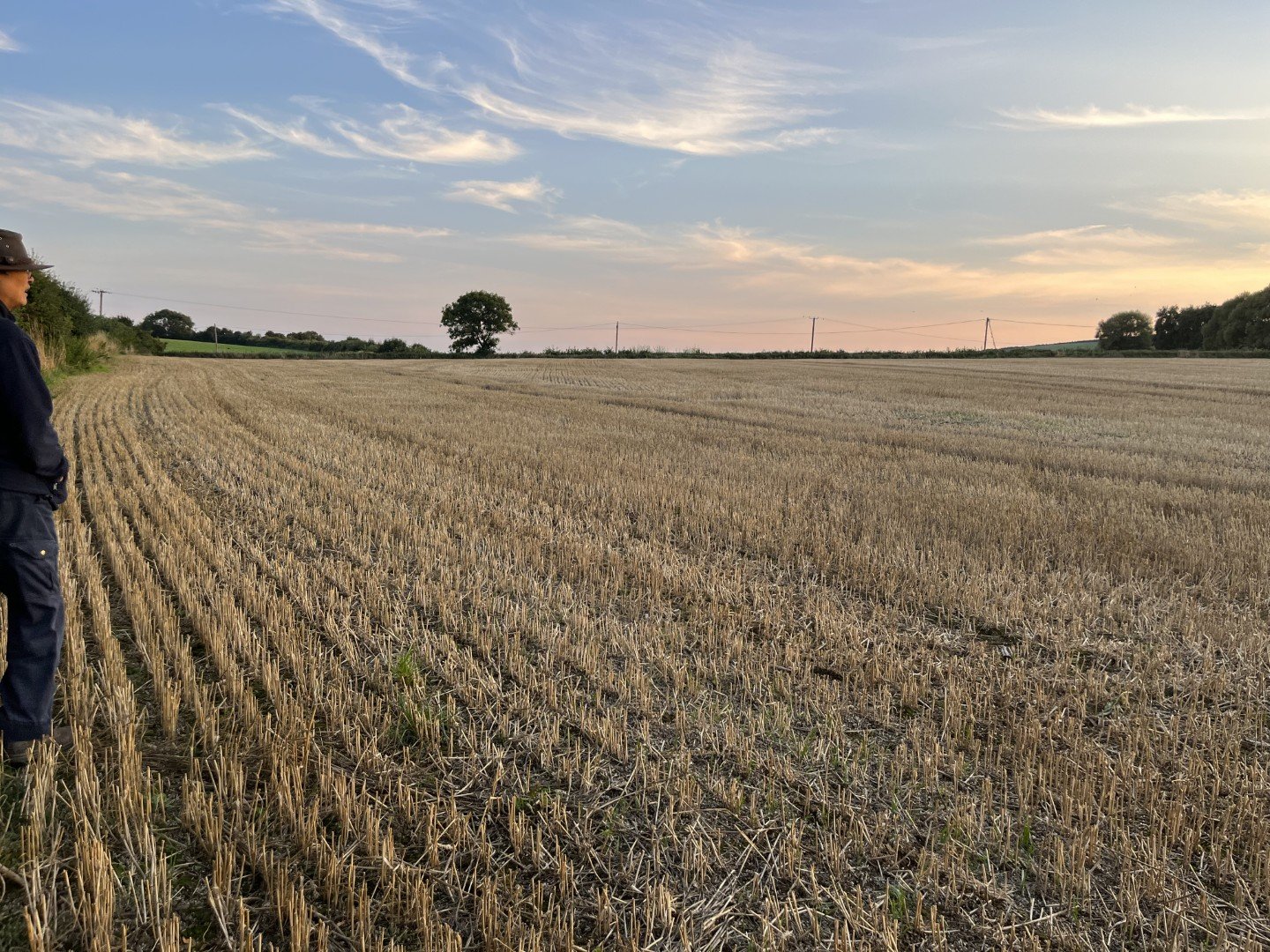
Pre purchase, September 2022
Creating a Plan: Key Areas
The new plan introduced areas for wildflowers, traditional meadows, new hedgerows, and, in the most sheltered area of the larger field, a dedicated area for climate adaptive fruit and nut varieties. There are also designated areas for water capture and storage, which is becoming increasingly important.
Expand image to explore
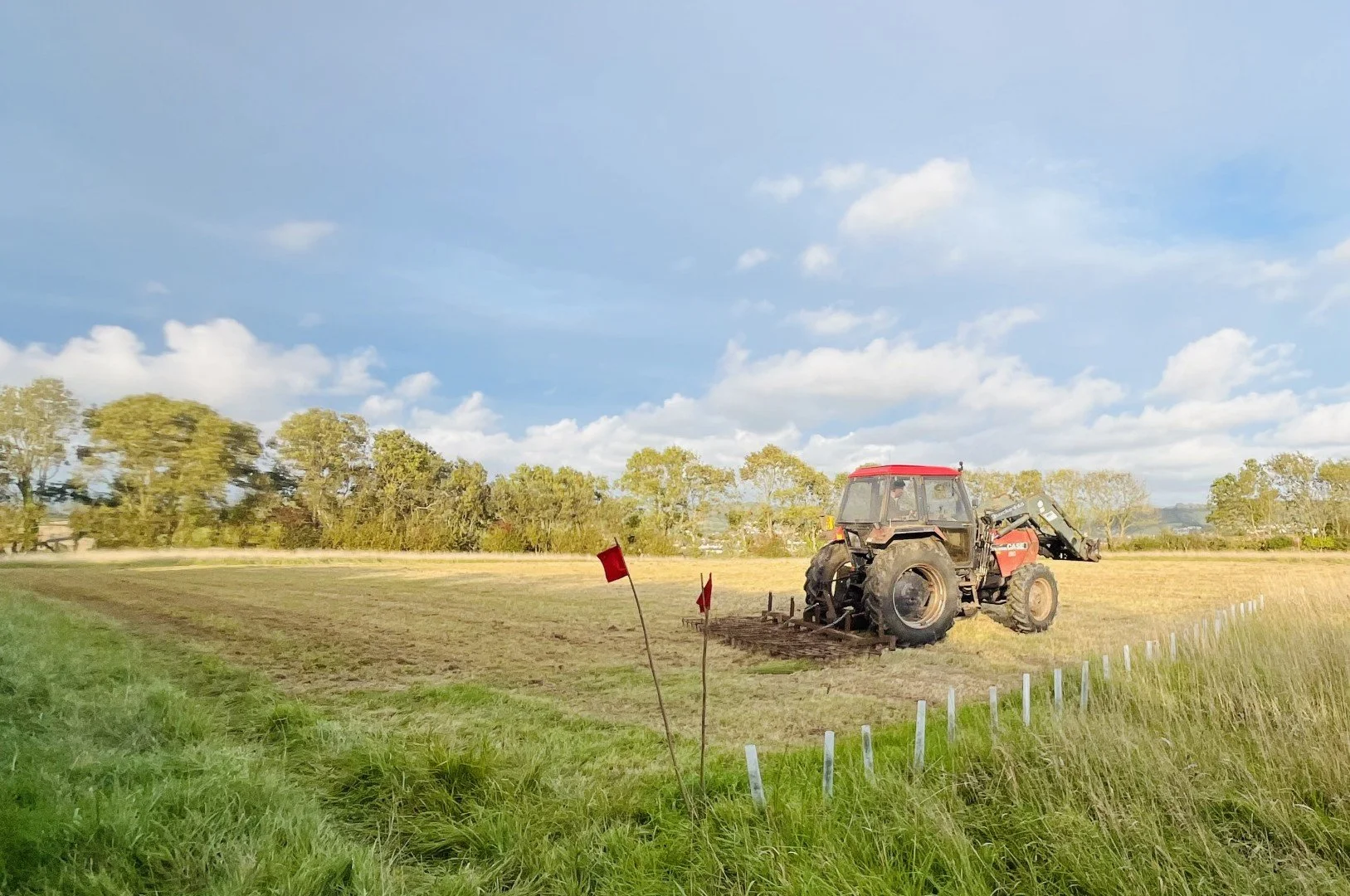
Preparing more wildflower areas
Multicrop orchard
Multicrop Orchard
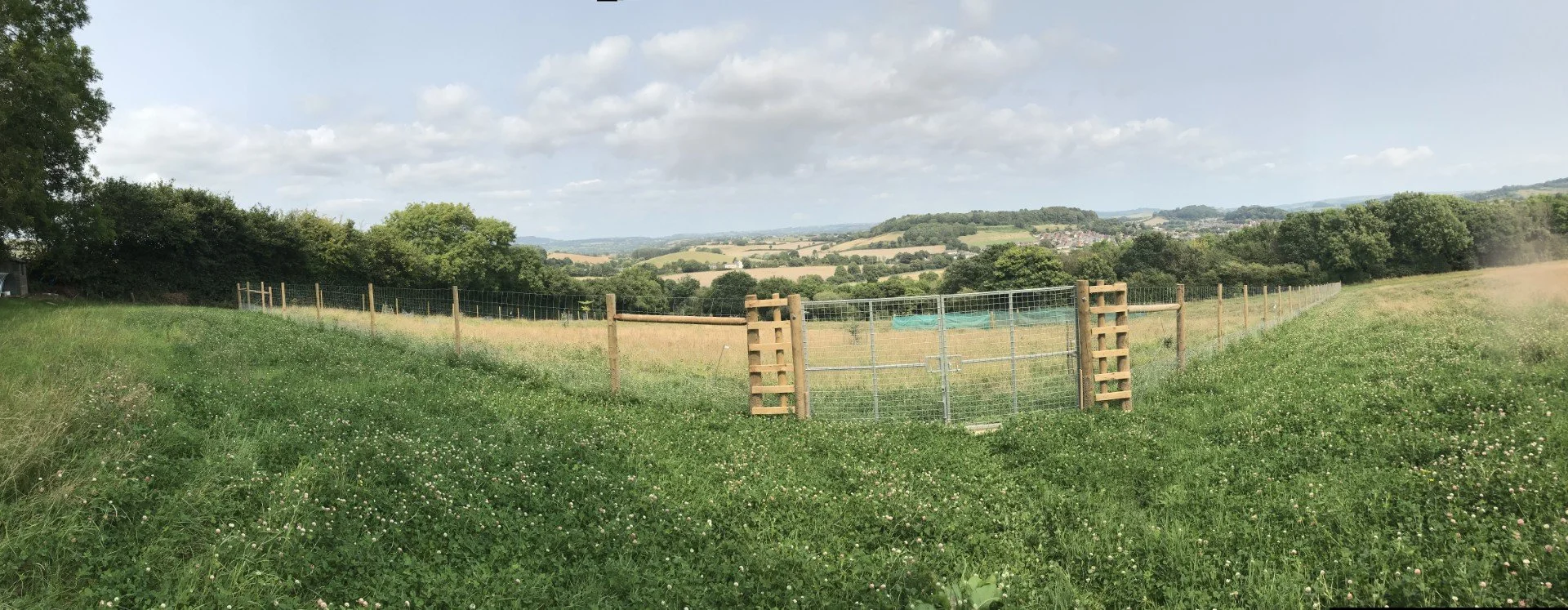
The multi crop orchard is a two acre fenced area to keep out deer and, we hope, rabbits! Within that area is a netted circle containing Almonds and Chilean Guavas, and now surrounded by a circular shelter-belt hedge planting to give the occupants a little more comfort.
Alongside the perimeter of the multi-crop orchard is a further windbreak planting of willows and goumis (Elaeagnus multiflora). The willows were acquired from the coast road overhanging the verge, just before the farmer cut the hedge back. They were long cuttings.
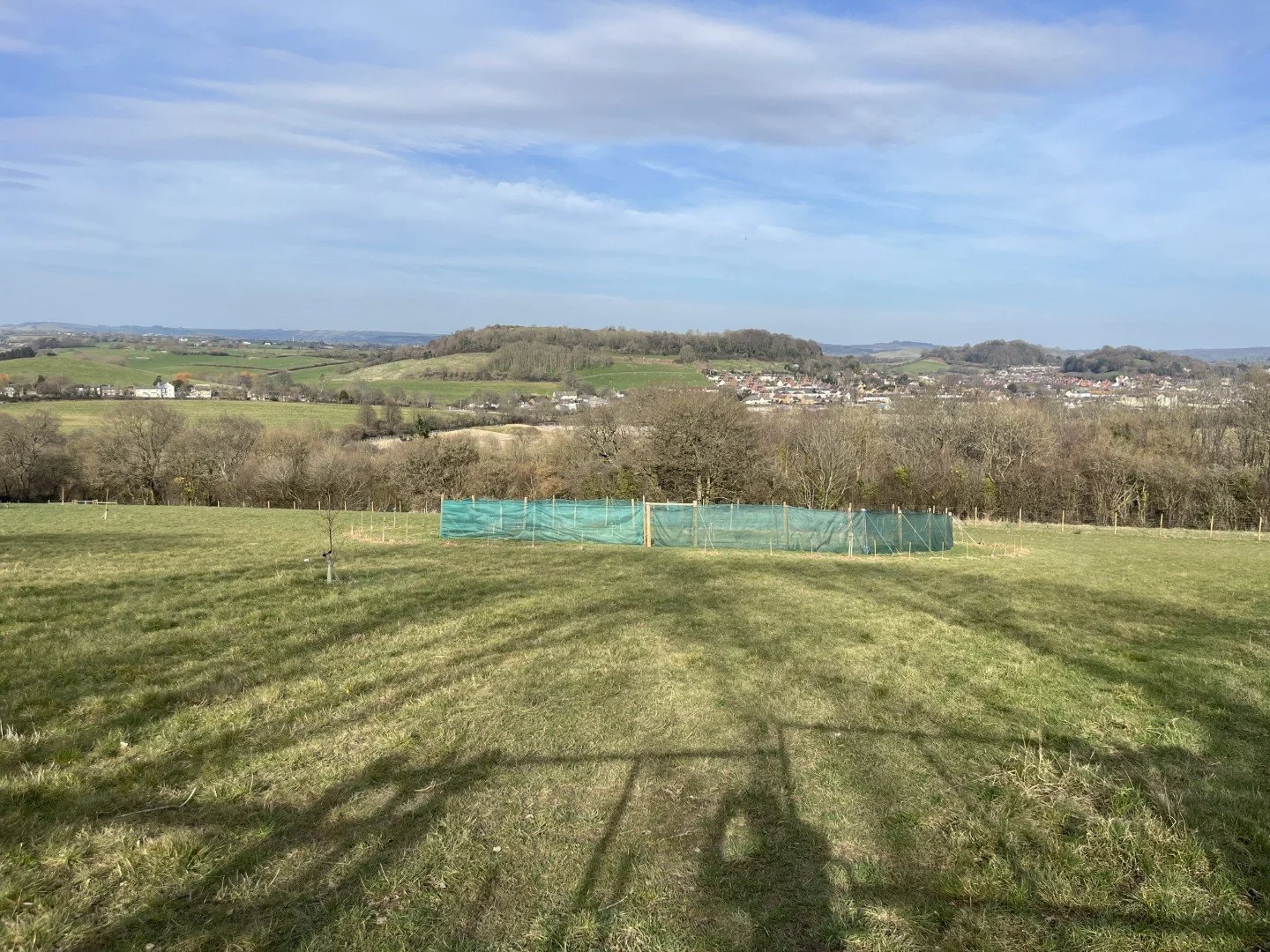
Almond enclosure
Water Capture and Storage
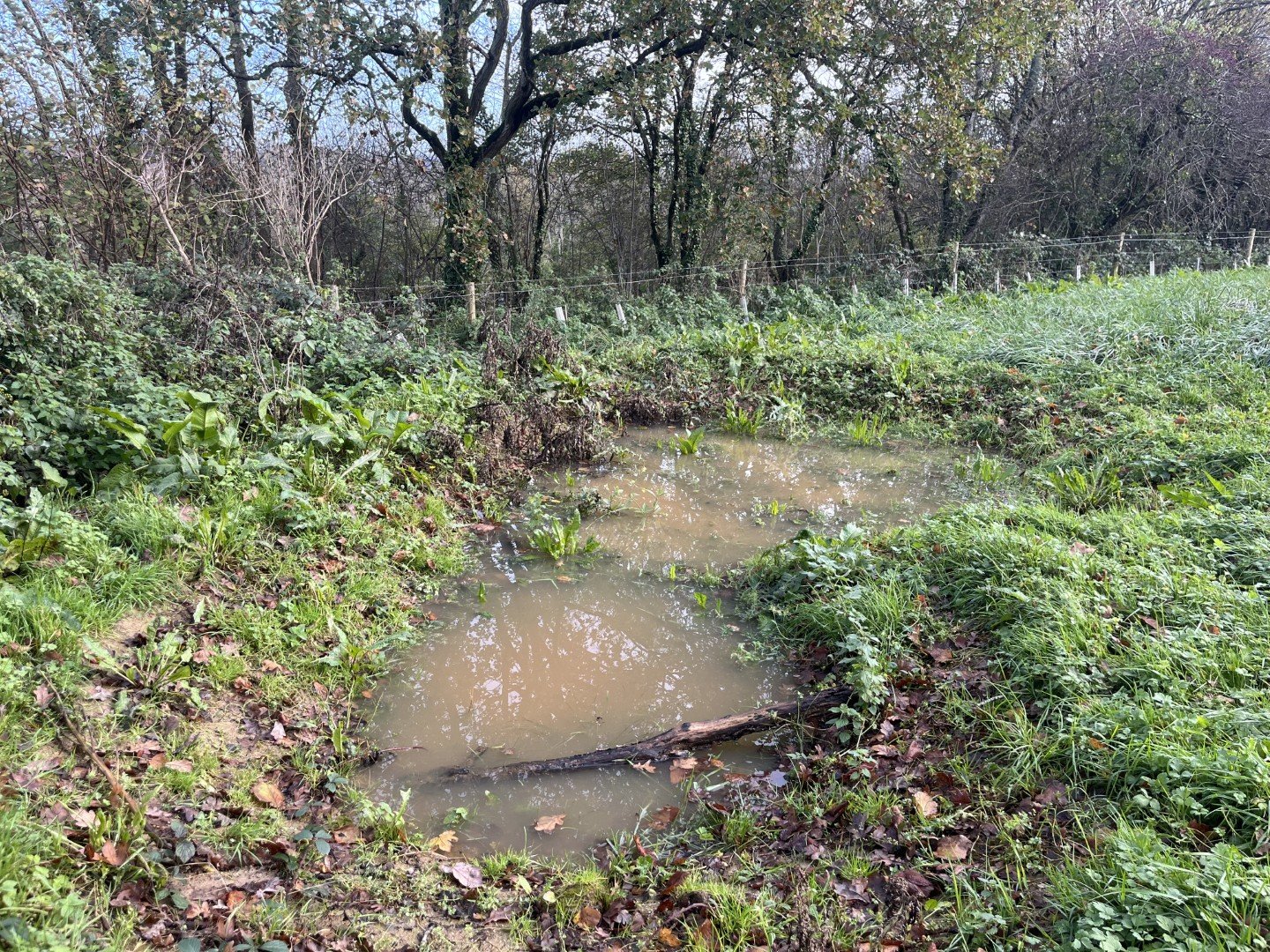
We have designated poorly drained areas across the site for water capture. Some of these areas will also serve as important areas for helping wildlife thrive - all important for an agro-ecological site. Water will also be captured and stored in tanks from rainwater off the barn. Across the larger field which is quite sloping, we are using mini-swales to quell run off and help maintain moisture in the ground in times of drought - now becoming more frequent.
Pond area
Soil Analysis and Worm Count
Soil analysis was undertaken in January 2023 to check for nutrient levels and organic matter. The soil is a neutral to acid pH, and organic matter typical for (recent) agriculturally productive soil at around 4.5. Results for the latest soil analysis is awaited.
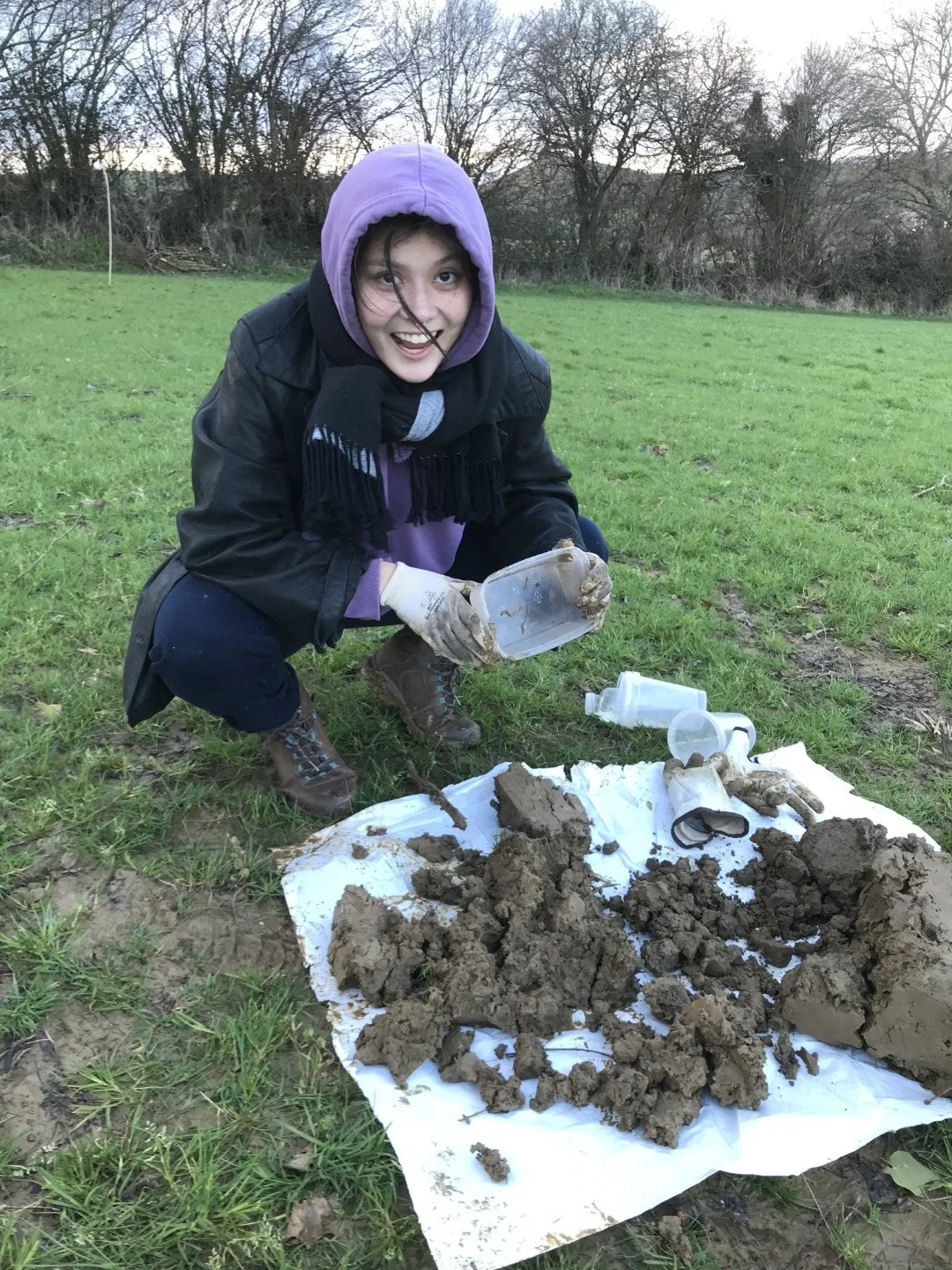
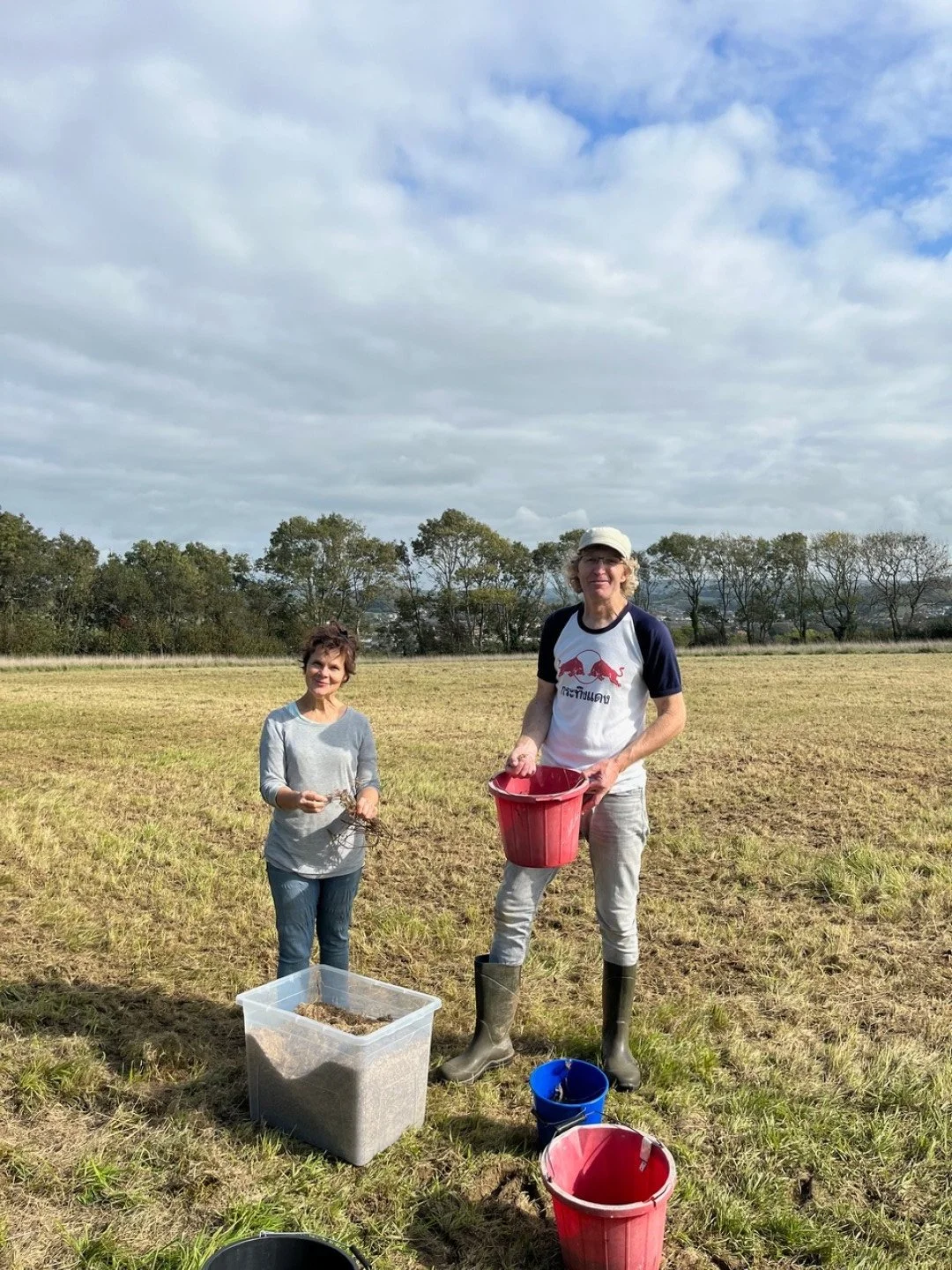
We counted worms in a spadeful of soil at 11 locations in both fields in February 2024, December 2024, and December 2025. Over this timeframe, we had a 9% increase in worm numbers, with a discernible increase in worm size. We observed that taking hay seems to coincide with a small reduction in worm numbers. In areas where hay was not taken, numbers increased. In one such area within the orchard, worm numbers more than doubled.
Counting worms, February 2024
Soil Issues
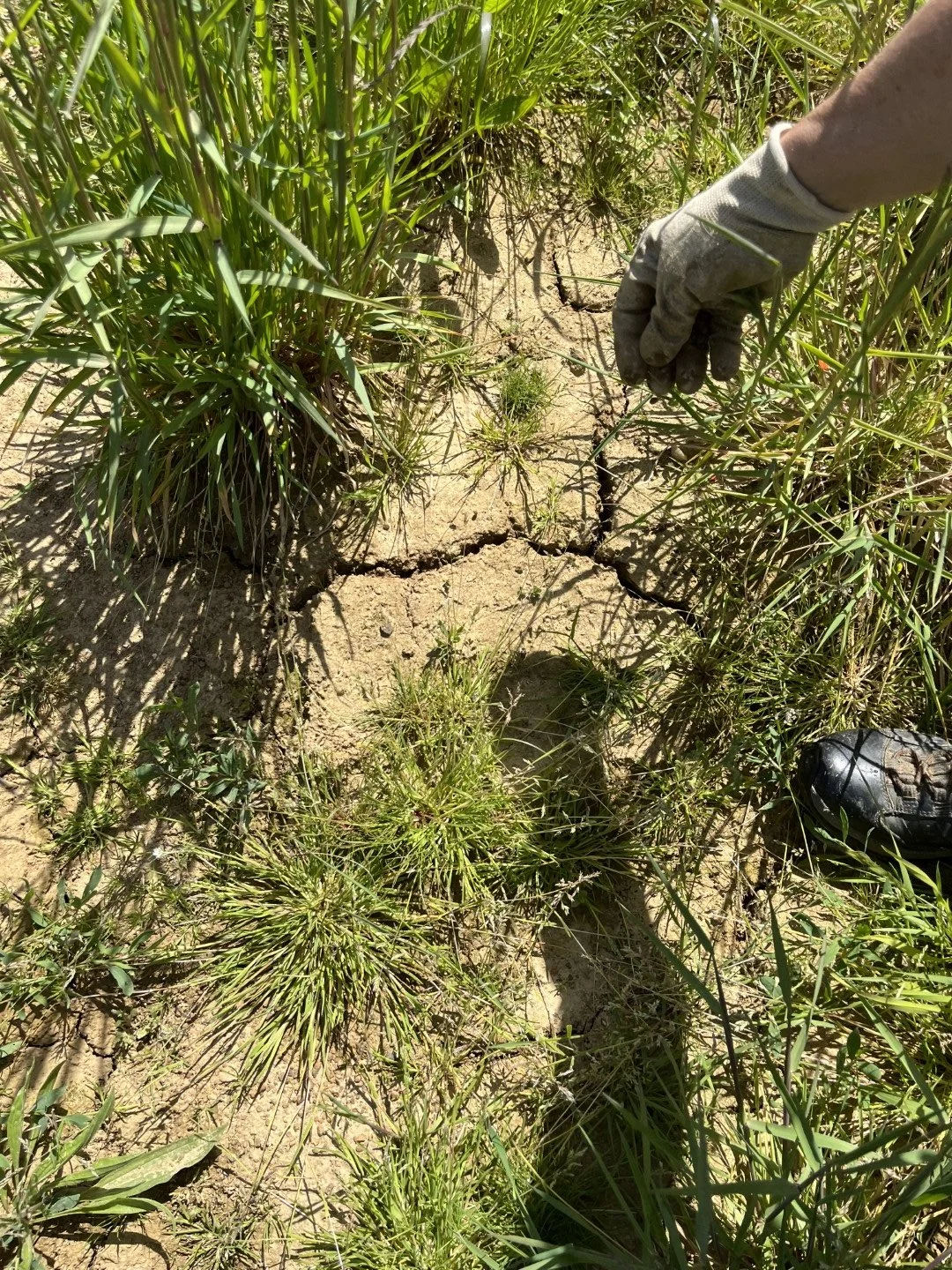
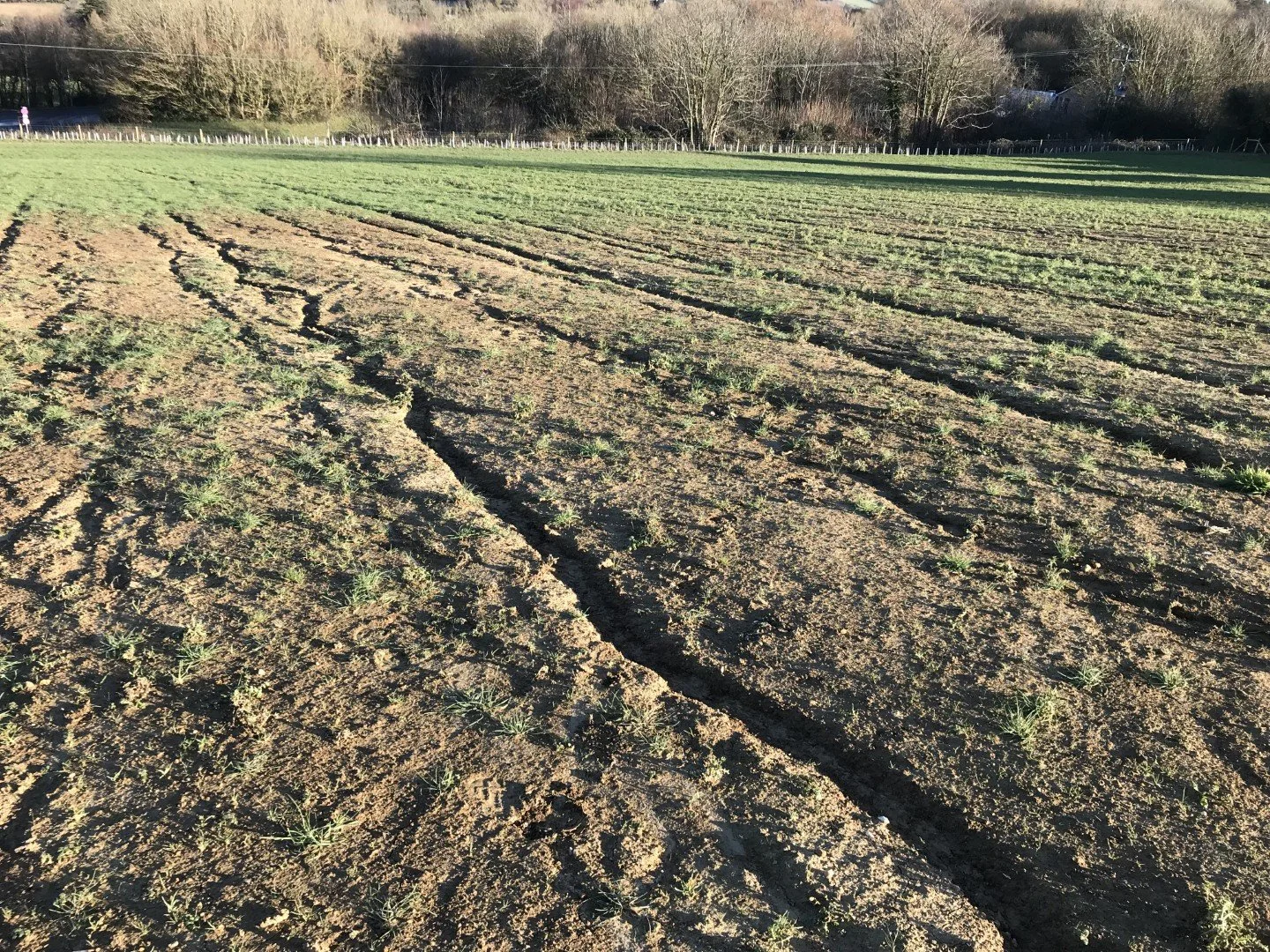
The cracked soil was extremely dry. Downhill furrows were caused by contract farmers ploughing downhill on a slope and subsequent rainfall rather than ploughing on contour – which of course, takes more time - but, we were lucky to get a farmer to come and help us as we had no machinery.
The dug out soil was from heavily capped areas and we replaced some of this with lighter topsoil dug from existing hedgerows. This should have the additional benefit of inputting mycorrhizal funghi from the hedgerow soil to the planting hole here where the new tree will go.
Soil in the first year, Sprinf 2023
Erosion after record rains, January 2024
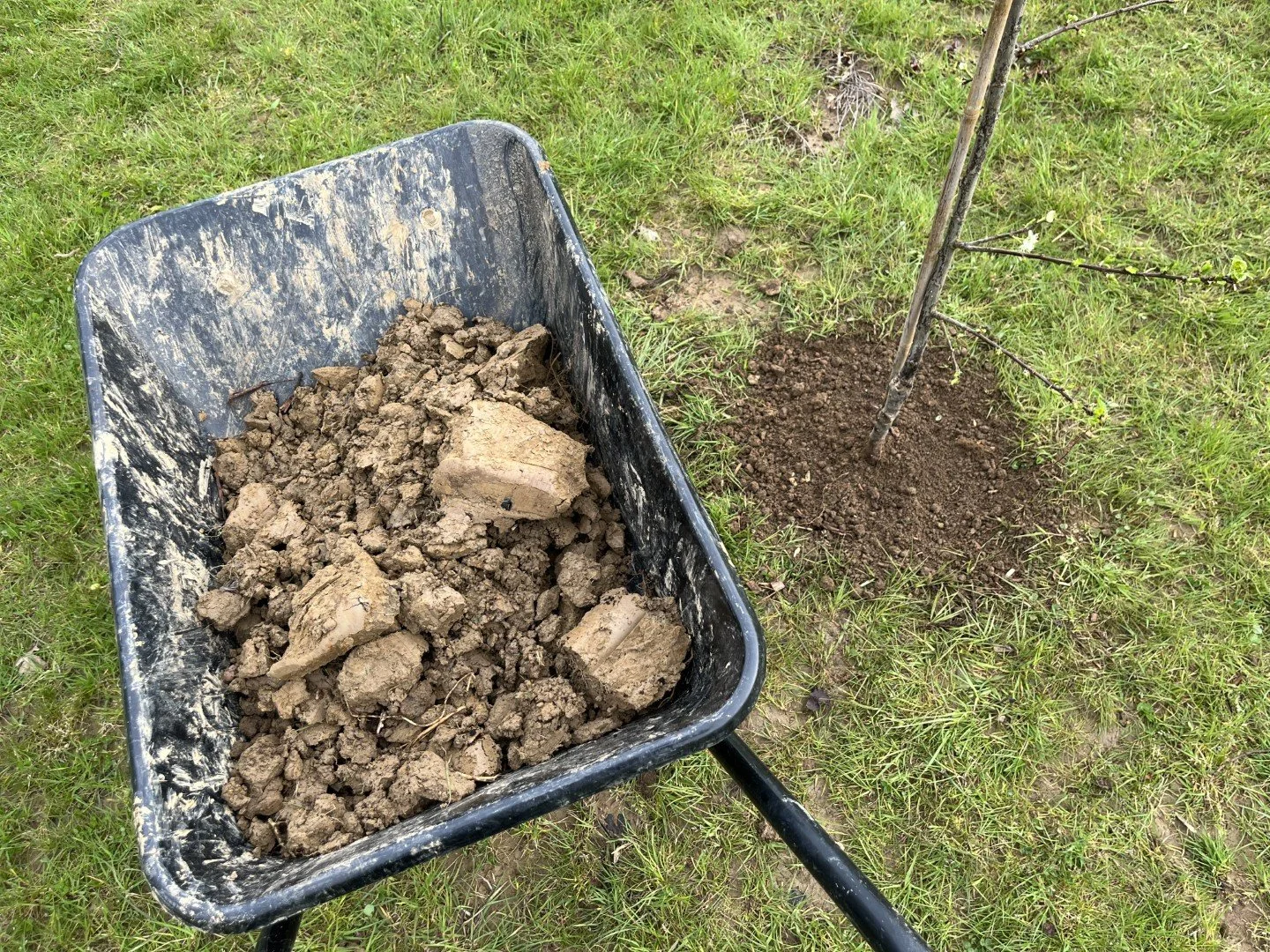
Compacted soil, Spring 2023
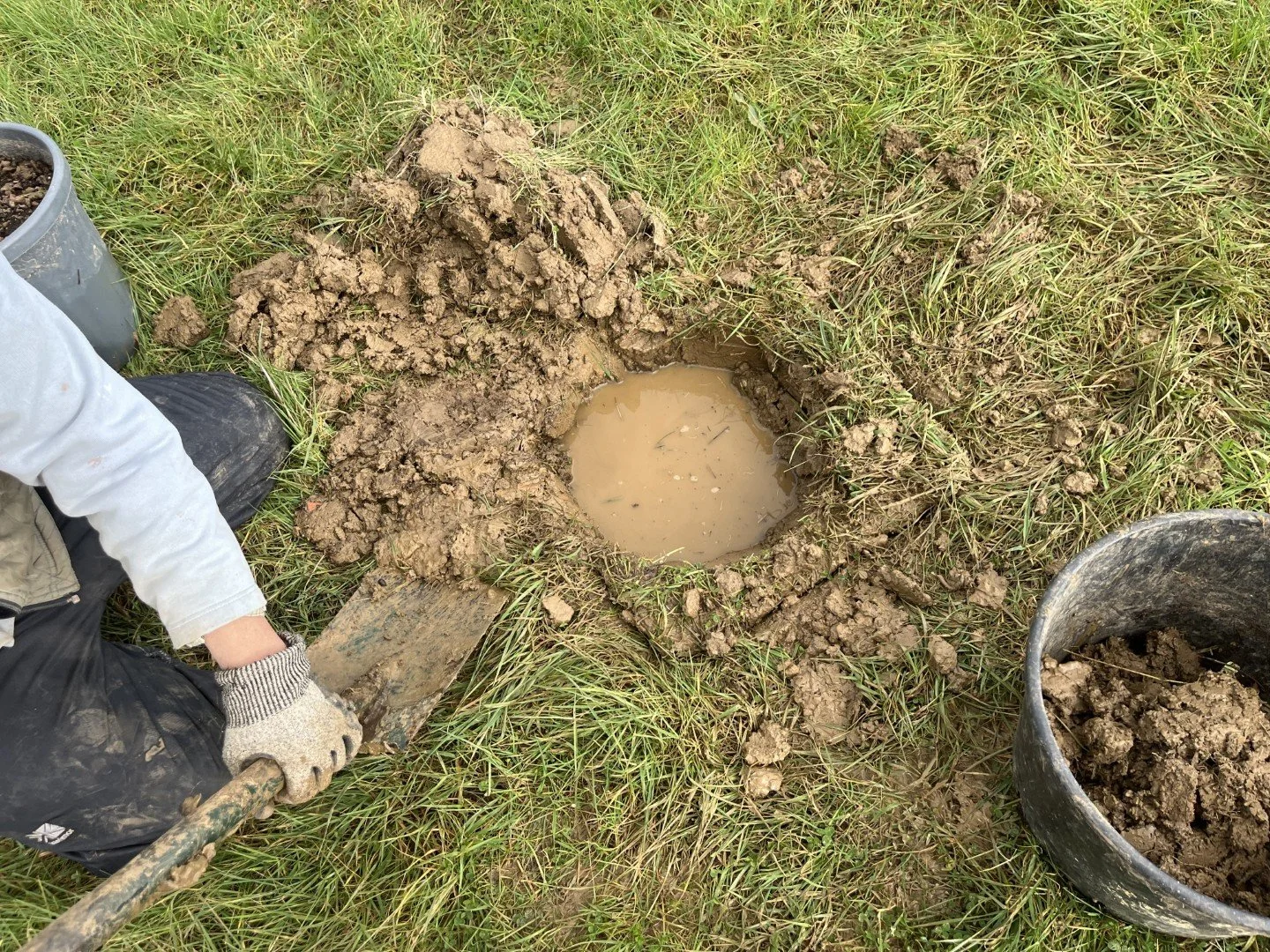
Waterlogged Soil, Spring 2023
Some Solutions
In the first winter, we planted cover crops in the areas adjacent to wildflower meadows. The cover crop was a mix of annual rye and vetch. Tall heads of the invasive arable black grass can be seen in background.
In the next year, we laid land drains, and shallow ploughed and disced the soil in the worst areas, where we had been unable to walk underfoot. These areas were then sown with traditional meadow grasses.
Planting traditional perennial meadow grasses helped with the problem of the notorious annual weed of arable fields: black grass, which had sprung up through the initial cover crop. Black grass can reduce the yield of wheat crops by up to 70%.
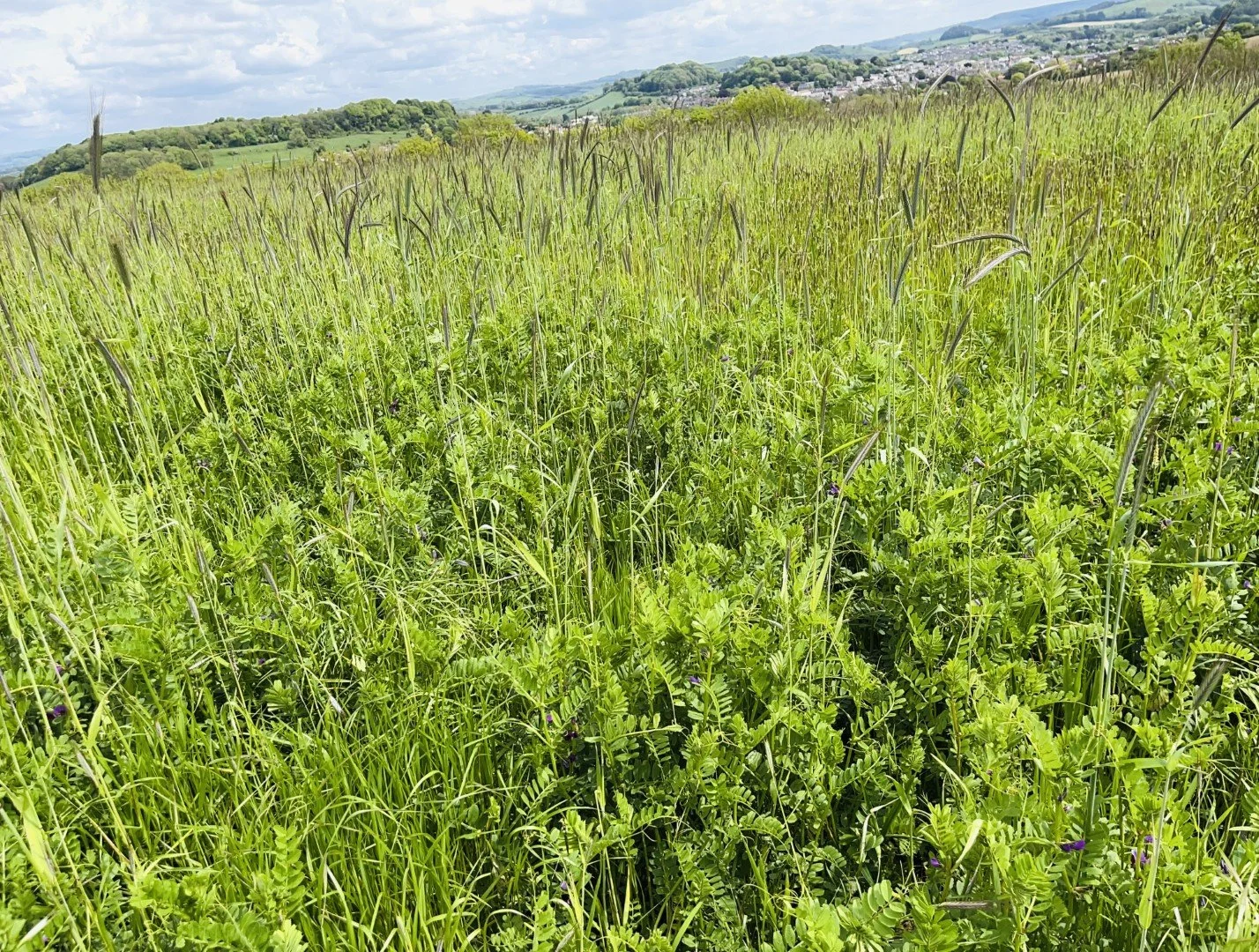
Cover crop (with Black Grass)
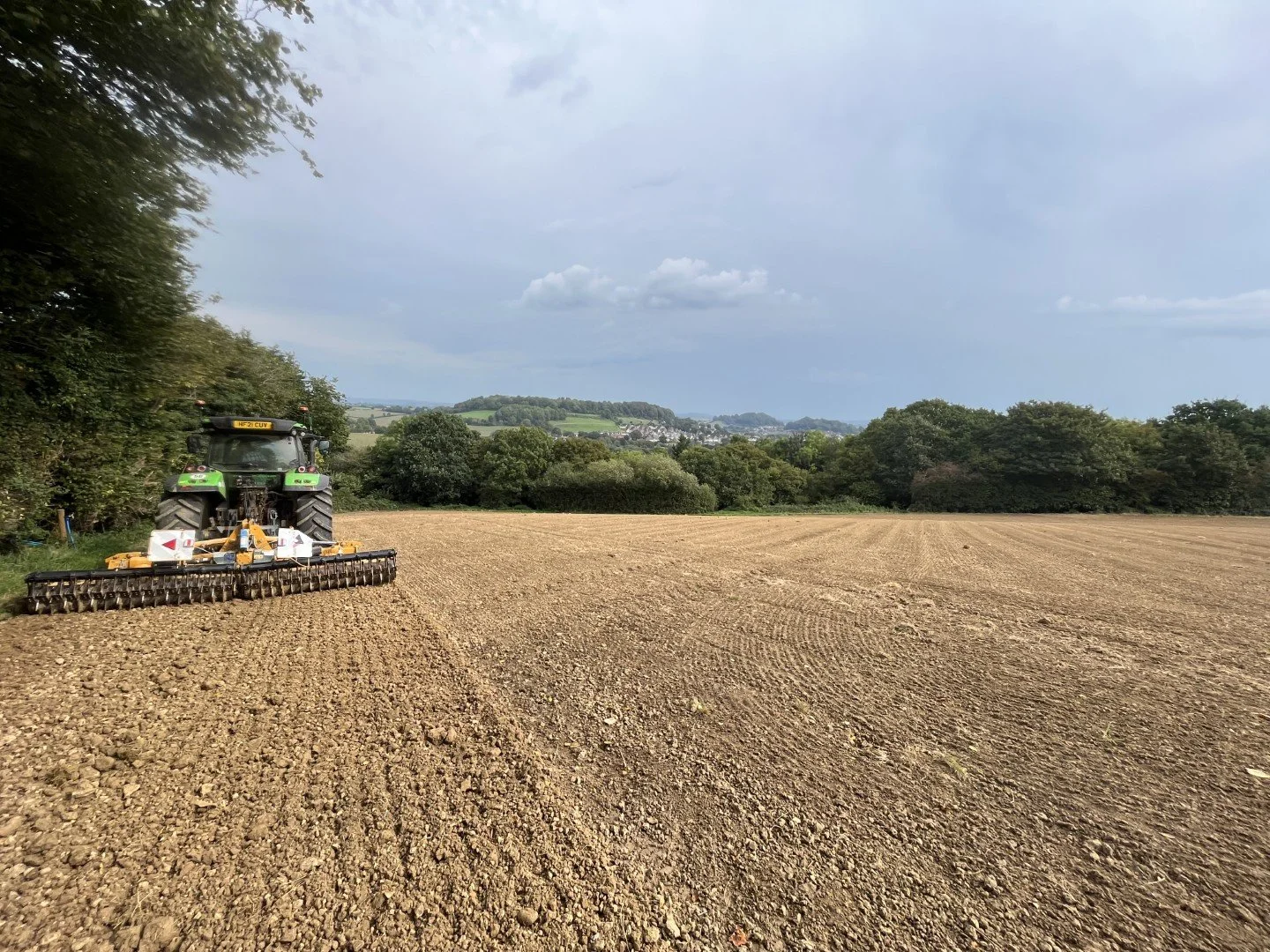
Discing
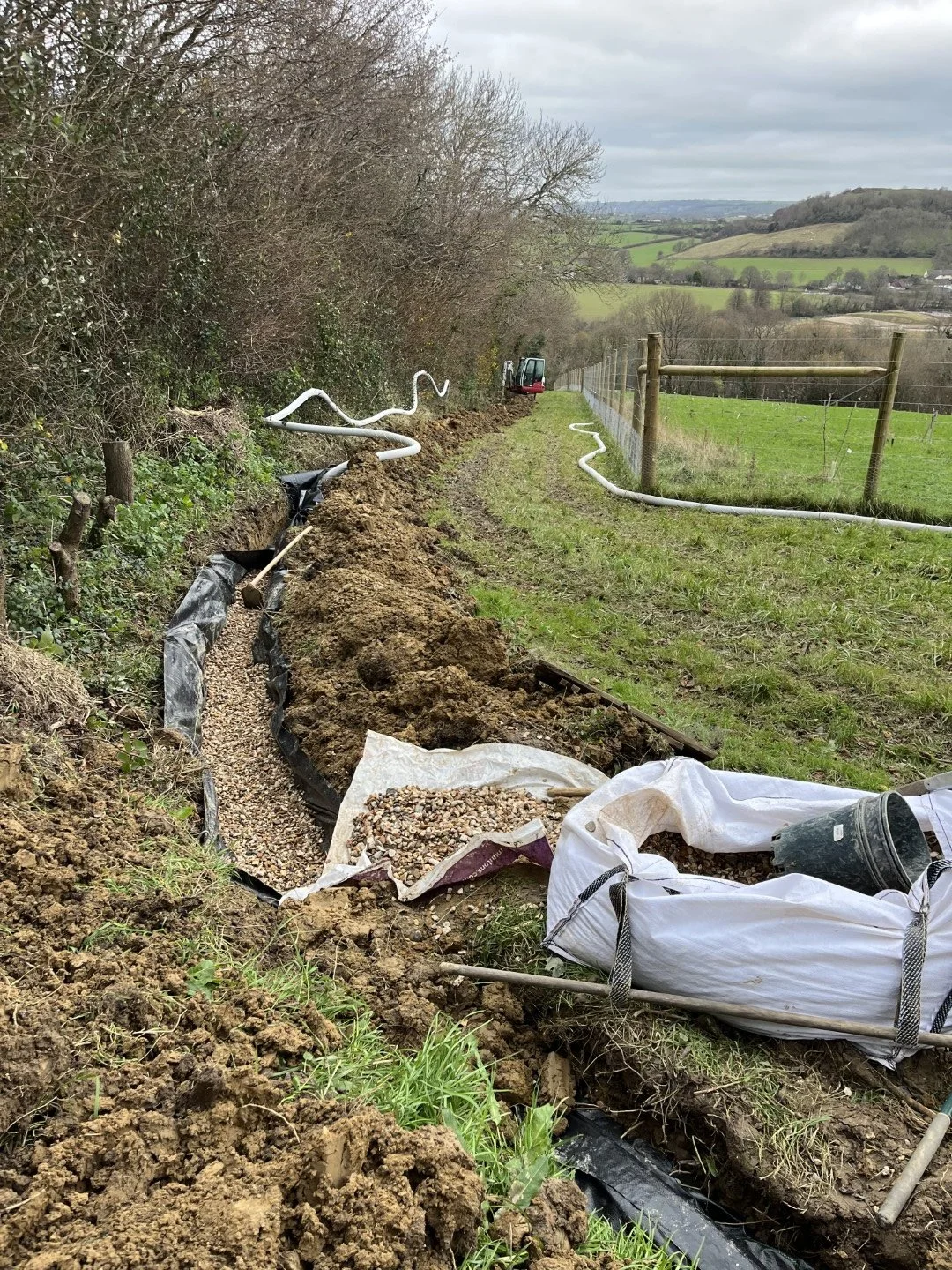
Laying a drain
Sowing Wildflower Meadows
We sowed cornfield annuals to provide cover while the first year of perennial meadow seed sourced from Goren Farm was getting established. These areas were then sown with traditional meadow grasses to provide ground cover through winter, build soil structure via underground roots and encourage more insects through their flowers and habitat. Traditional meadow grasses also tend to be better than modern high sugar perennial rye grasses at co-existing with wildflowers being less competitive.
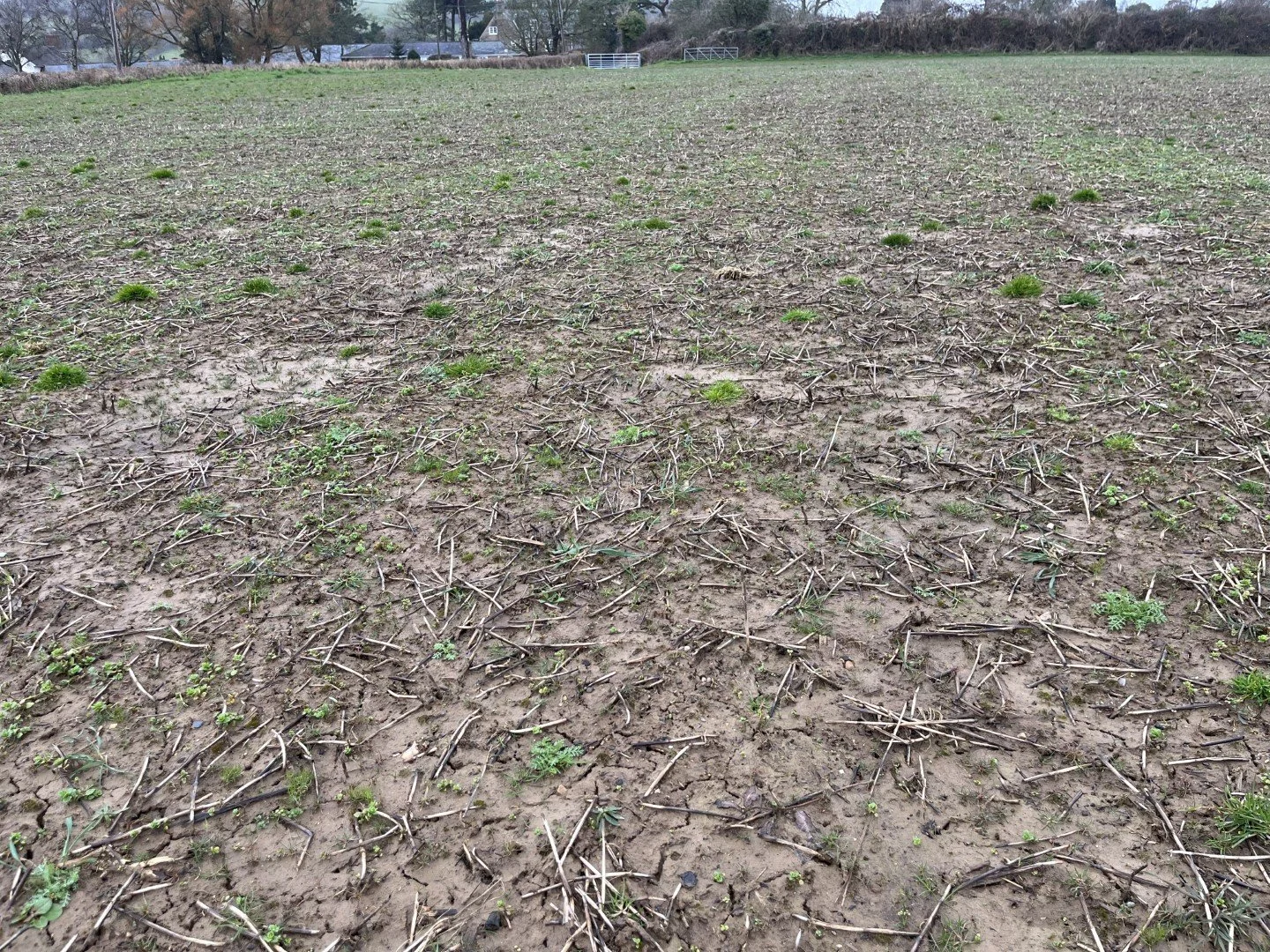
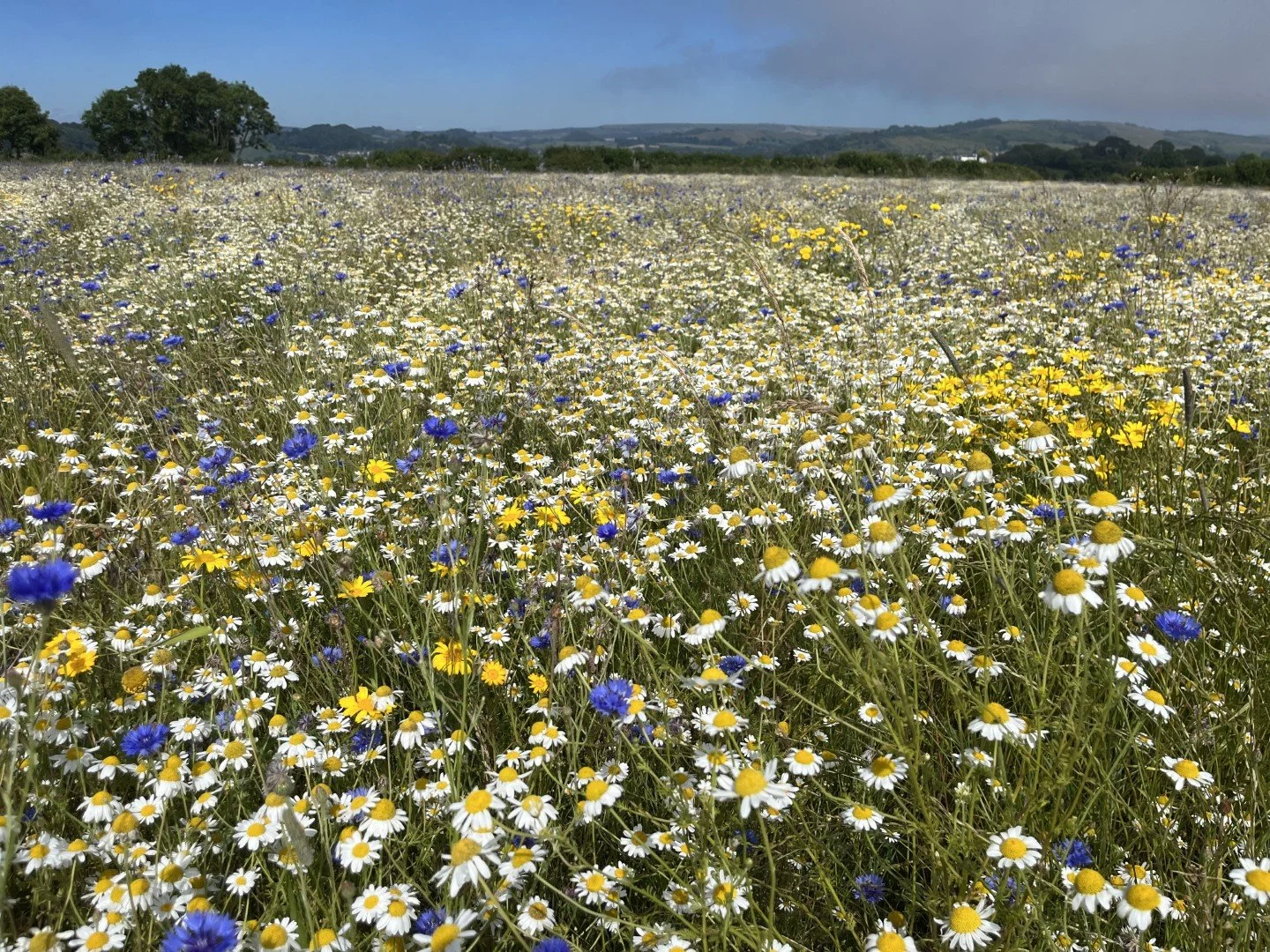
The first meadow, five months, after sowing, (see photo) illustrates how patience is needed. Three months later, in June 2023, the Cornfield annuals emerged to a spectacular display! Perennials did not properly flower until the following year.
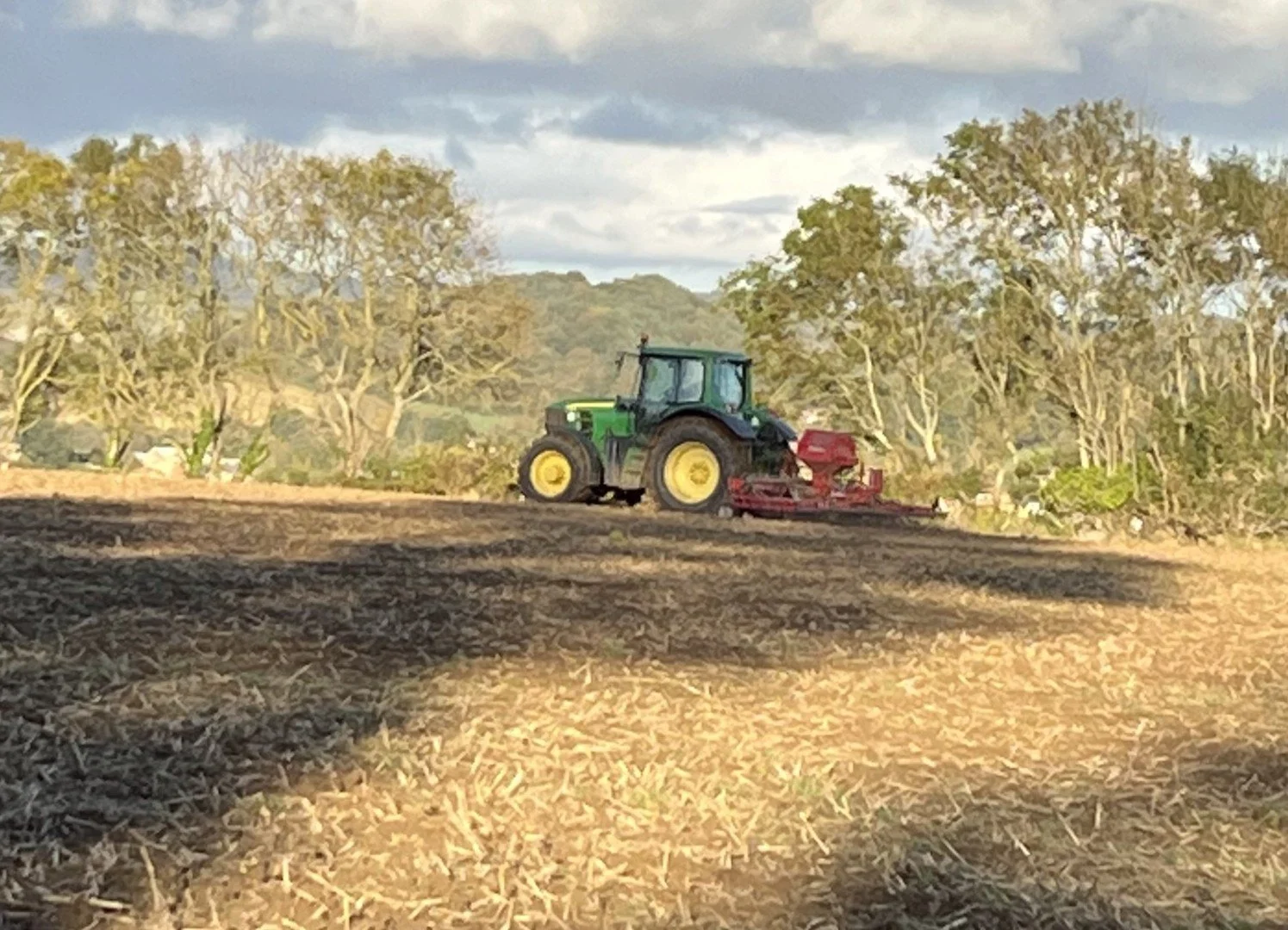
Sowing Cornfield Annuals, October 2022
5 months later, March 2023
Cornfield Annuals in bloom, June 2023
Dorset Wildlife donated from a collection of seed from four sites to form a second further wildflower meadow seed area. A third area in the larger field was drilled with wildflower seed from Cotswold Seeds.
The soil in the larger field is less nutrient rich and the grass is noticeably sparser, with a greater density of wildflowers. It will be interesting to see how the three areas fare over time. Certainly, in the top, smaller field, where the first meadow was sown, and where the soil is richer, we have seen a rapid increase in clover over the past autumn and a decline in numbers of those species in those requiring low fertility, such as wild carrot.
Lucy & Nick Gray sowing wildflower seeds
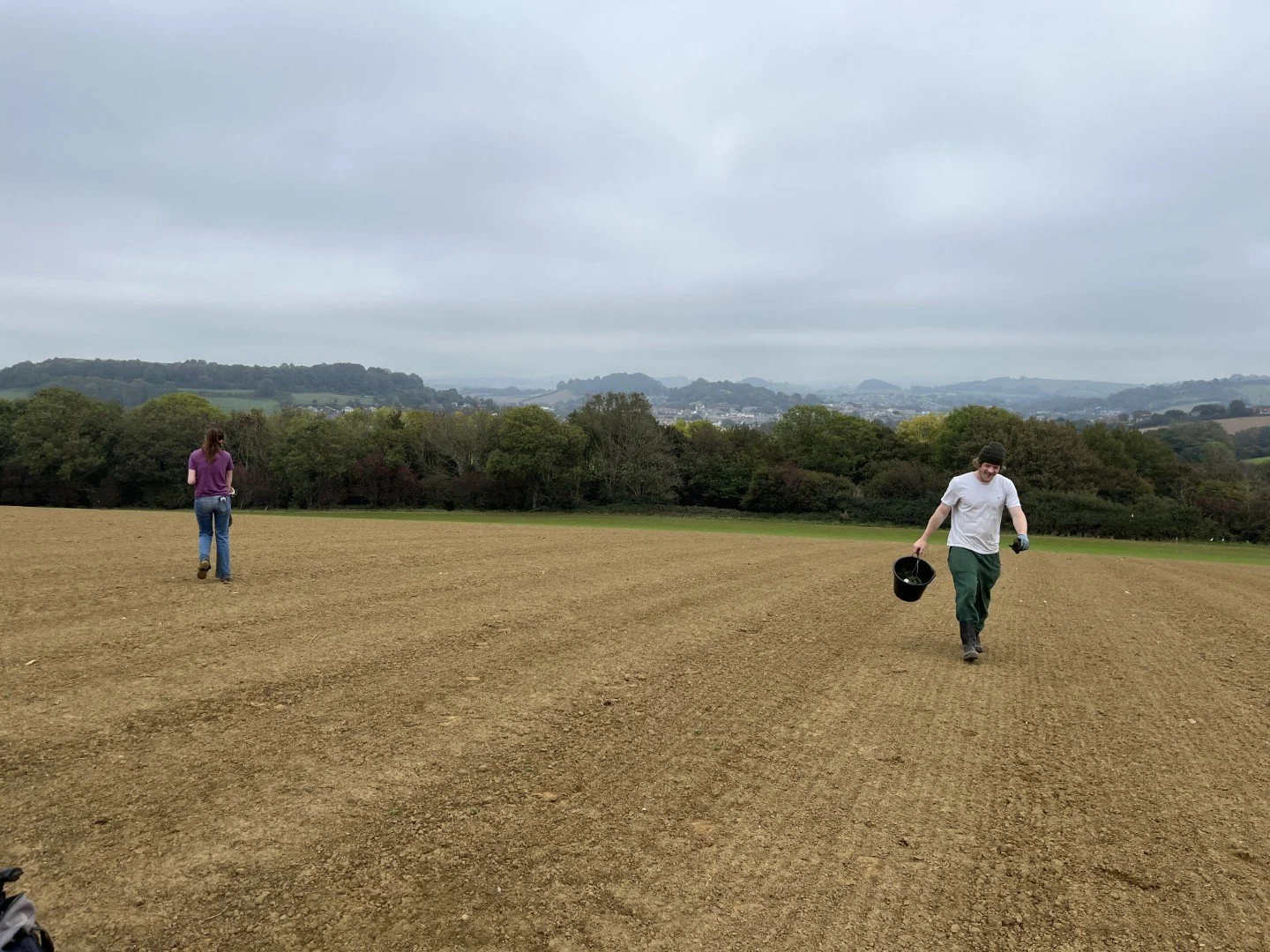
Neighbours helping to sow wildflower seeds
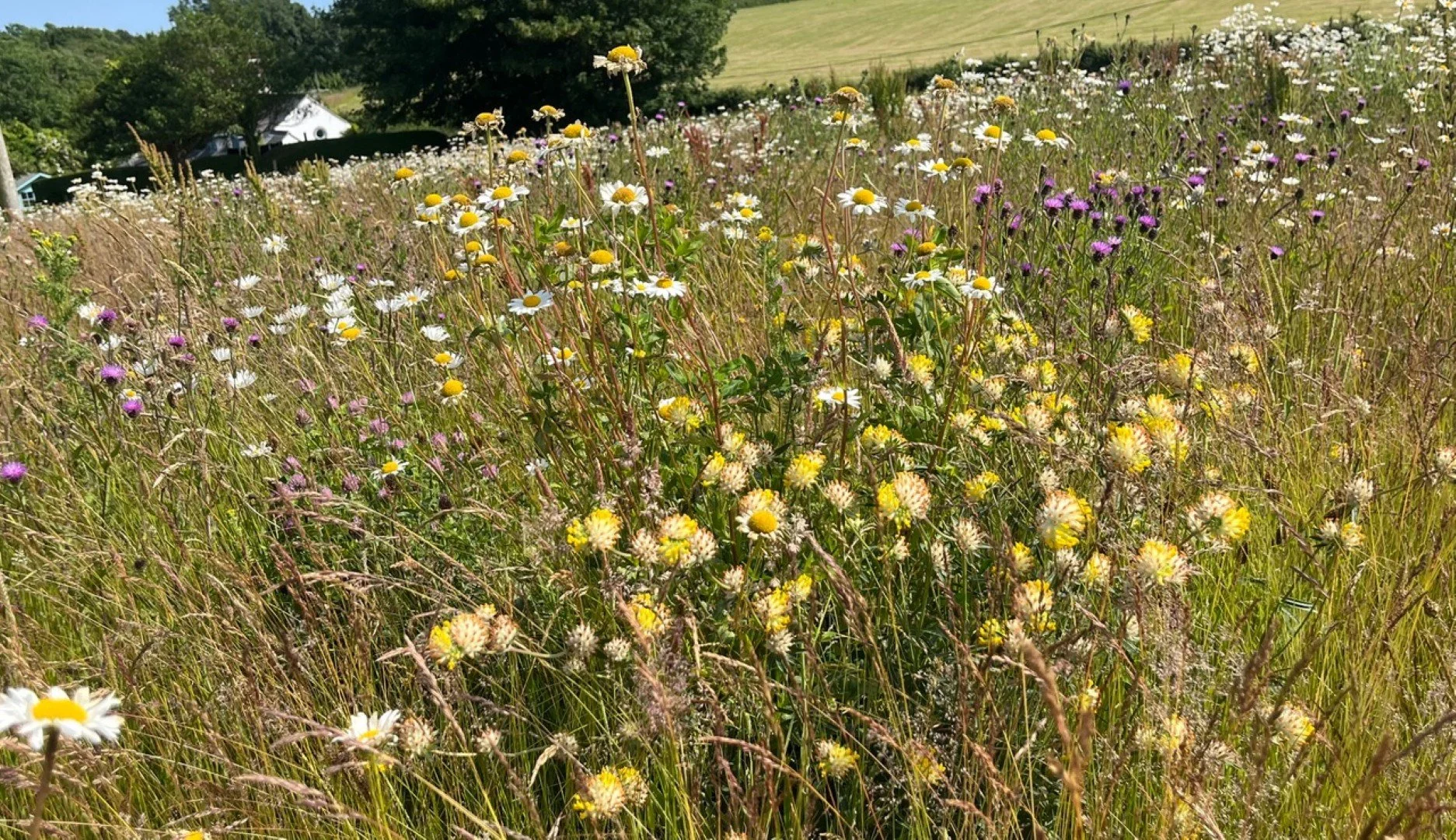
Kidney vetch, knapweed, oxeye daisies in large field meadow
New Hedging
Implementing further hedging was essential both for wildlife and to provide shelter for the multi crop orchard. Having only been used to relatively sheltered garden environments, we were unprepared for the full force (and damage to plants) of both the south-westerly and the north-easterly winds across our exposed 17 acre site.
The Great Dorset Hedge project was keen to support us and made a great effort helping plant our fourth 140m double row new hedge, bisecting the big field. We also received magnificent help from local volunteers - dedicated environmentalists from local groups!
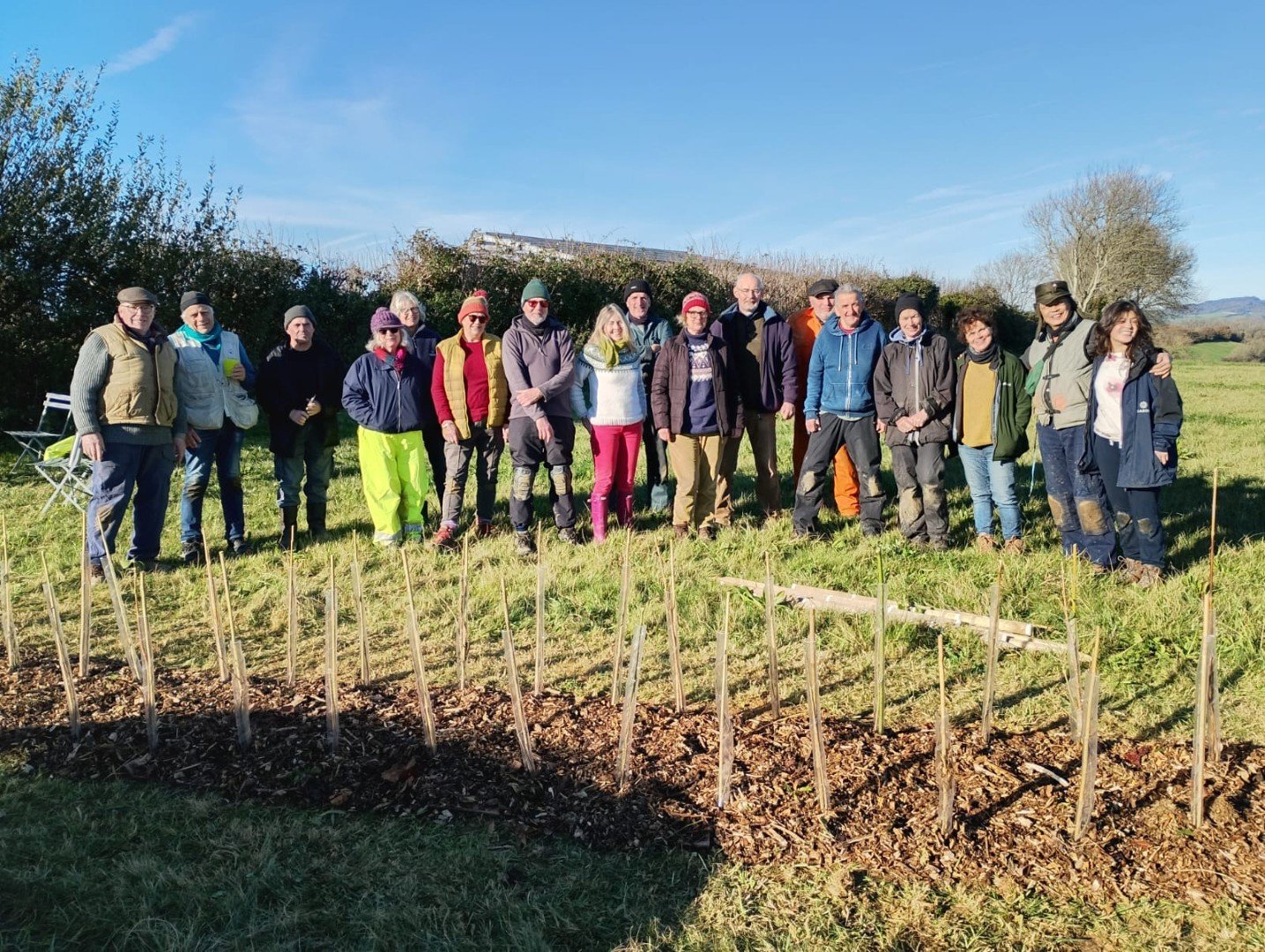
Dorset Hedging Team
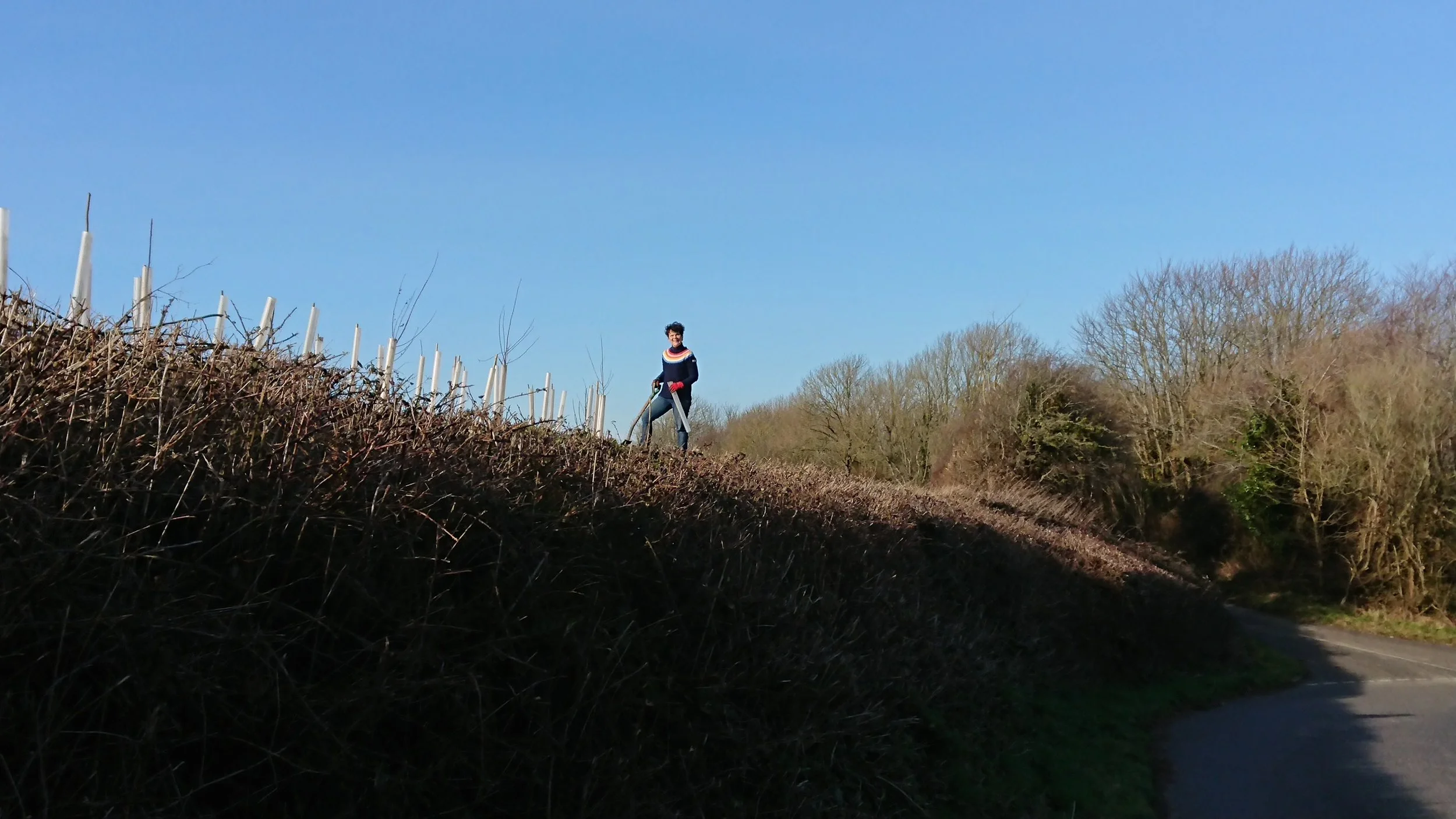
Lucy planting the first hedge
All our hedges are mulched with recycled cardboard from shops in Bridport and West Bay, and locally sourced chipped bark. All this sourced free - otherwise, I’m afraid we would be broke!
To properly protect a new hedge in areas with a substantial deer (or roaming livestock) population, it is essential to surround the hedge with fencing to help it establish.
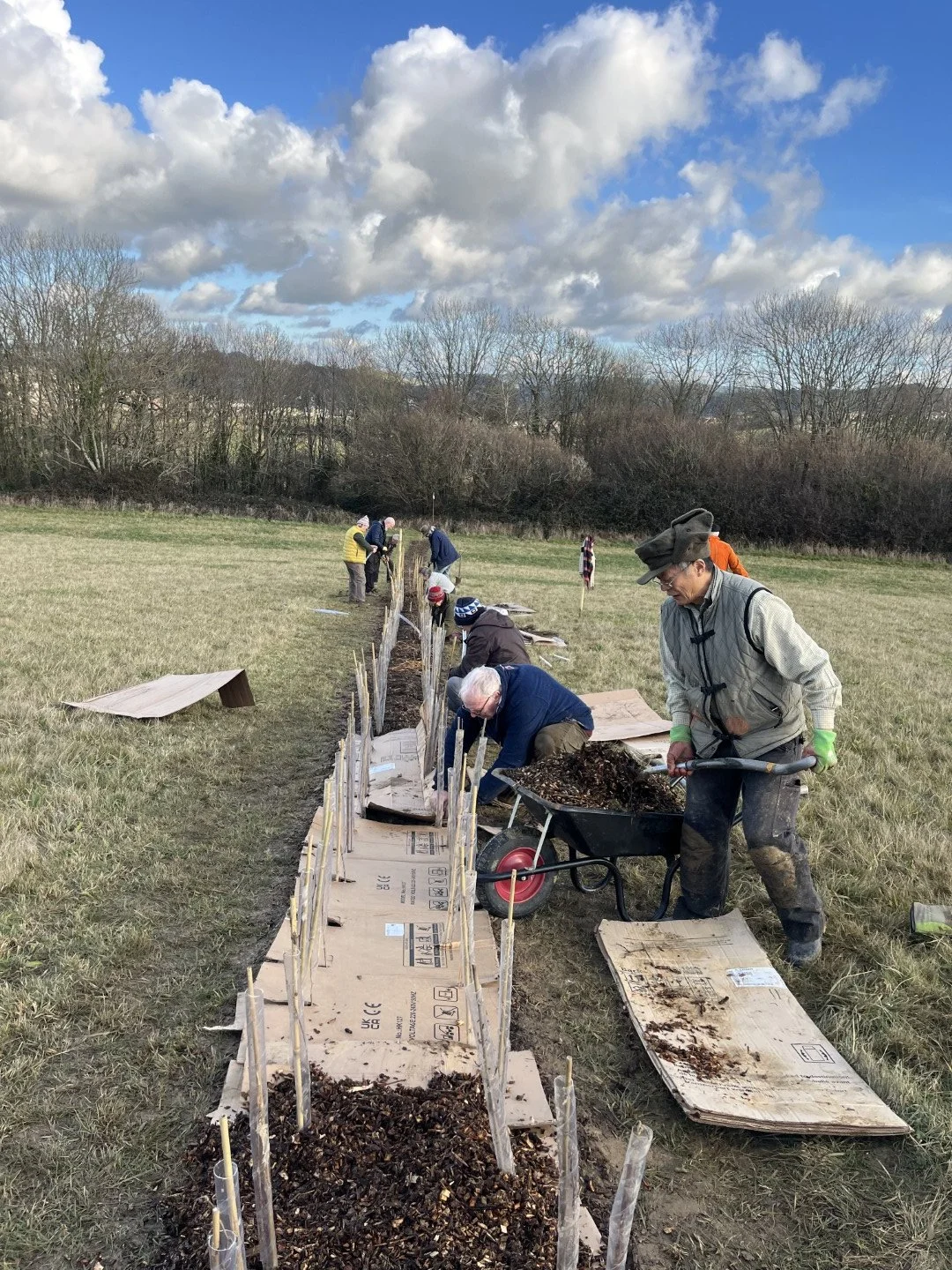
Cardboarding the hedge
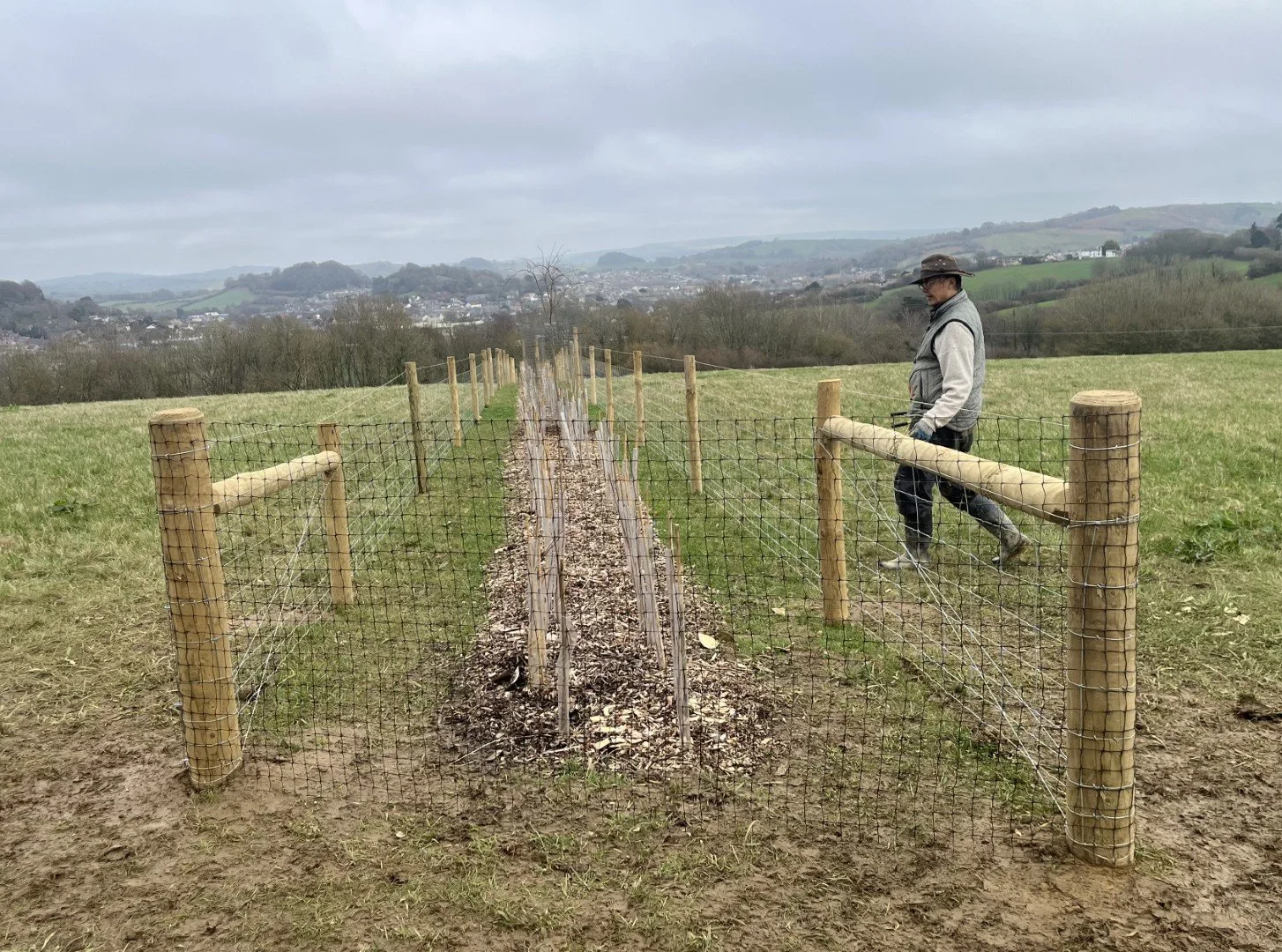
New hedge and fence
Tree Planting
Asian Pear ‘Shinseiki’
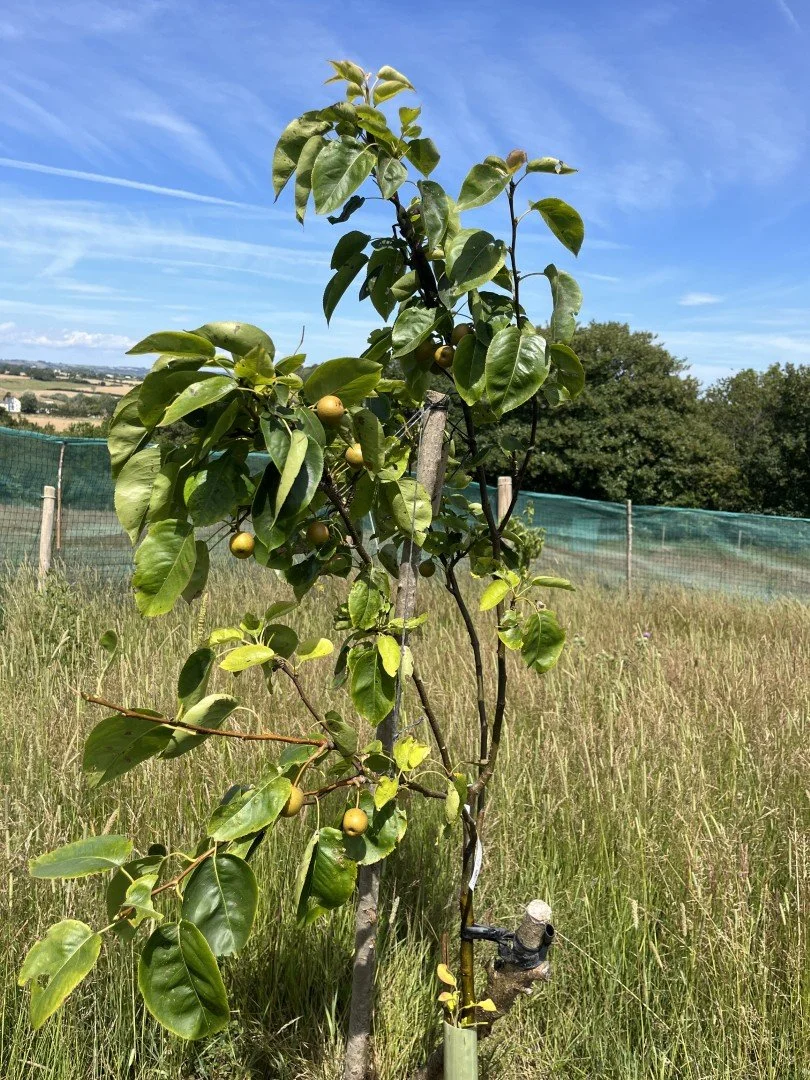
The Asian pear tastes like a cross between a pear and an apple with a aromatic refreshing taste and crisp texture. While delicious, it does not appear to store well unless refrigerated. The fruits shown here didn’t last on this occasion due to hornets all descending on it at the same time – this is the result of not yet having established enough other flowers and fruits in the surroundings.
Toona Sinesis
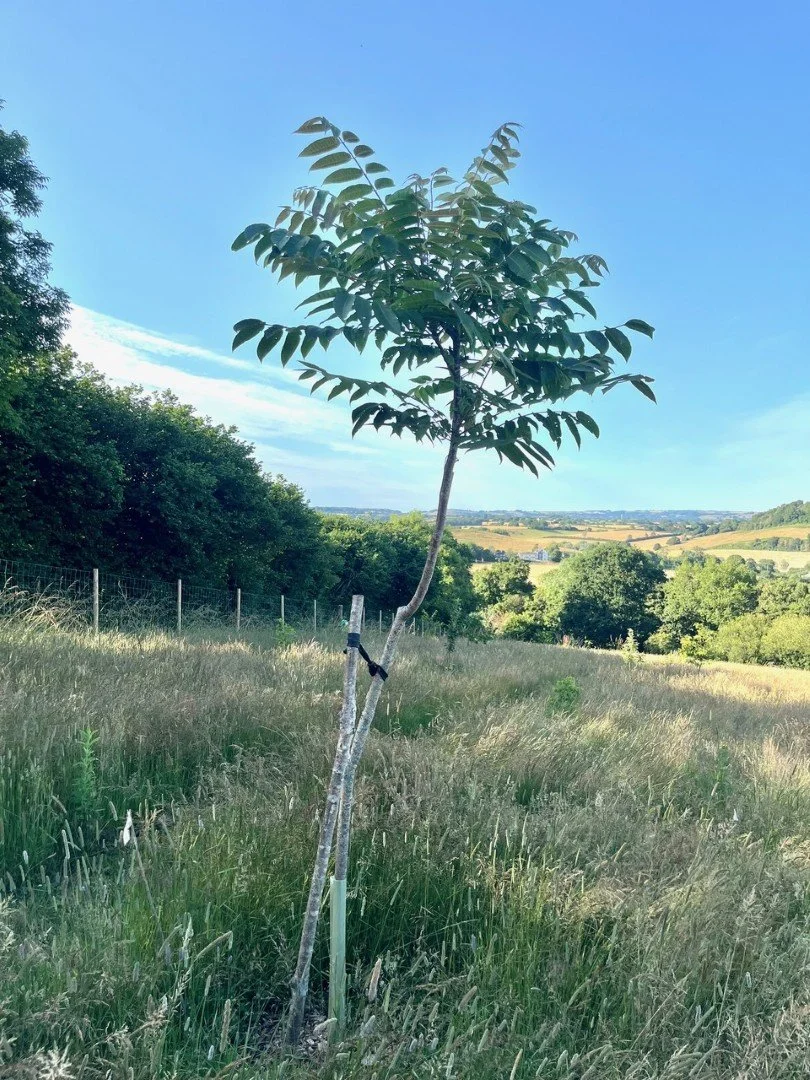
The toona tree’s smaller leaves can be harvested between March and May. They are delicious in stir fries, added towards the end. They have a unami flavour, but be warned: too much cooking spoils the flavour.
Sweet Chestnut
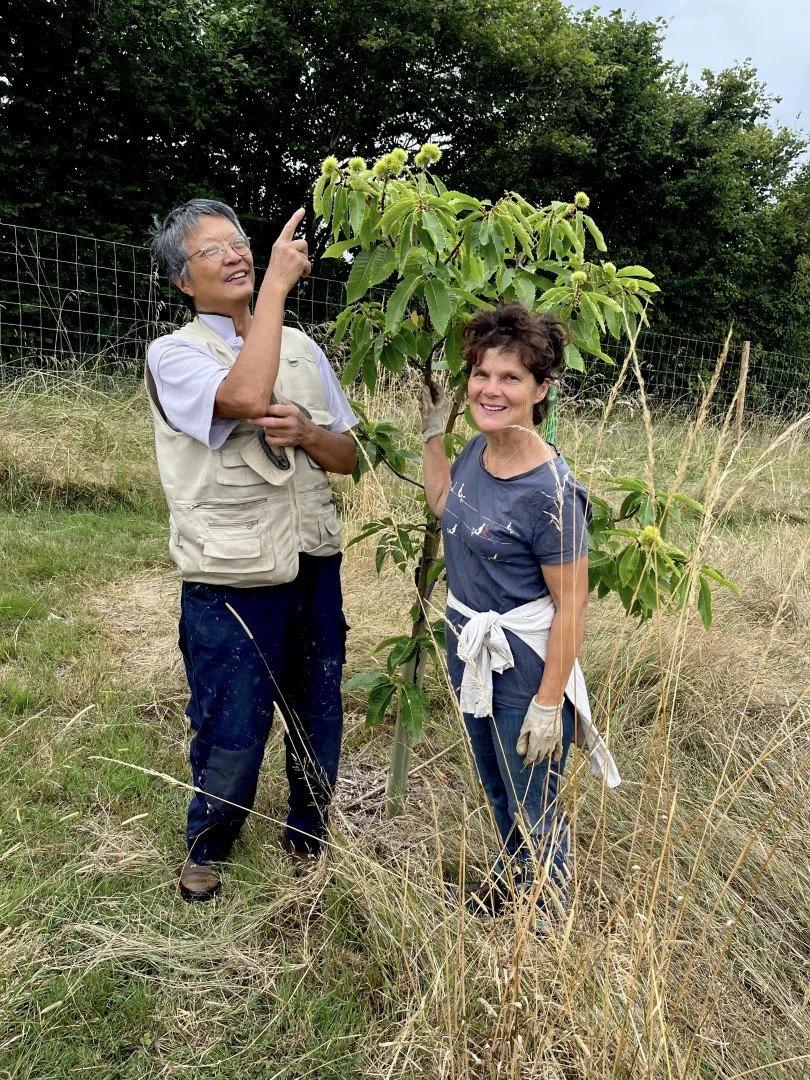
French cultivar ‘belle epine’ is one of the three grafted sweet chestnut trees we are growing here, selected for early cropping. Grafting gives earlier fruits, and we have already had a small crop in the second year of planting.
Medlar
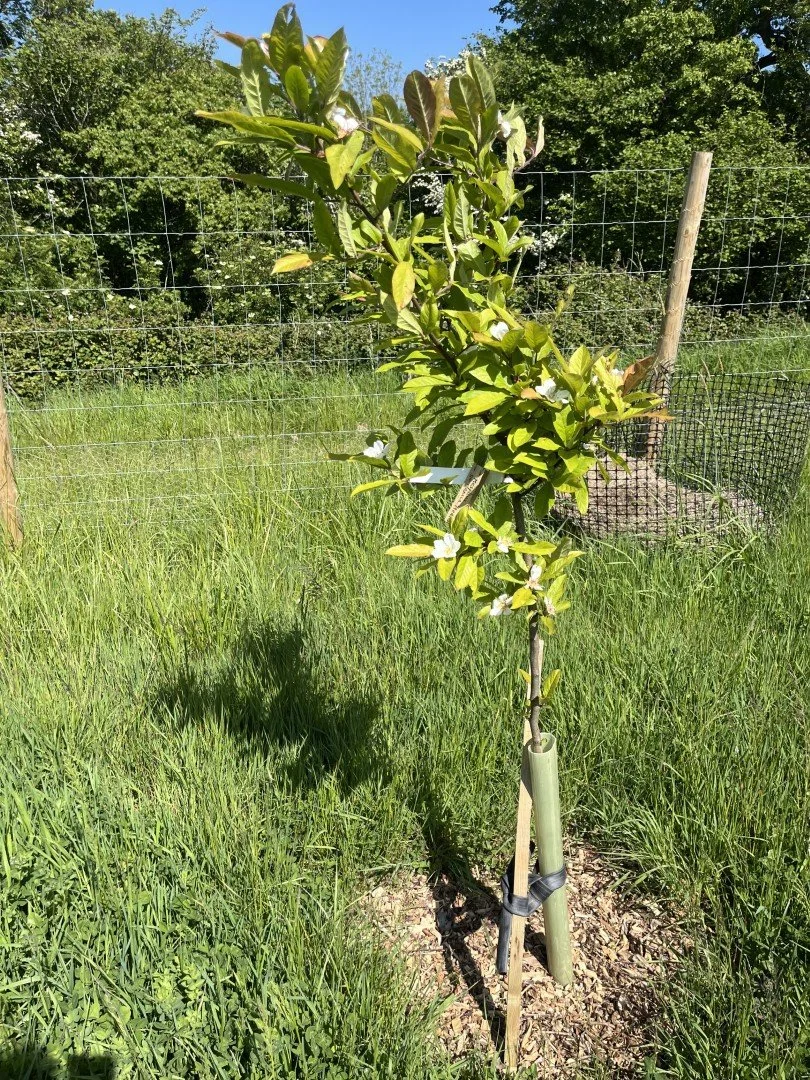
Medlar - reputed to be a popular fruit up to the 19th century, but disappeared from view because it needed to be ‘bletted’ (ie. well-rotted) before eating. It is harvested in December and stores well until ready to eat.
Persimmon
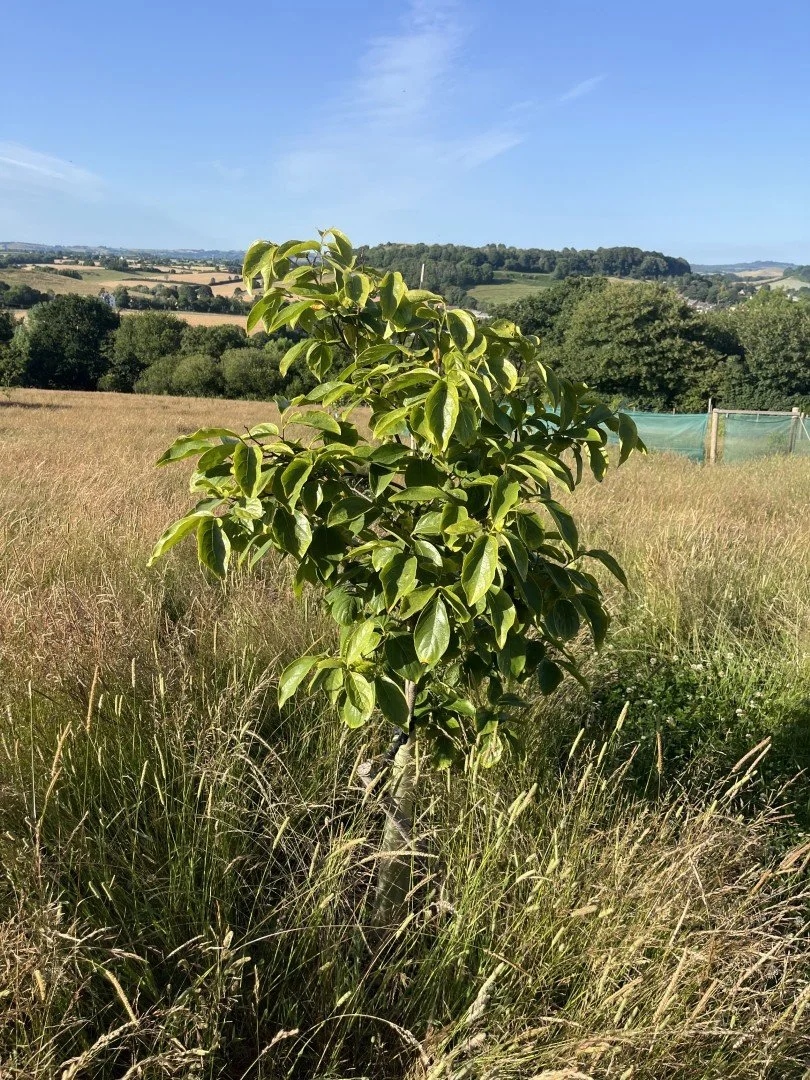
Persimmon diospyros ‘Fuyu’ (the crispy textured persimmon from North America) are doing well. We also have the less hardy persimmon ‘rojo’ as a trial.
Pecan
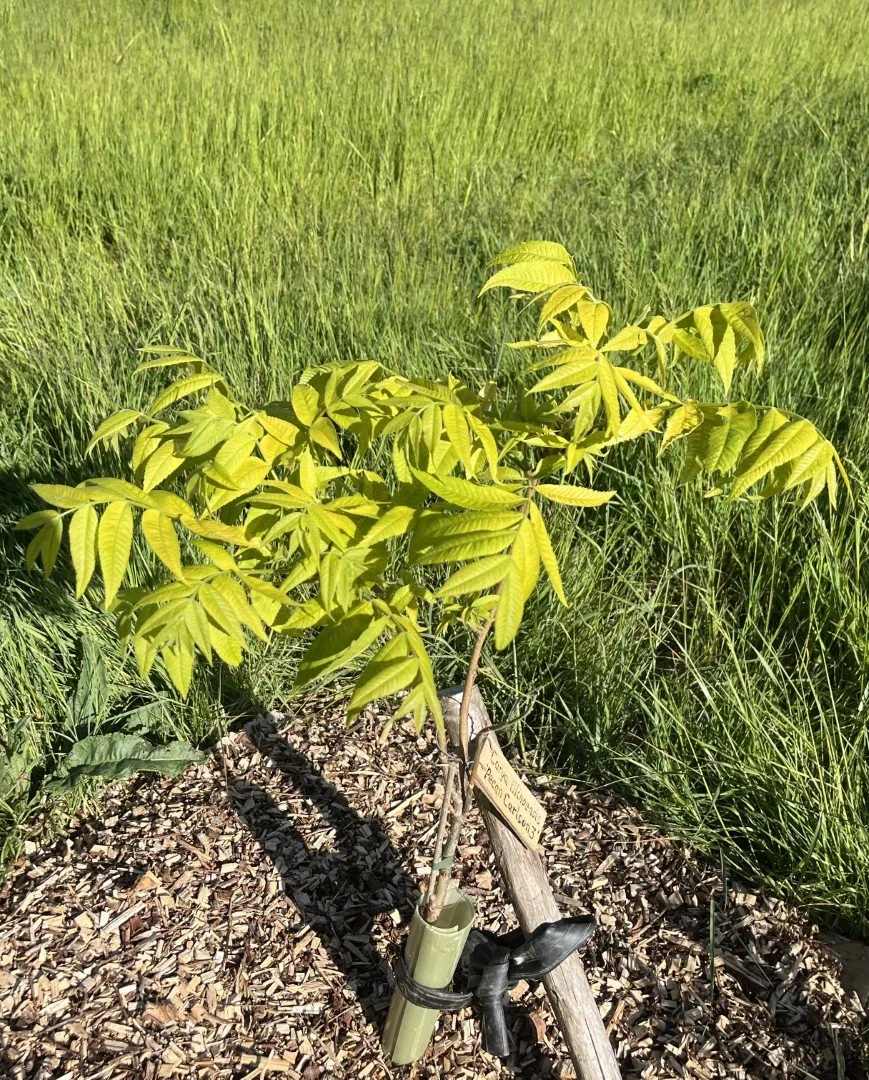
As with the chestnuts, we have sourced three grafted types of pecan, selected for early cropping. ‘Carlson 3’ is shown.
Almond
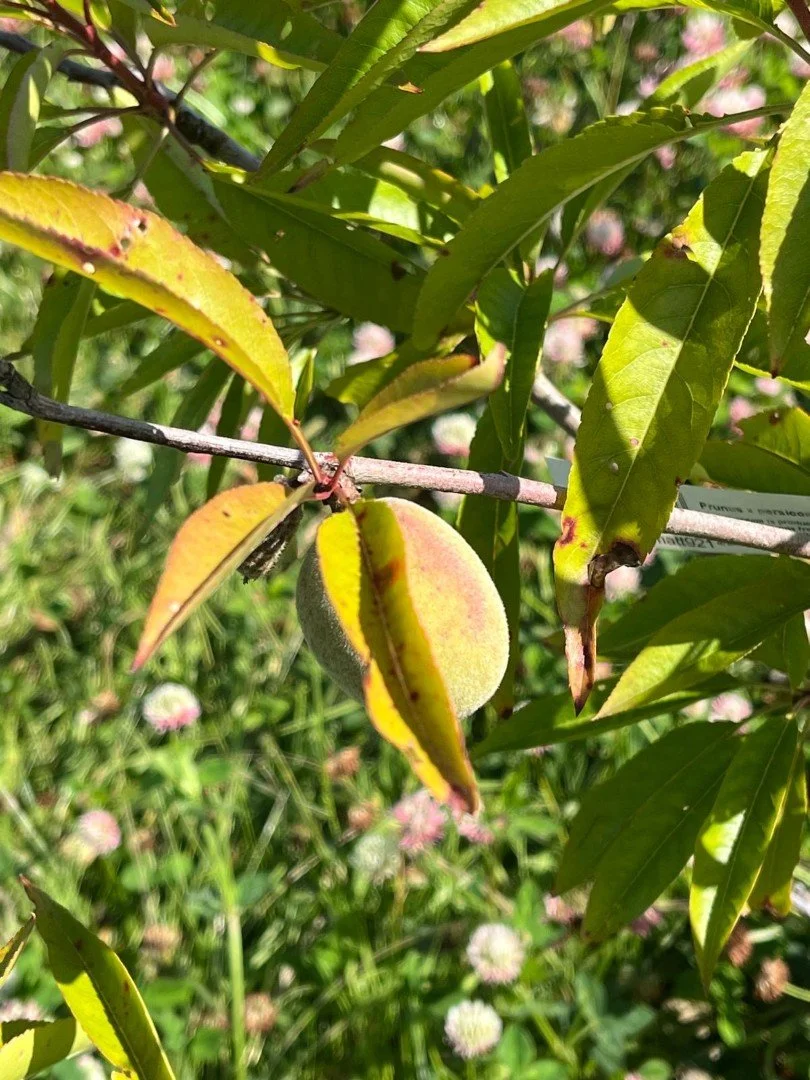
Our first almond
Our almonds are the trees we are watching most carefully because leaves, blossom and fruit are easily damaged by wind, and the shelterbelt we have planted is not yet established.
Prunus robijn (almond) is shown. This is a new cultivar of almond, bred to flower later in the season with the hope that the flowers will escape the frosts.
We also have tea plants (Camellia sinensis v. sinensis) at the start of their journey.
Mushrooms
In conjunction with local mushroom expert, Nick Phillips, we created an outdoor log site of injected logs using amongst others turkey tail, chicken of the woods, and lion’s mane.
We also planted some trees with a mushroom spore solution around the roots – some with a spore solution of chanterelle and others with porcini. This is very experimental, but we thought we would give it a go.
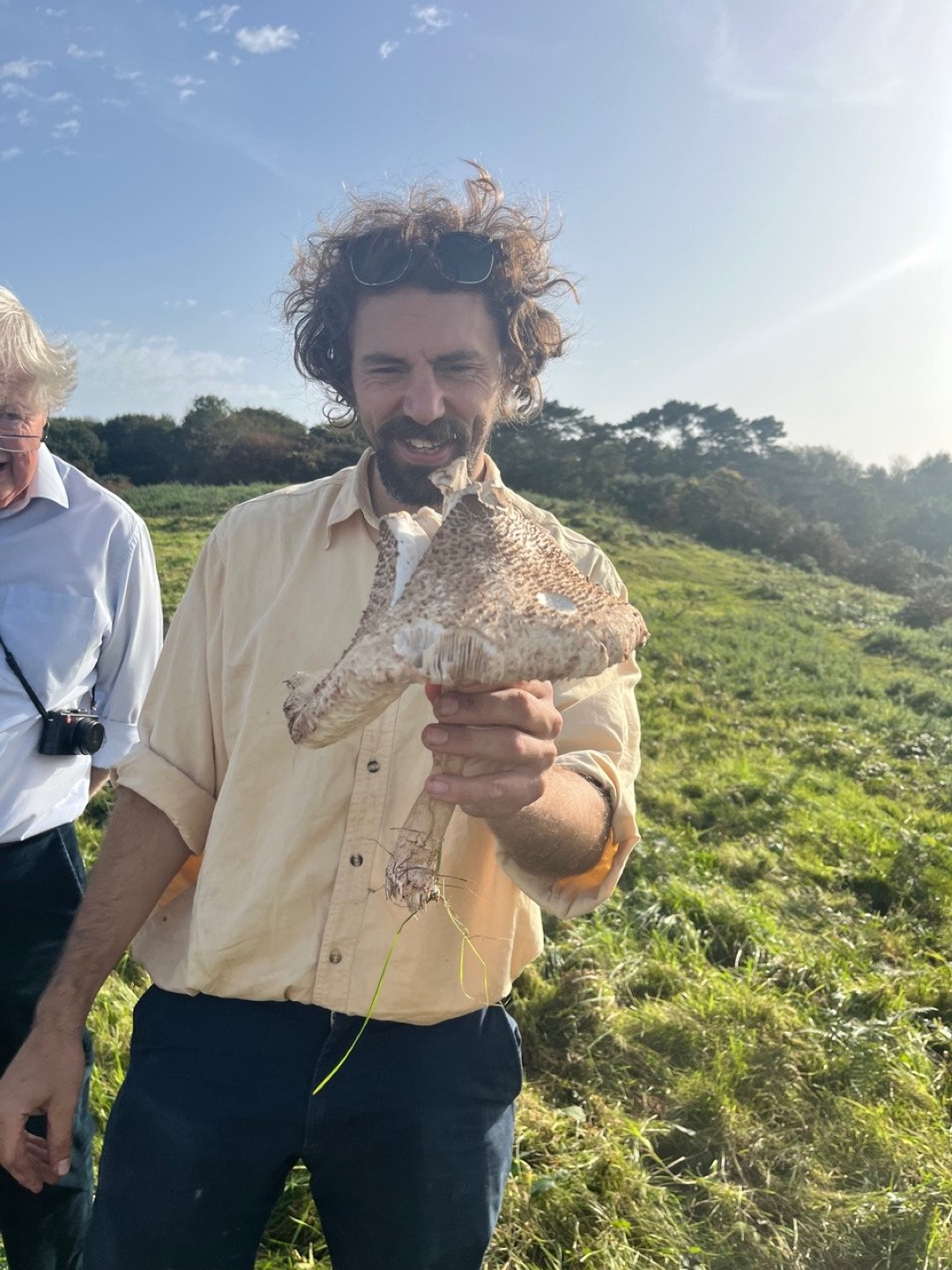
Nick Phillips with a parasol mushroom
In the meantime, various species of wild mushrooms popped up unsolicited along along the verge and around trees:
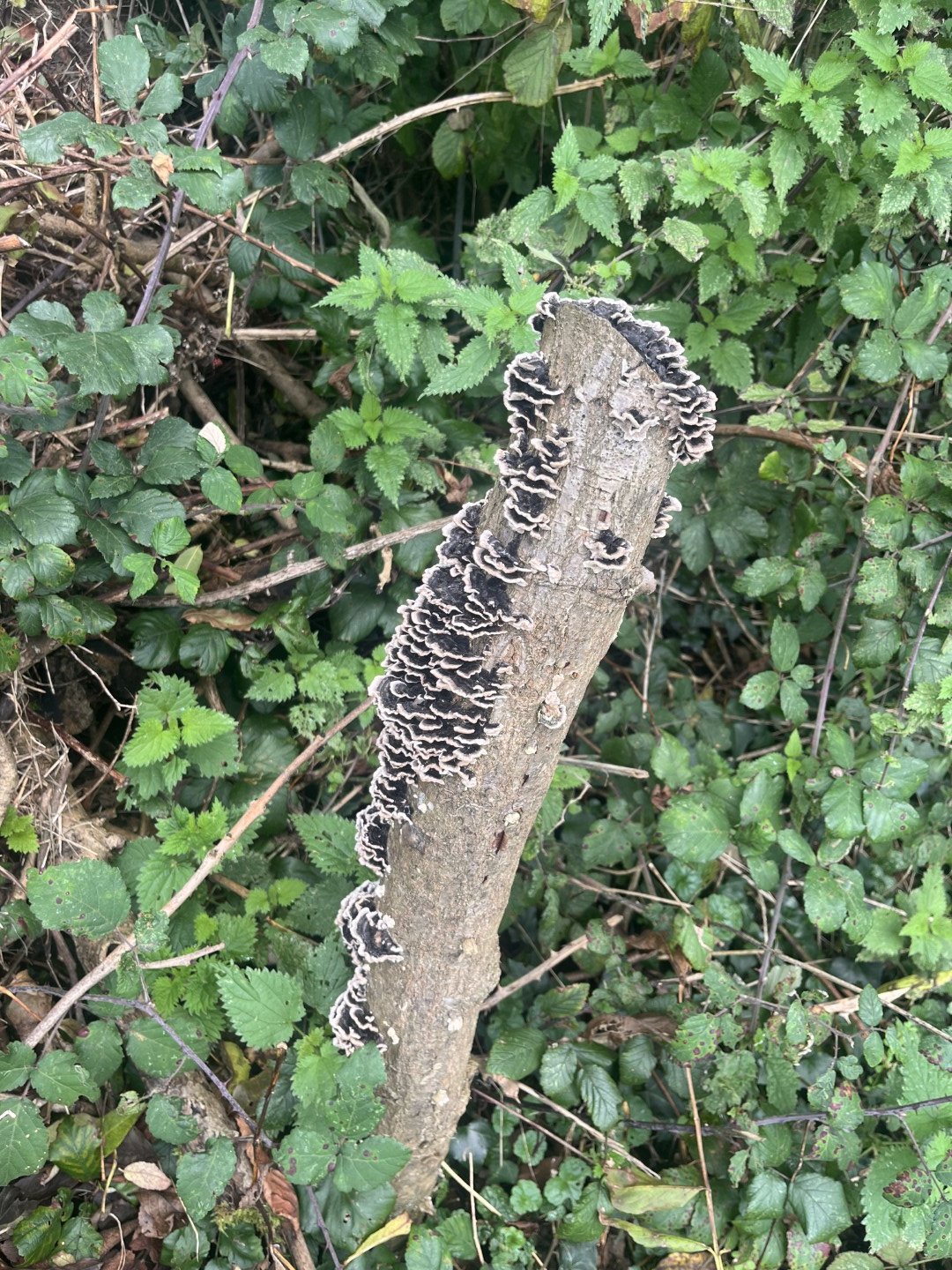
Turkey tail mushroom log
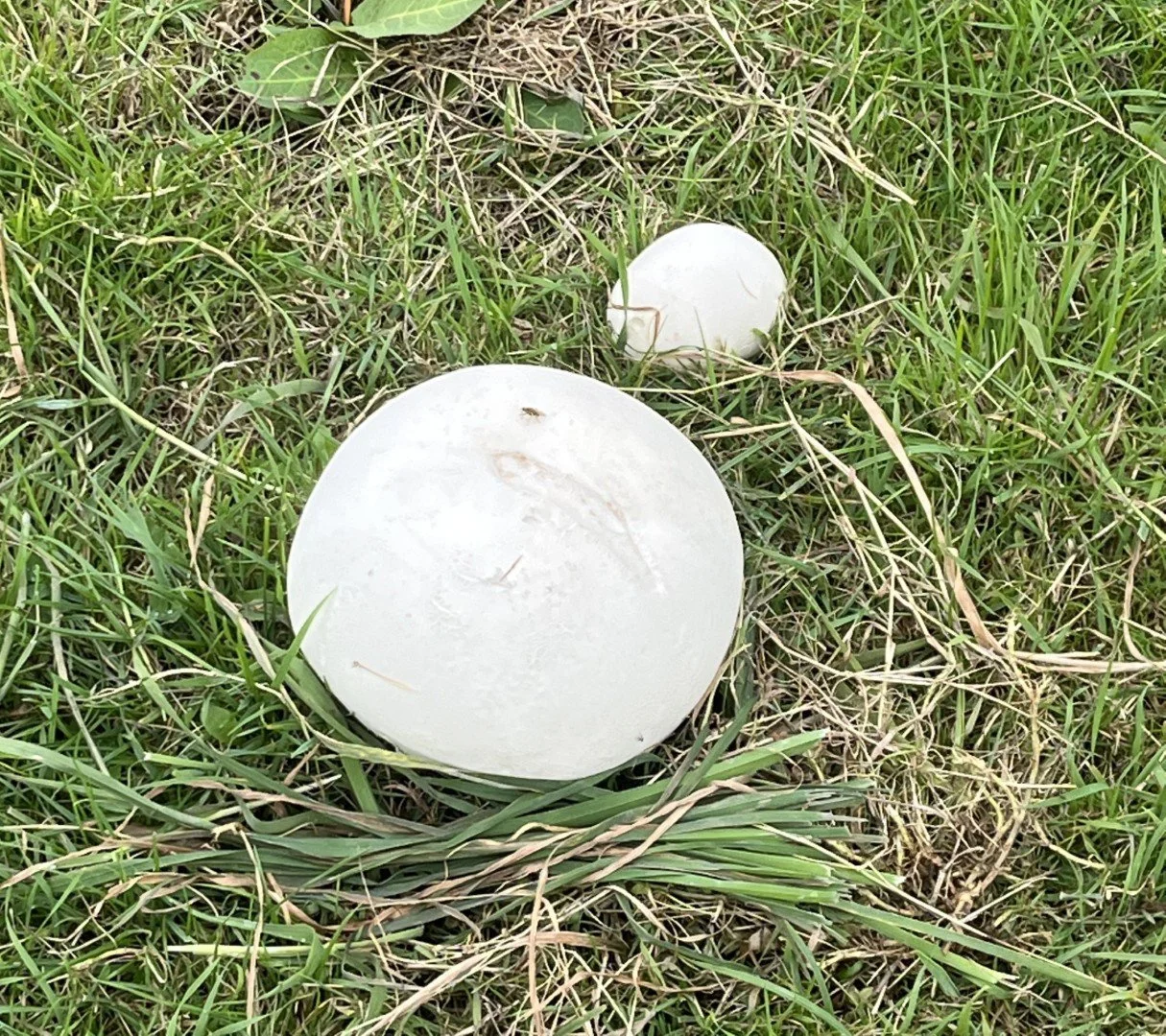
Giant puffballs
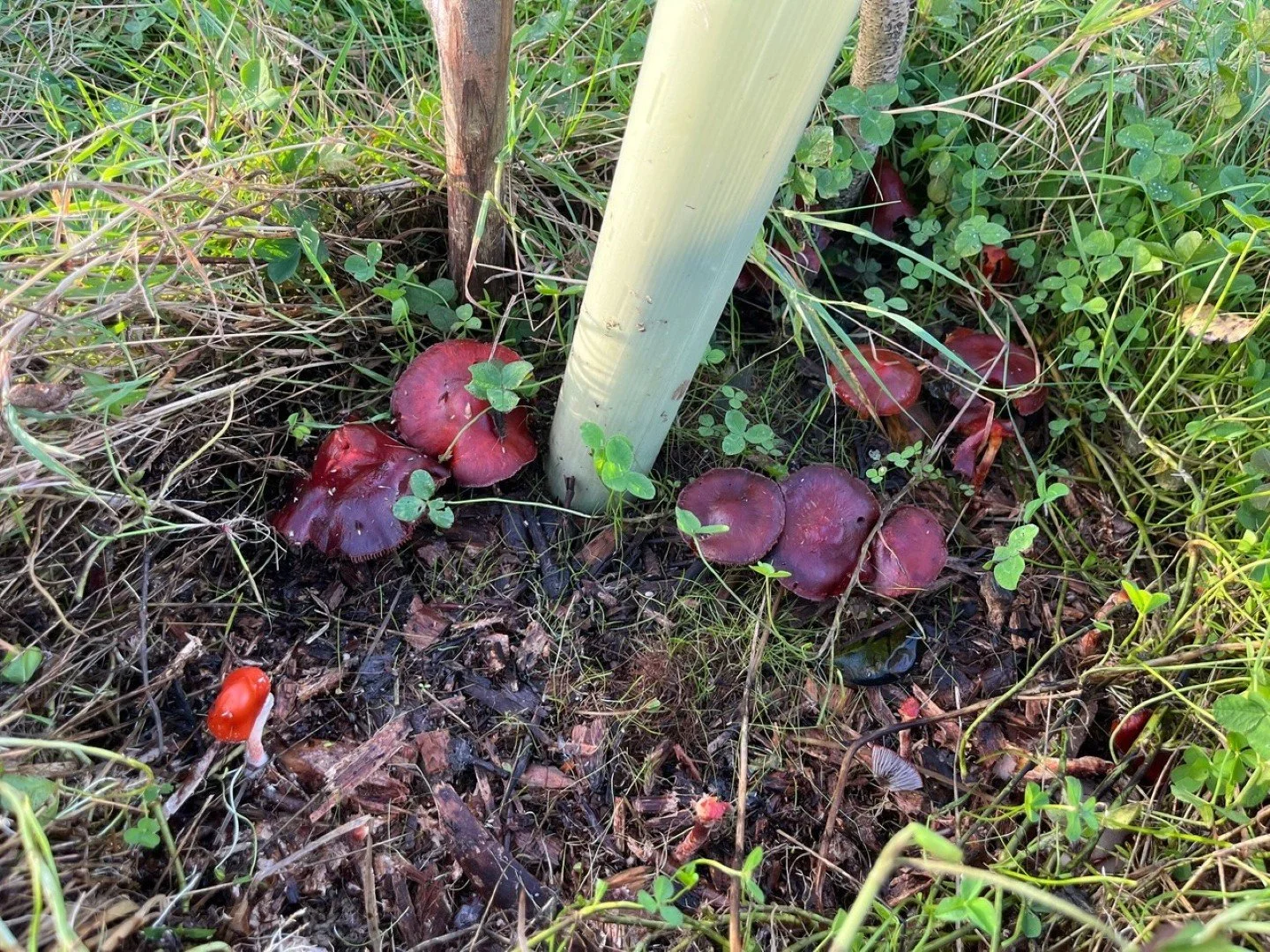
Waxcaps
Pond Construction
In creating our first pond, we decided on a traditional method partly based on soil analysis and what we observed was the boggiest area on the site. We spent a number of days puddling the soil incorporating half a tonne of bentonite clay. Using appropriate equipment, we dug out, compacted the sides and incorporated the bentonite mix, exactly as directed by supplier. Sadly, it was not a success. The eight-inch-thick sides held water for several weeks, but after a sustained drought period last year, it soon cracked. We attempted to strengthen the sides further but the upshot was the water retention period was not long enough to constitute even a seasonal pond. We will be using a more modern method in future construction.
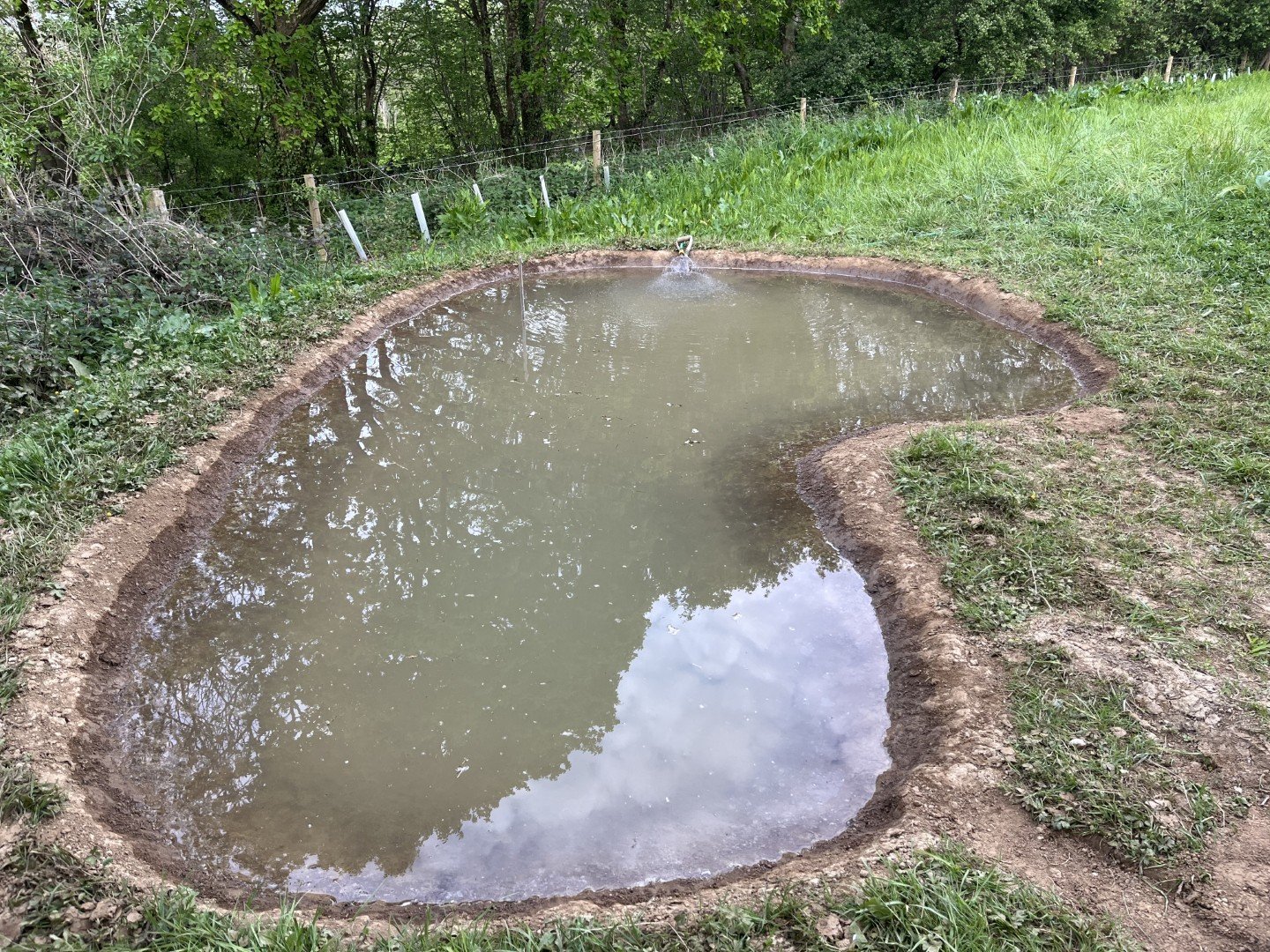
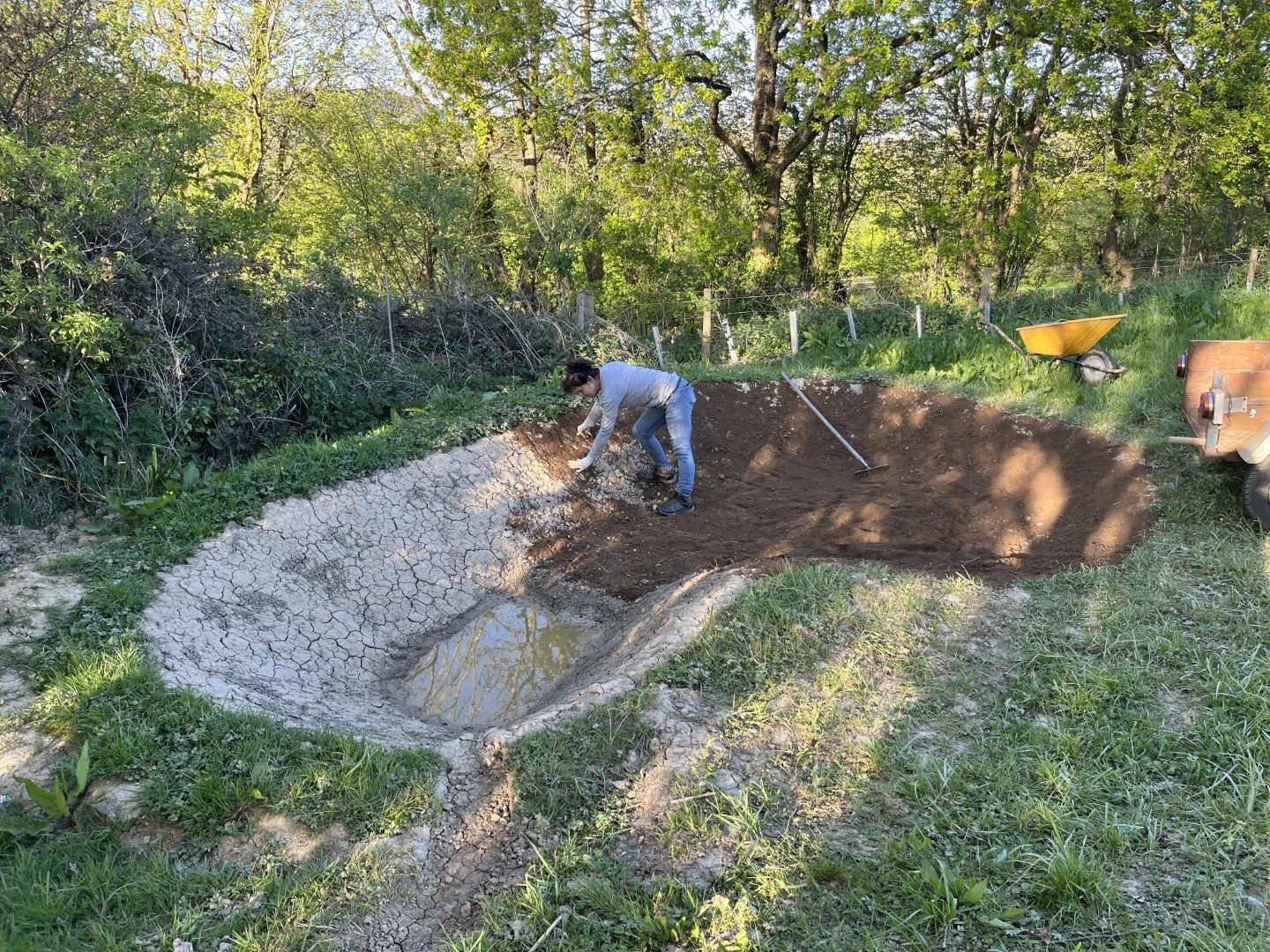
Pond layer- bentonite
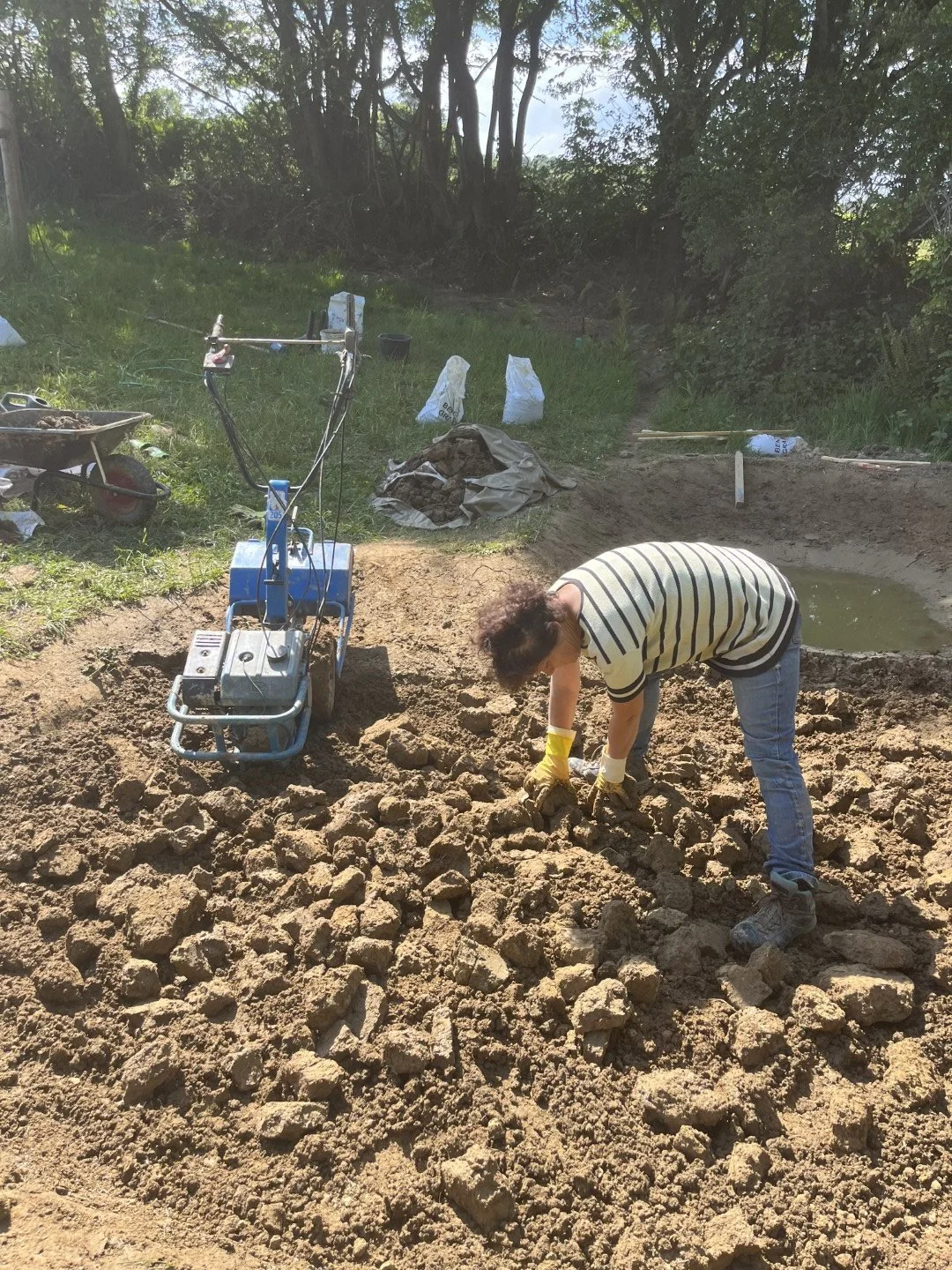
Puddled clay and bentonite
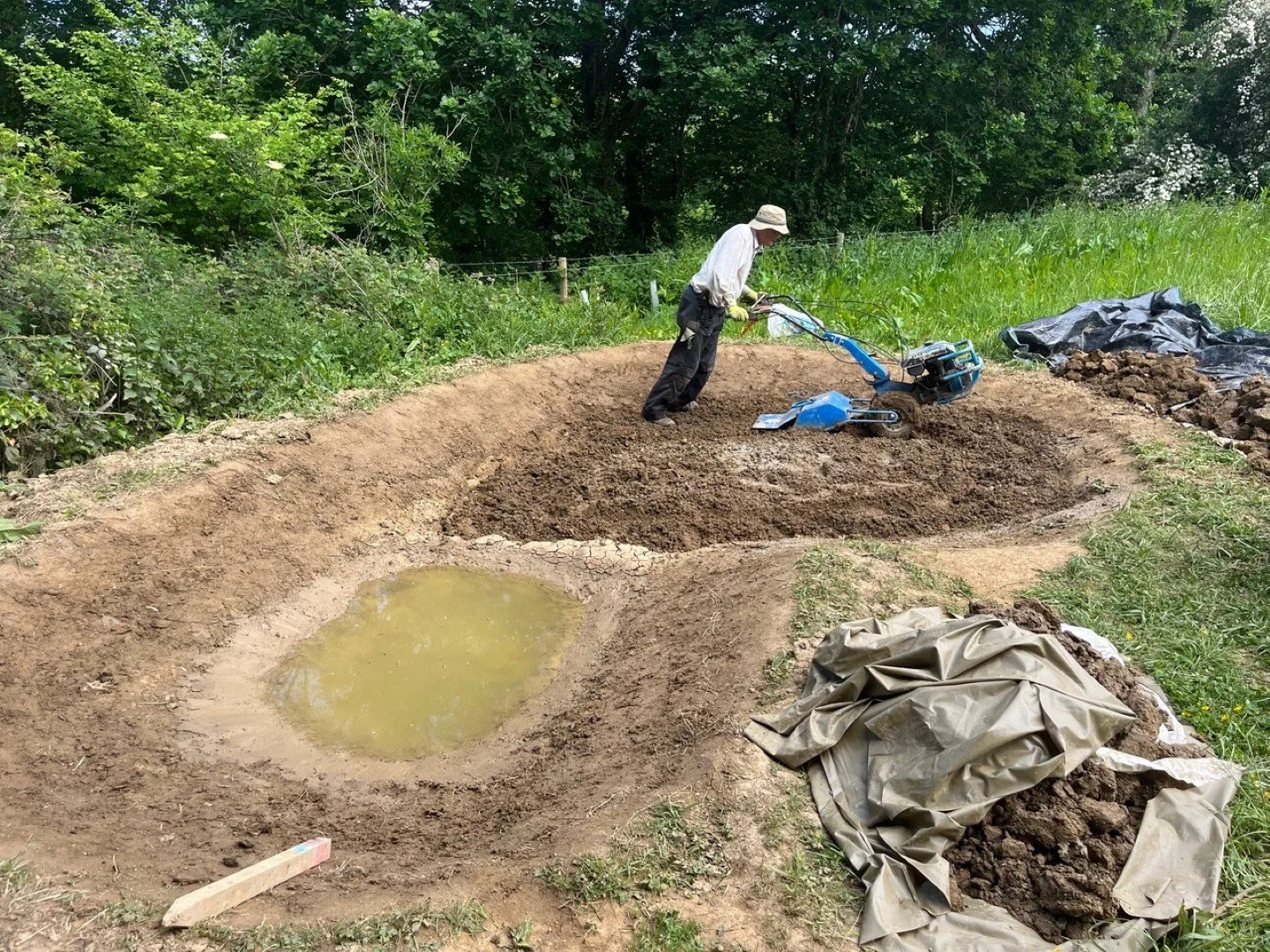
Rotavating clay mix
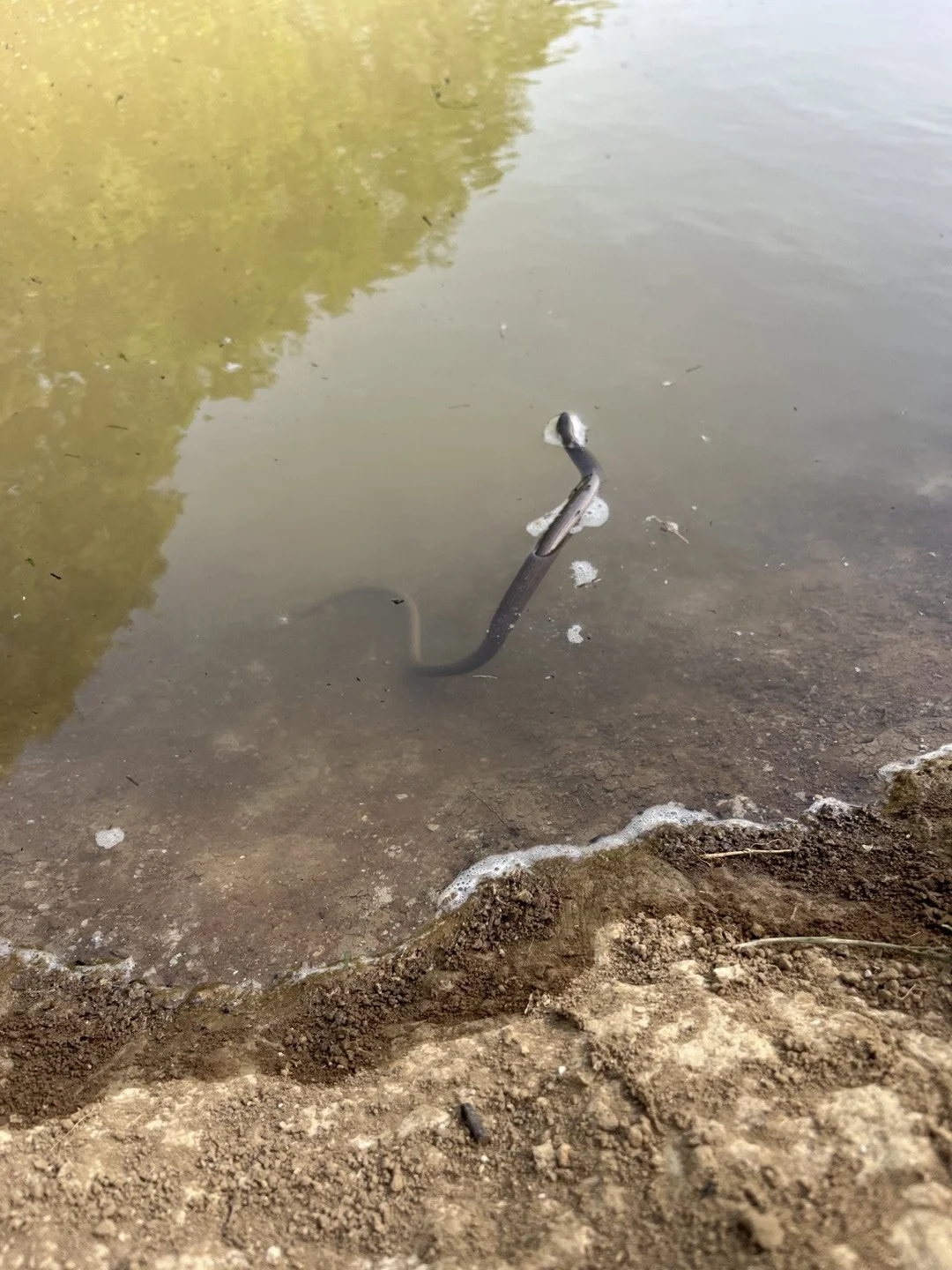
All said, a pond’s value to wildlife was almost immediately proven with a giant slow worm occupying it within a seven hour period.
Slow worm, May 2025
Other Habitats
We are continually learning and thinking of ways to create suitable habitats to enhance biodiversity in our fields.
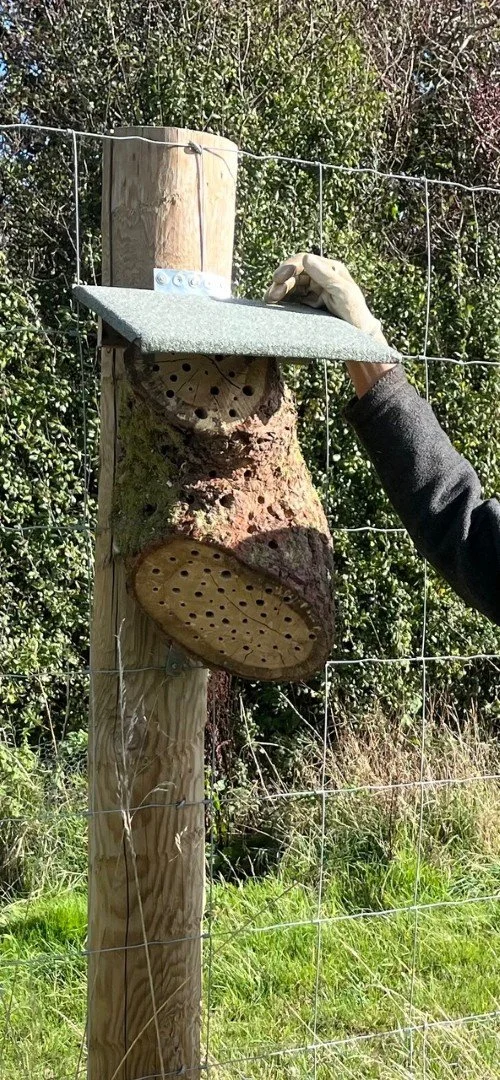
Solitary beehive
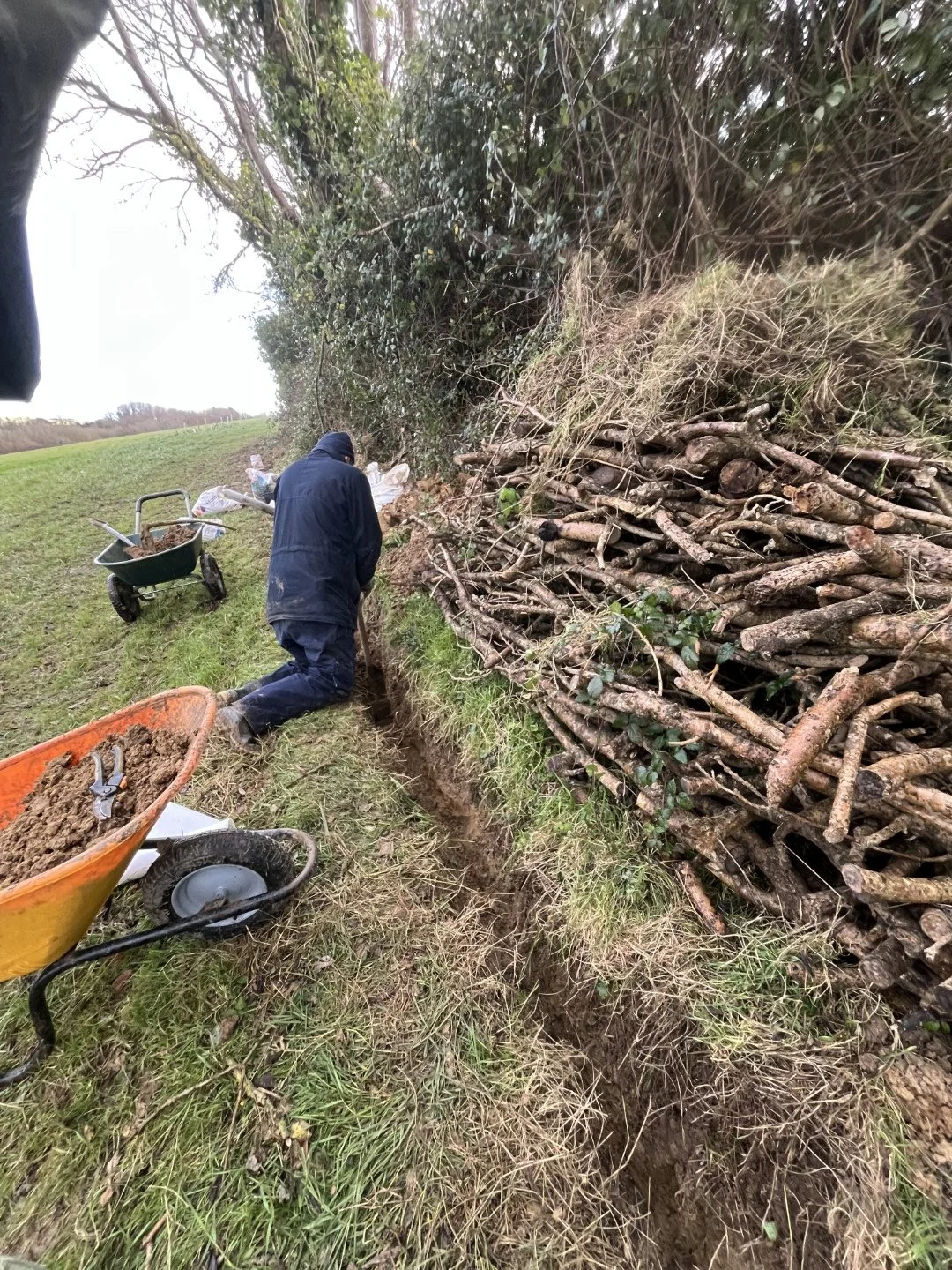
Small mammal brushwood habitat
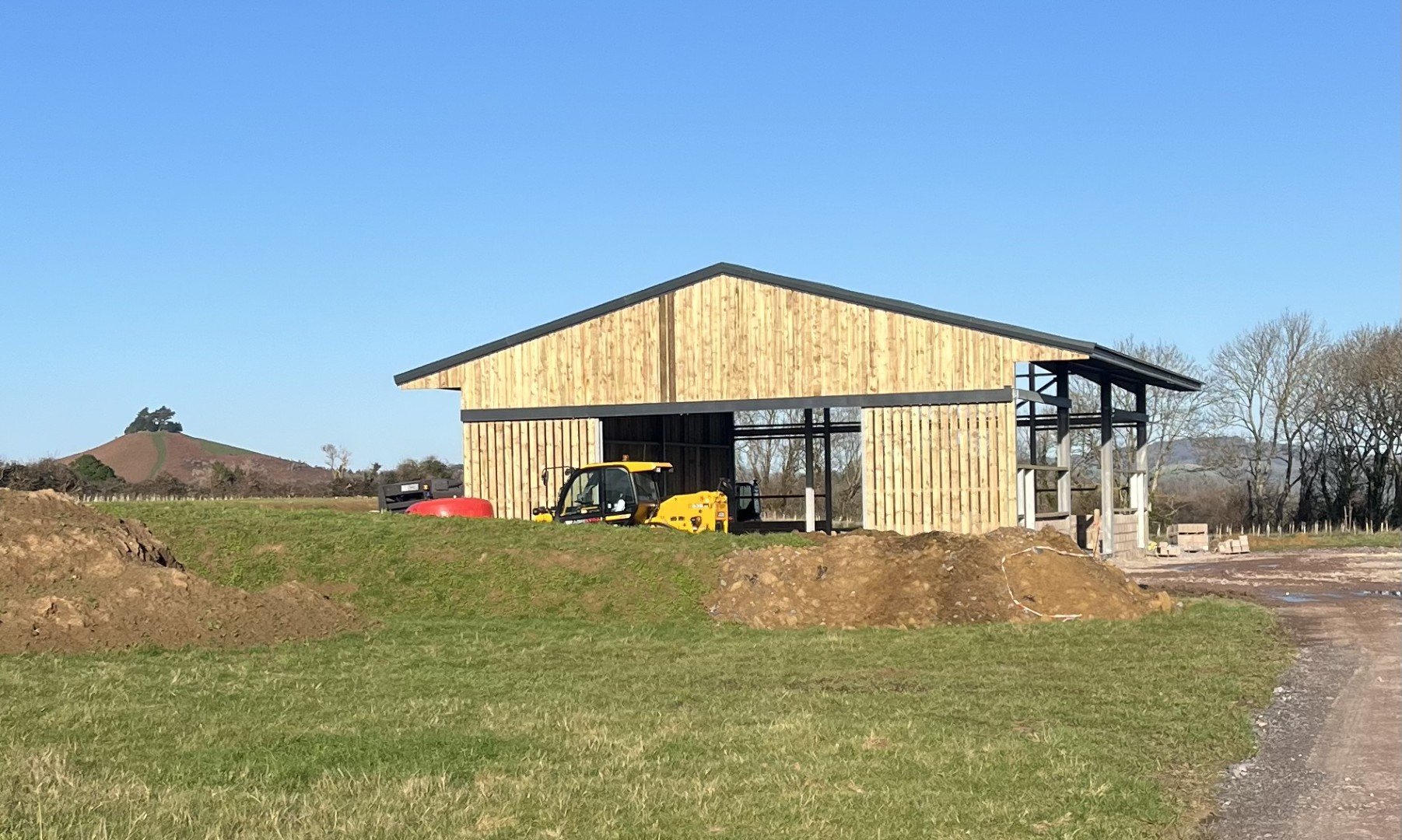
Our newly built barn has just been checked out by a pair of swallows! Hopefully they will return to nest!
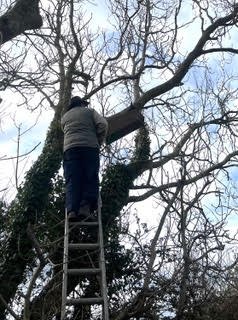
The owl box entailed careful positioning!
All in a Day’s Work
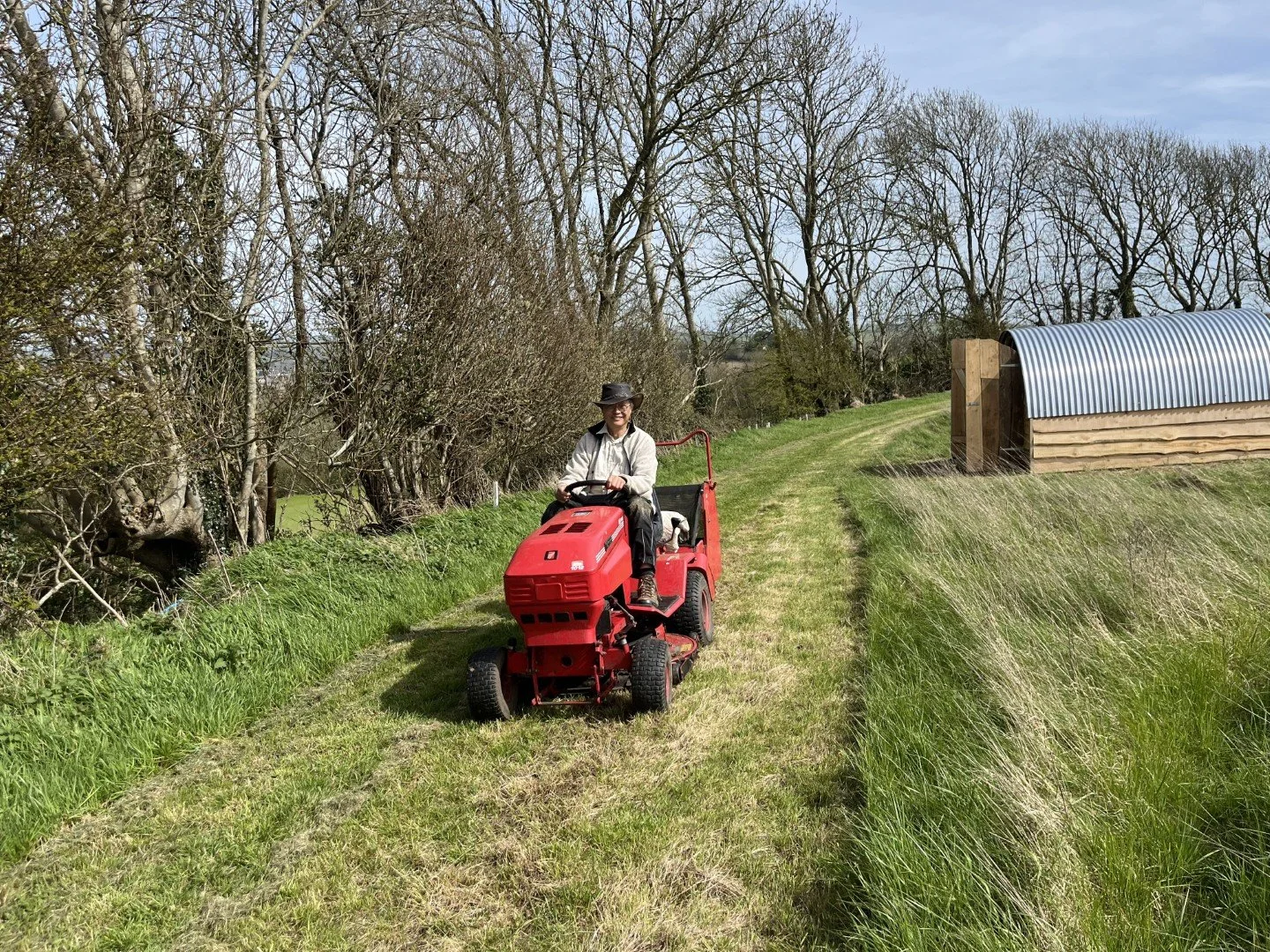
Mowing paths is essential around and to key areas in both fields in order to travel quickly without machinery. The recently acquired second hand Cut and Collect machine (35 years old!) proved invaluable.
Cut and collect path
The strength of both the south-west and north-east wind in this coastal location in 2025 was such that we had to plant a further shelter belt around the almond enclosure after the latter was half ripped apart by Storm Darragh in early 2025.
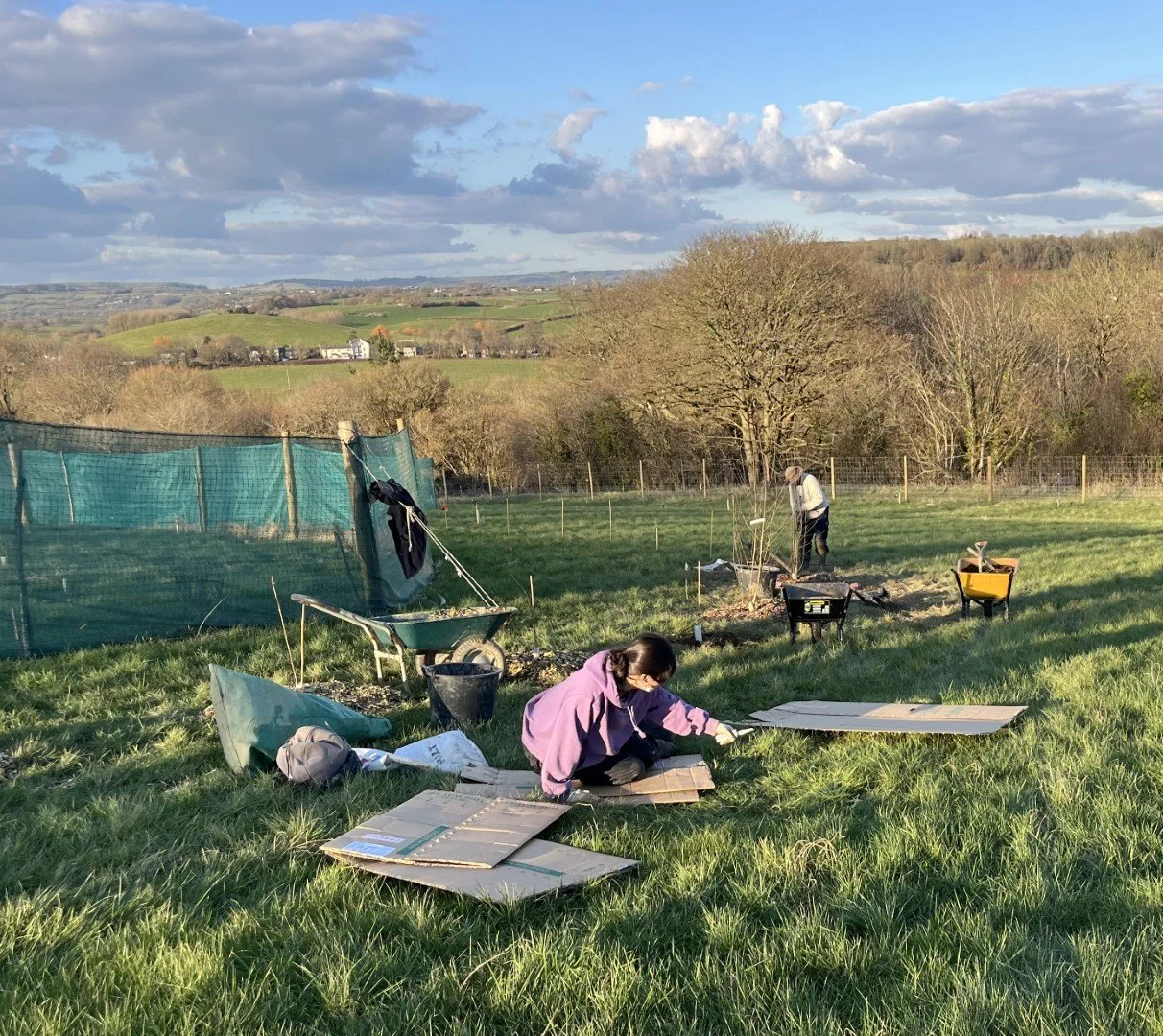
Planting a shelter belt
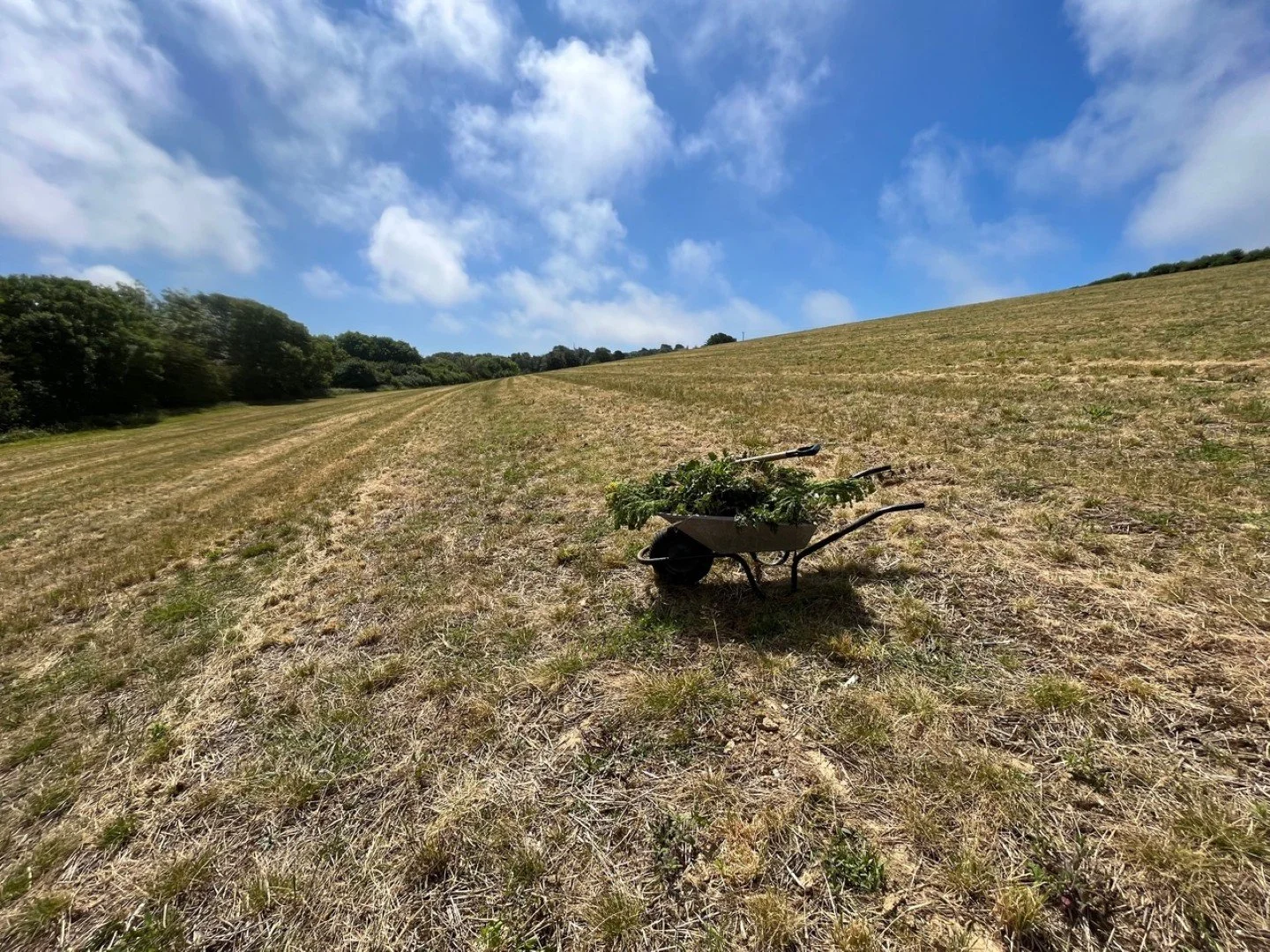
Ragworting
Ragworting was something we had to do as we had not ruled out use of livestock for a limited period to help keep the grass down in order for the wildflowers to flourish.
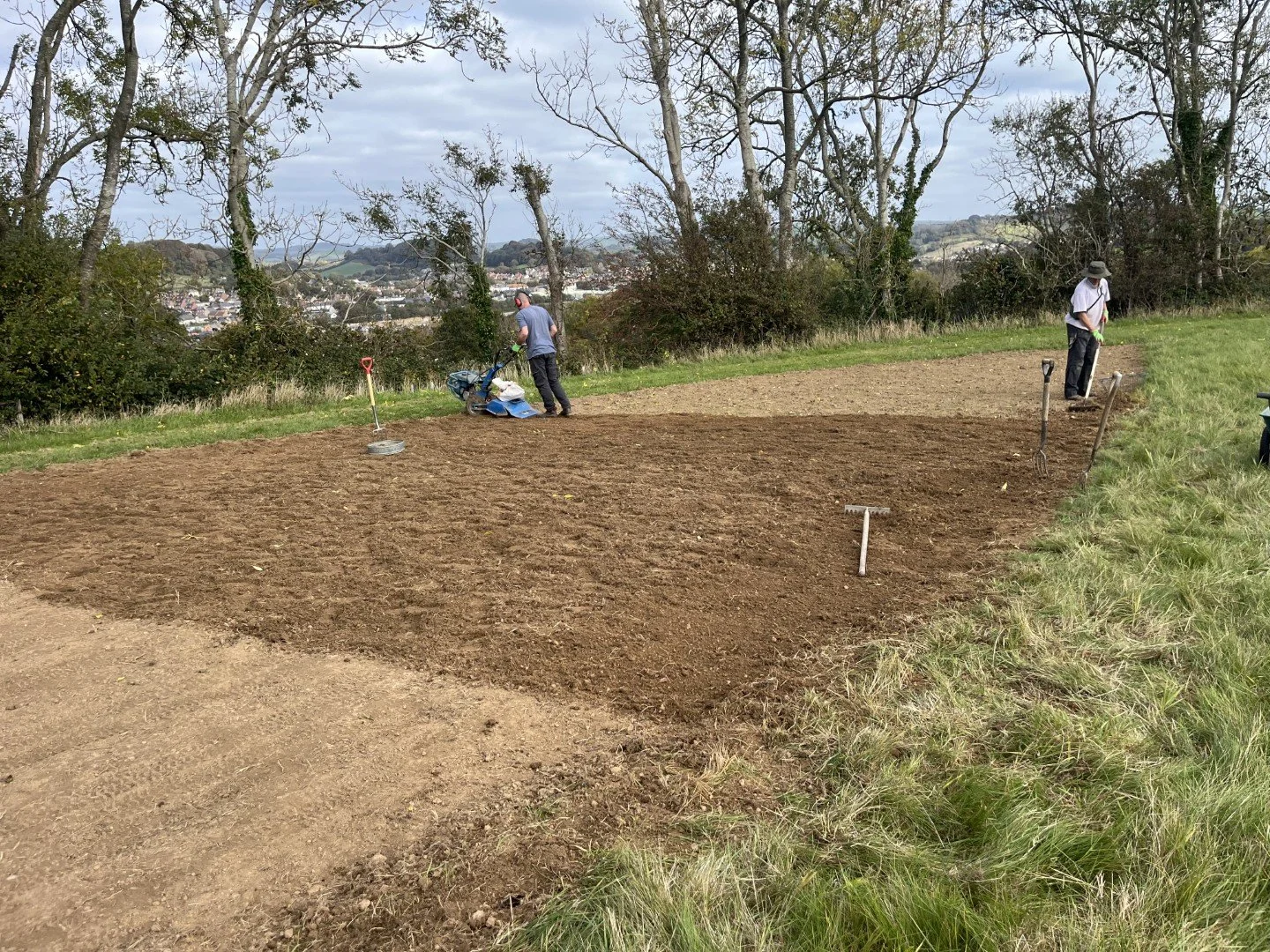
Soil cultivation for the Rye.
In 2023 Lucy made the discovery whilst on a sourdough baking course with South West Grain, of an ancient semi-perennial rye grain with a fabulously sweet flavour. Its name is ‘St John’s Rye’. We had to travel to West Ireland: the Beara Peninsula, to buy it as, due to Brexit regulations, we were unable to get it sent across. We have now sown a trial area.
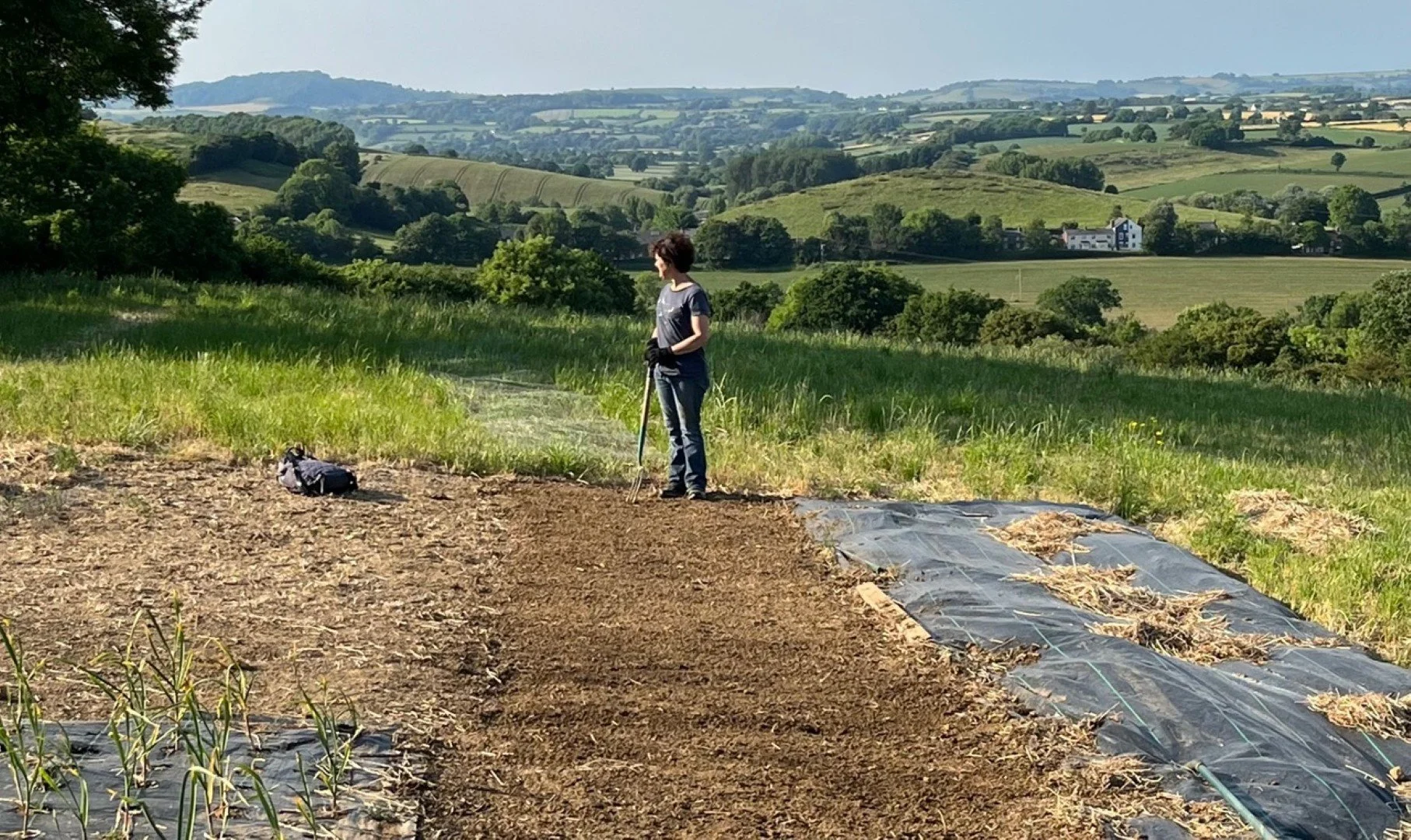
Preparing for garlic
In another area of the fields, we successfully trialled some french garlics, which came to fruition very well, and sold in a couple of hours in Bridport Market. This year we are trialling a broader range of garlic species with more exciting flavours.
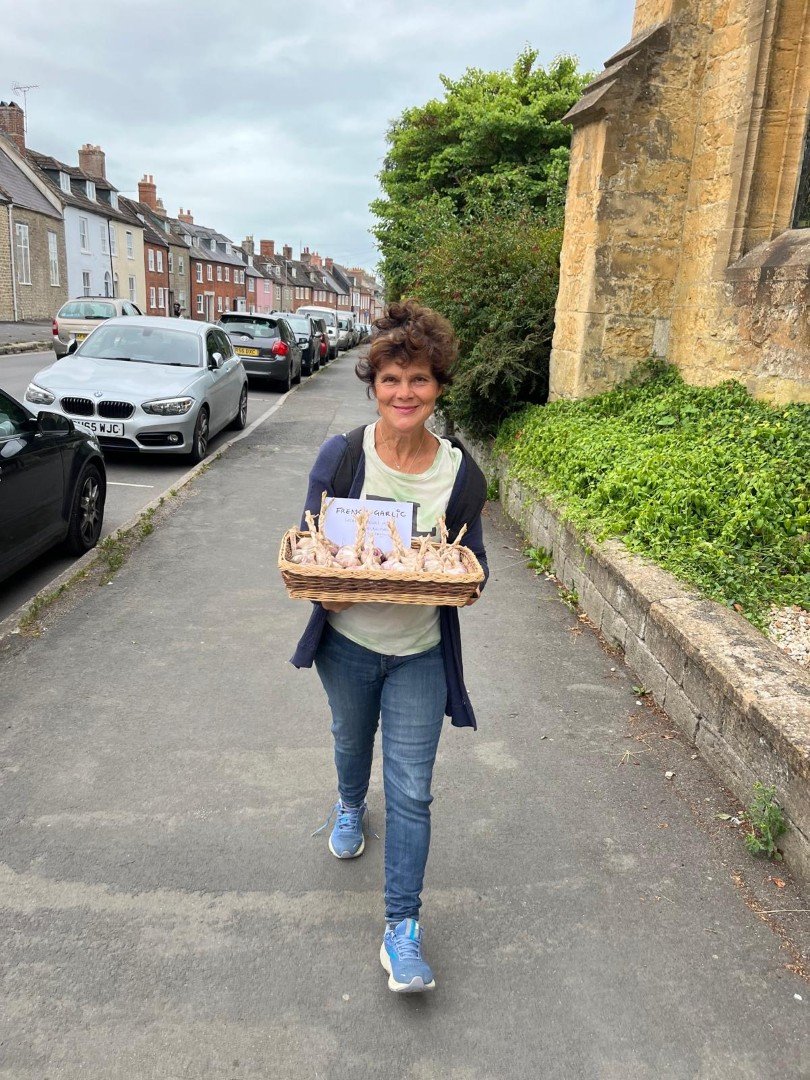
Lucy taking garlic to market
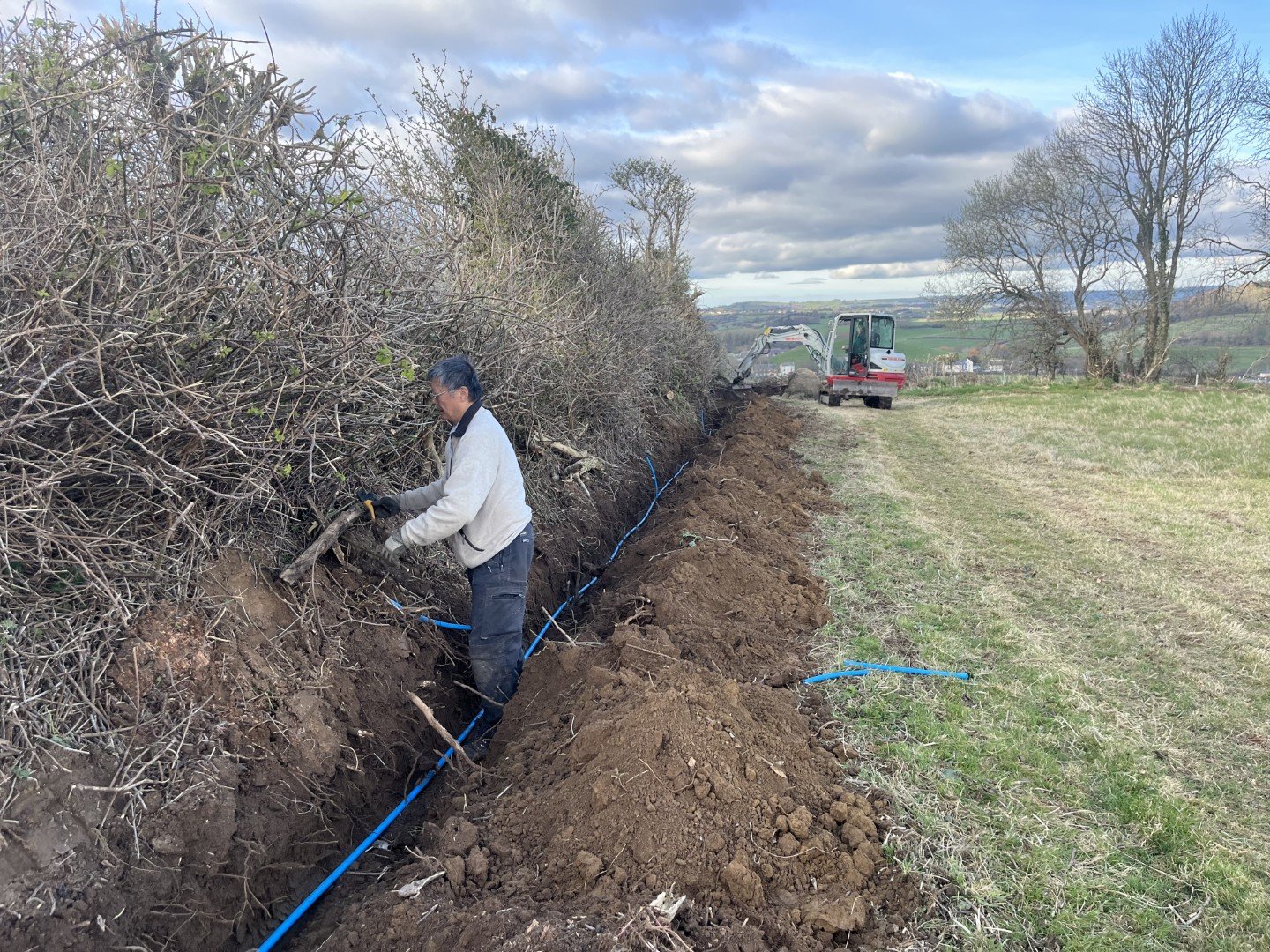
We were lucky, on purchase, to have water laid to the field entrance and we have now laid pipes around half the land. This year, we are installing IBC containers to collect rainwater.
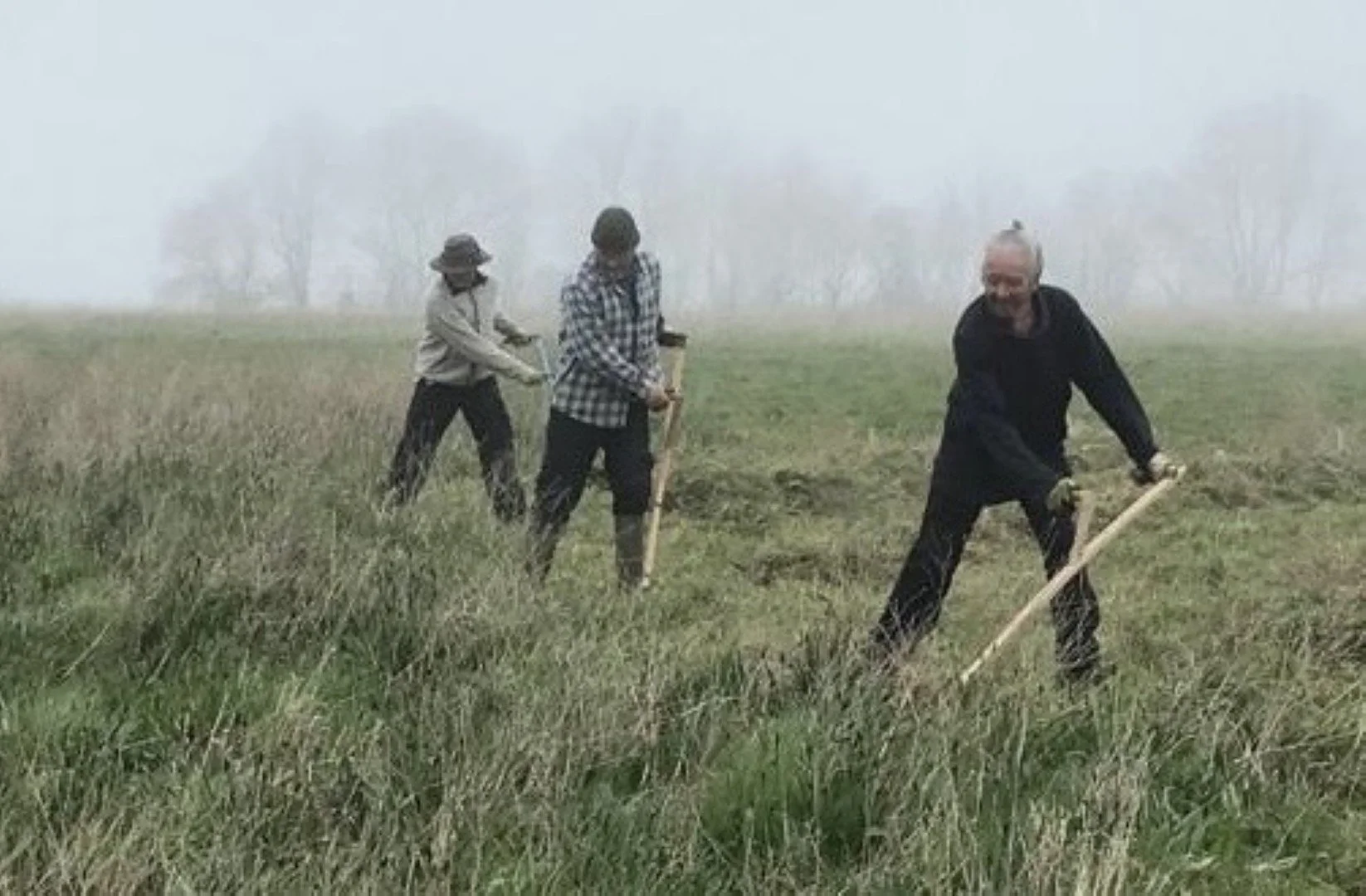
A part of the wildflower meadows will be scythed in March as we have no sheep to keep the grass down before the flowers emerge.
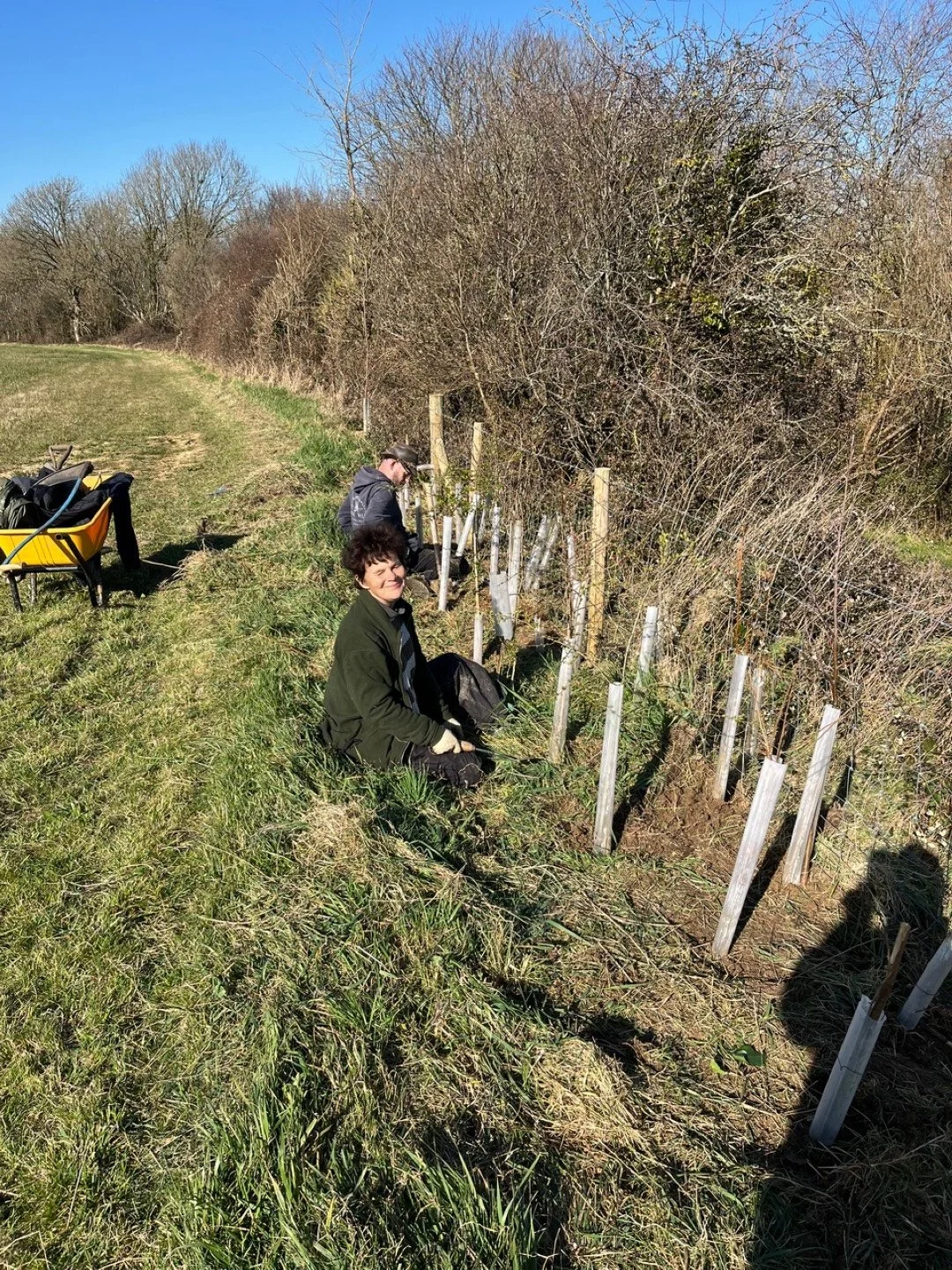
Hedge maintenence
Whilst the cardboard around the hedge topped with chipped bark helps with weed control & moisture protection, it doesn’t last long – three to four months. Grasses soon self sow in the mulch and get their roots down through the damp cardboard. Because of this, regular weeding for two to three years around the hedging plants and trees is essential to prevent the plants being robbed of moisture and nutrients.
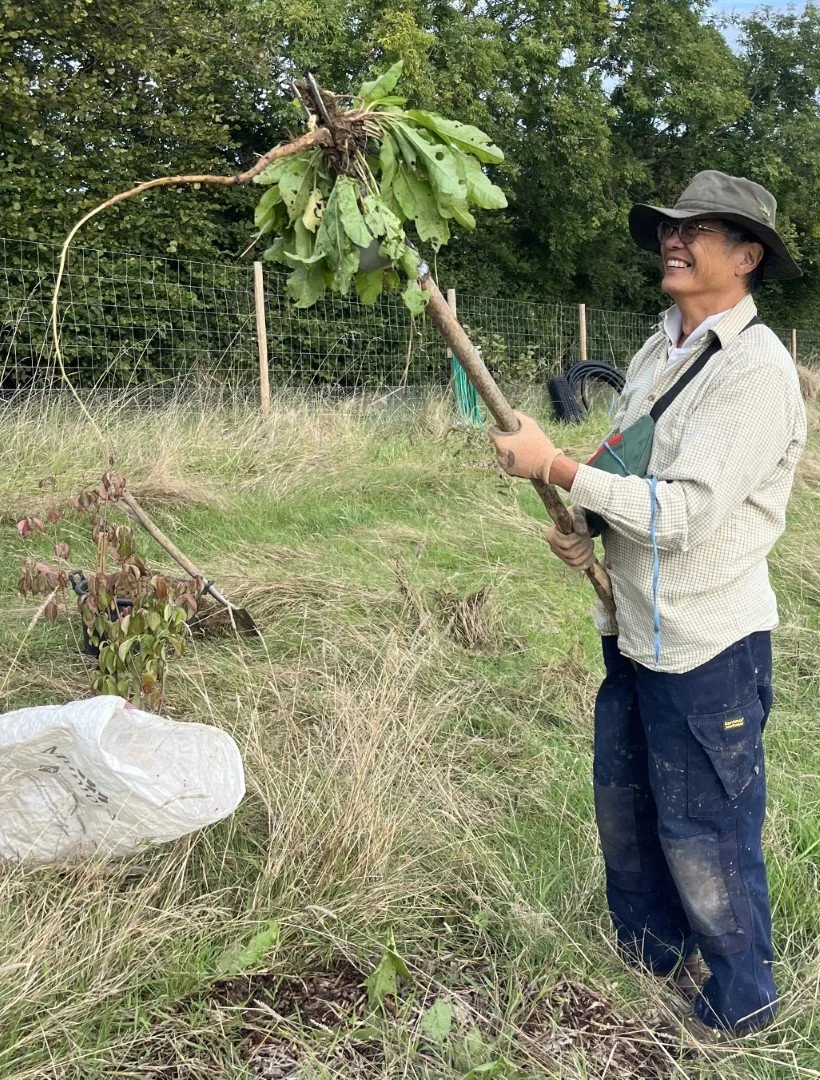
The problem of weeding docks is that there are almost certainly multiple essays on this subject on the internet. Here we are using another fork-like tool from Bridport Market’s collection of old tools to help extract this devil of a root!
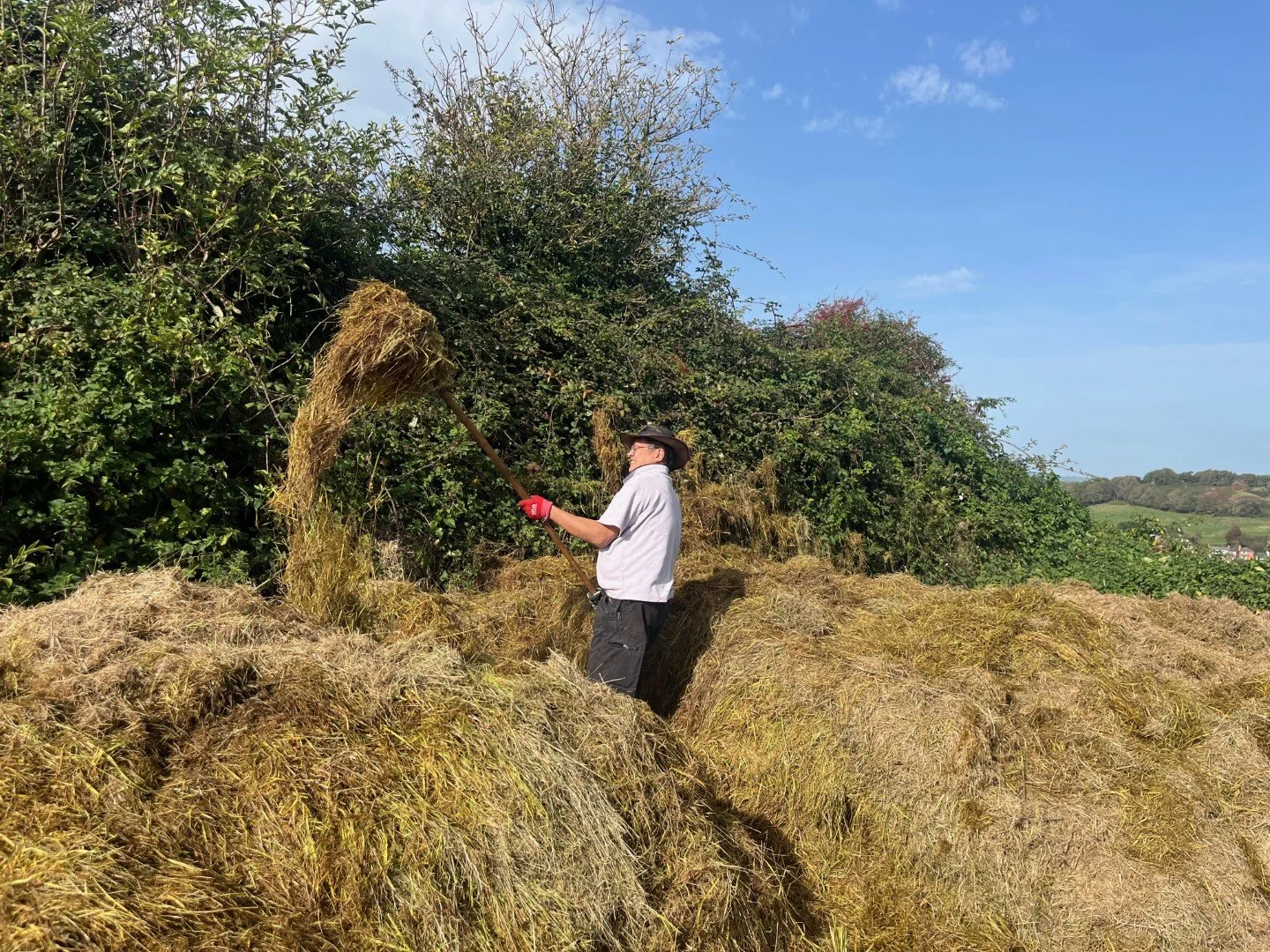
To help with suppressing weeds, we have a giant compost heap composed of the remnants of the raked up hay that didn’t make it into the farmer’s giant hay bales, which he takes once per year, usually in late July. When partially composted, this can be shifted across to the tree and hedging plant areas to act as a mulch.
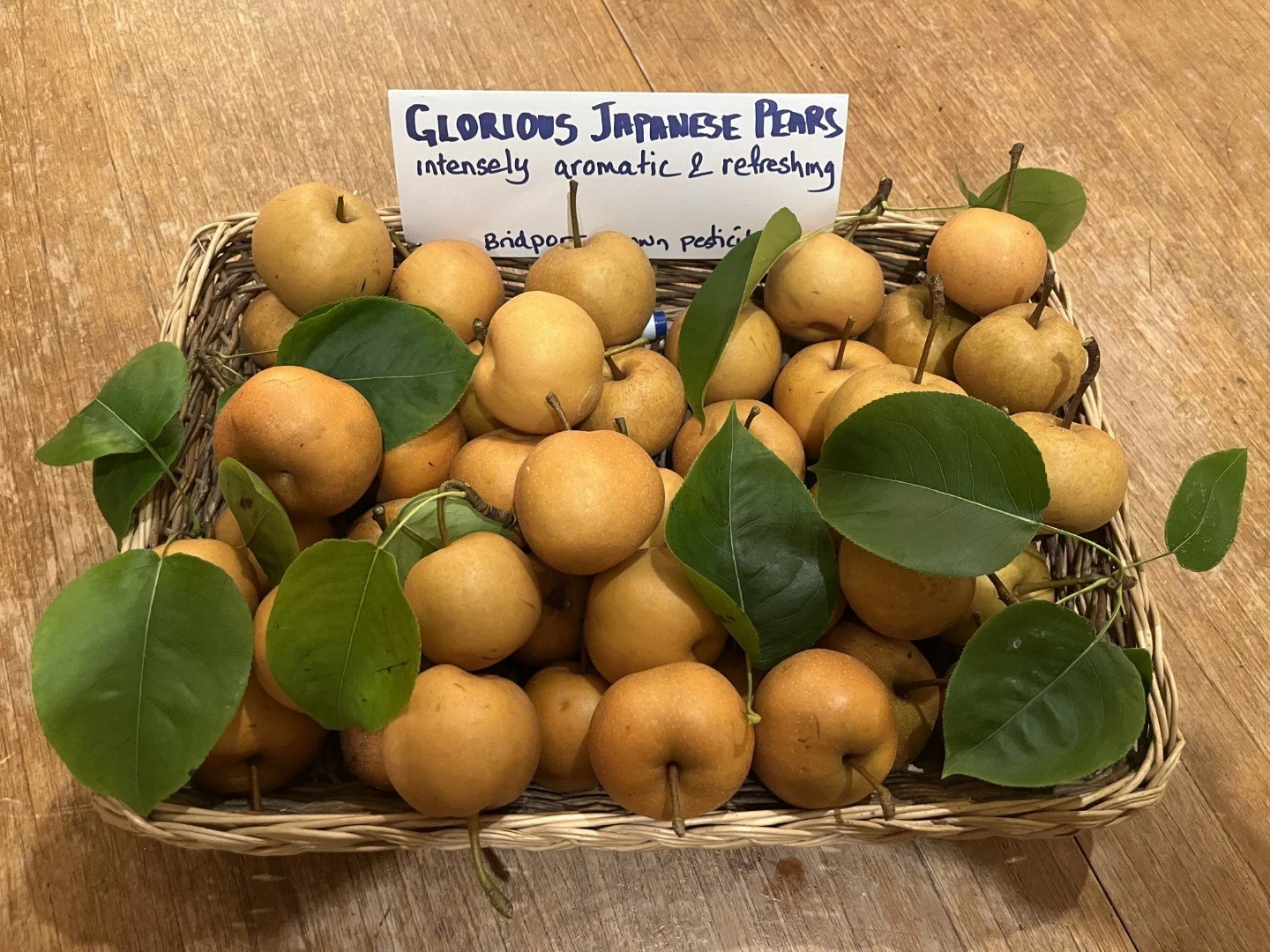
Fruit picked and taken to market for people to try and buy – shown here, Asian (Japanese) pear ‘kumoi’. We hope to have more next year!
Community Involvement
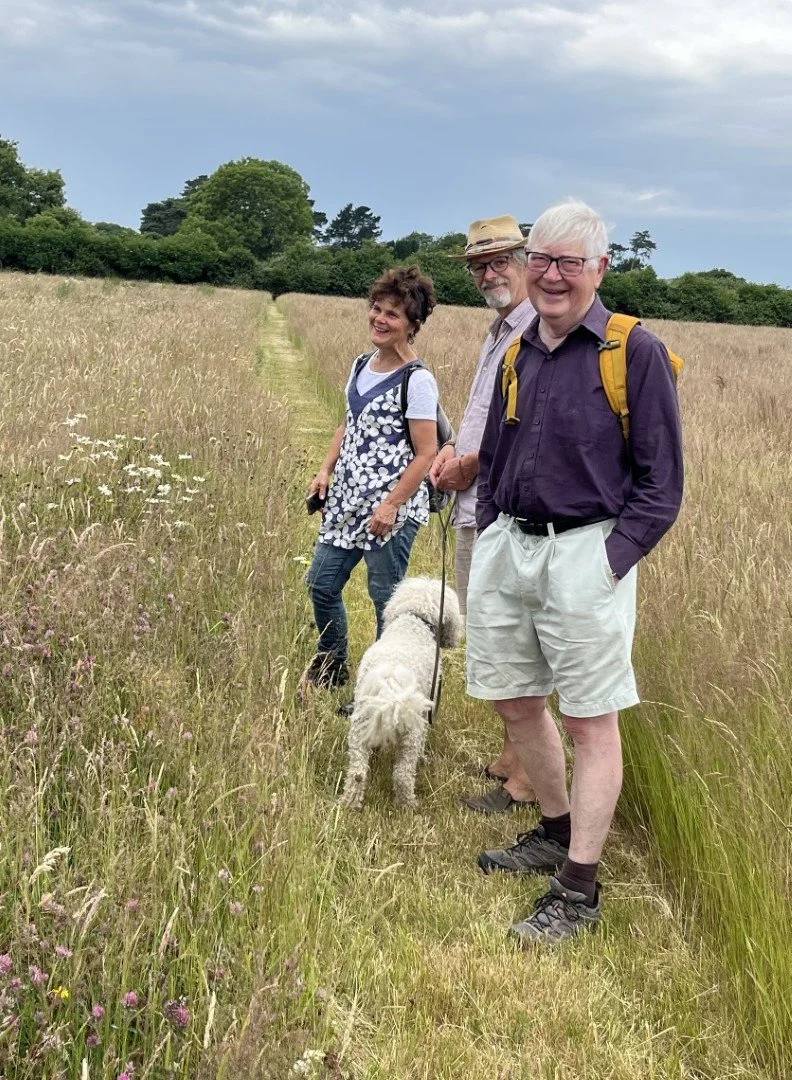
We believe what we are doing is important to future survival and wellbeing, and we want to involve as many people as possible in growing and eating a more diverse range of food plants.
We held several Open Days last year and we hope to do same in 2026.
We do get to take a break – sometimes!
Wildflower walk, June 2025
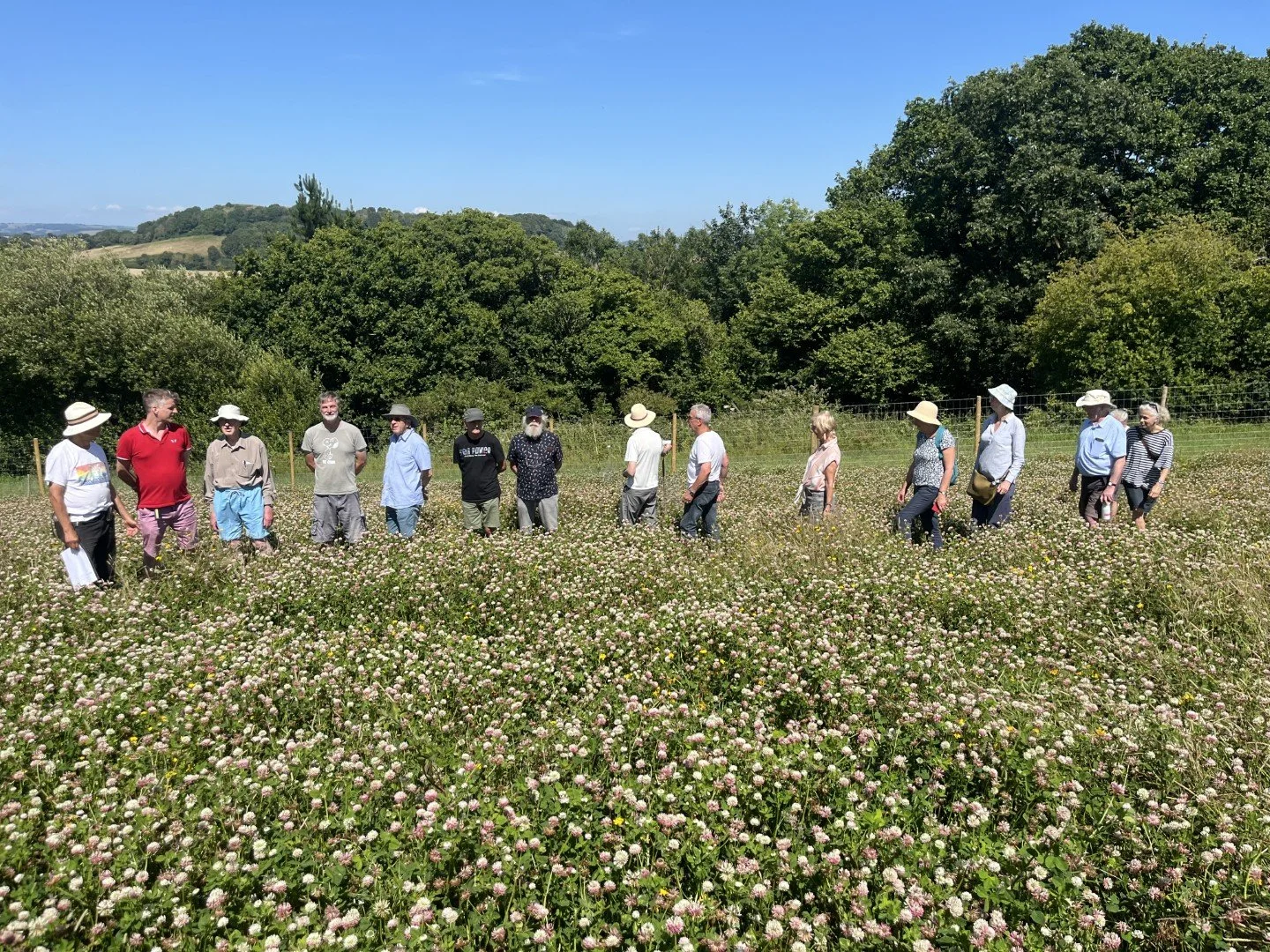
Visit with locals, July 2024
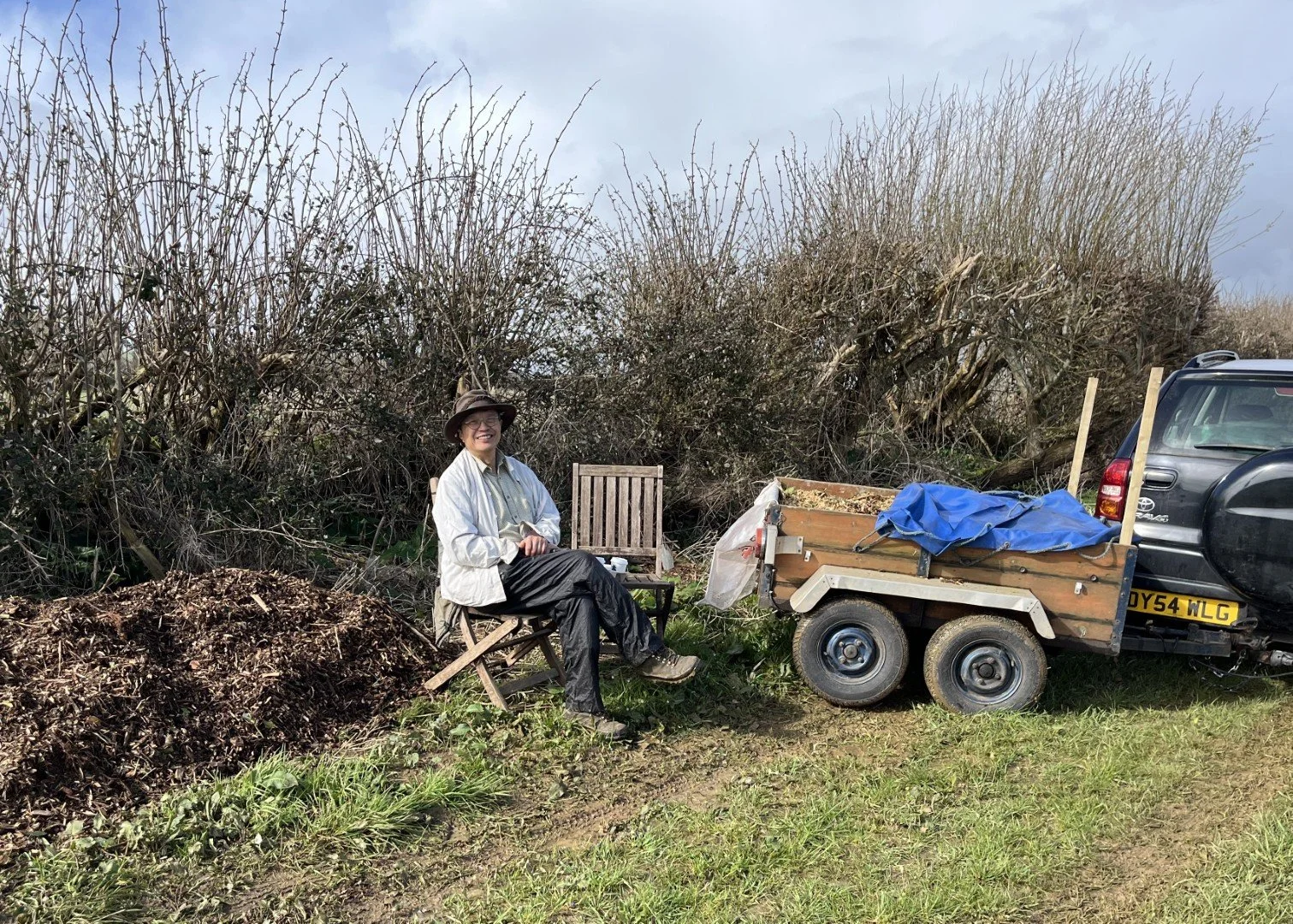
Chit taking a break