

Our goals for the Farm
To increase the biodiversity of plants, insects, birds, and soil organisms within the local area.
To build awareness of a wider range of climate adaptive fruits, nuts, grains and flowers suitable for local consumption & production.
To further understanding of agro-ecological methods - trees with appropriate understory plants to pollinate, fertilise, and build soil structure.
To contribute to Bridport Food Security and its sustainable food network.
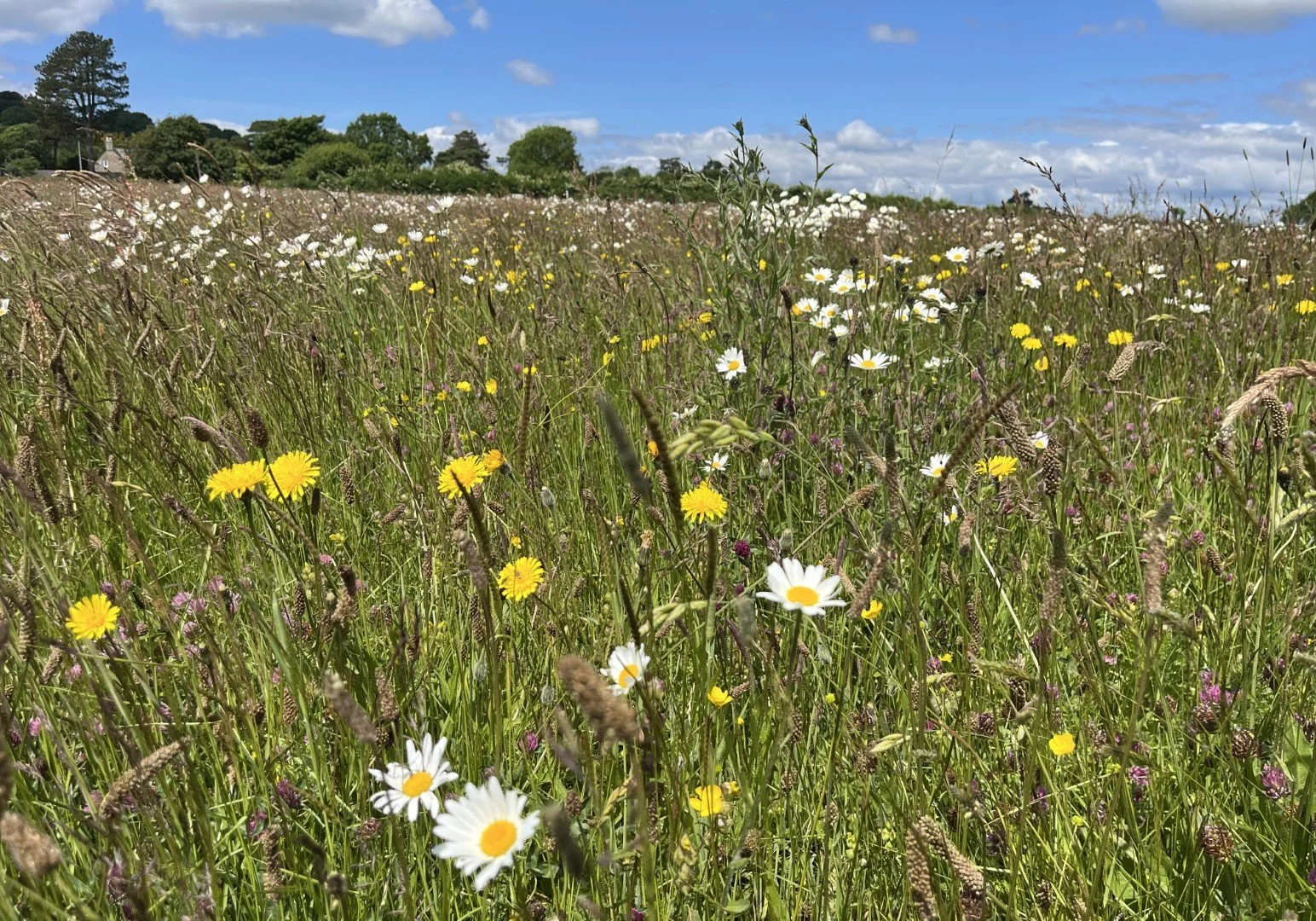
Hawkbit & Oxeye
Why we’re doing this
Food, nature and biodiversity crisis;
Global biodiversity loss, ecosystem collapse and national security assessment, Feb 2026 UK

Huge decline in insects (70%) since 1960’s and the need to recognise most plants (over 80%) need insect pollination.
Study on insect decline in Europe
Climate Change posing multiple threats to food security. Tim Benton explains here why the food system is about to collapse.
Current crops may not sustain us in the long term.
The UK food industry reports that 2020, 2024, 2025 were 3 of the 5 worst harvests on record with wheat yields down by c. 21% due to extreme weather.
Climate changes also mean we may need to change some of the varieties of fruits we grow because some varieties - e.g. Ashmead Kernel apples - need a sustained chill factor to fruit.
Agriculture is responsible for 25% of emissions
How we’re seeking to make a difference
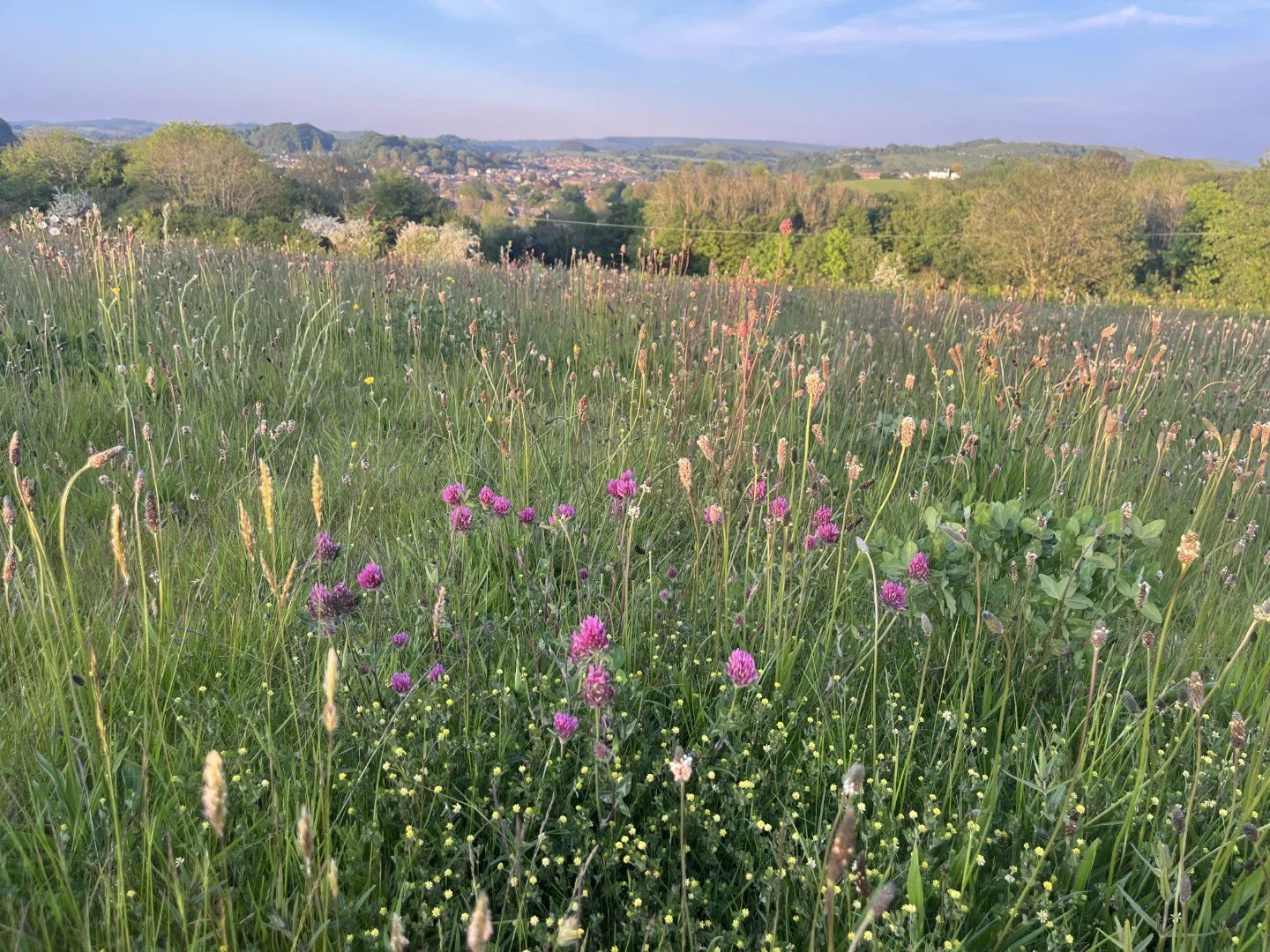
Lesser Trefoil & Red Clover grasses
Re-introduce wild flower meadows and native hedges to increase insects, wildlife and pollination
Develop a climate resistant multi crop orchard incorporating the principles of agro-ecology
Make use of trees to sequester carbon, improve drainage and soil, and produce alternative crops
Experiment with alternative growing systems to increase biodiversity, climate resilience and carbon sequestration.
Avoid agro chemicals, unless last resort, and then only in-line with soil association standards
Pass on learning to the community and encourage children to engage with a broader range of plants than they would otherwise be exposed to