

Who We Are
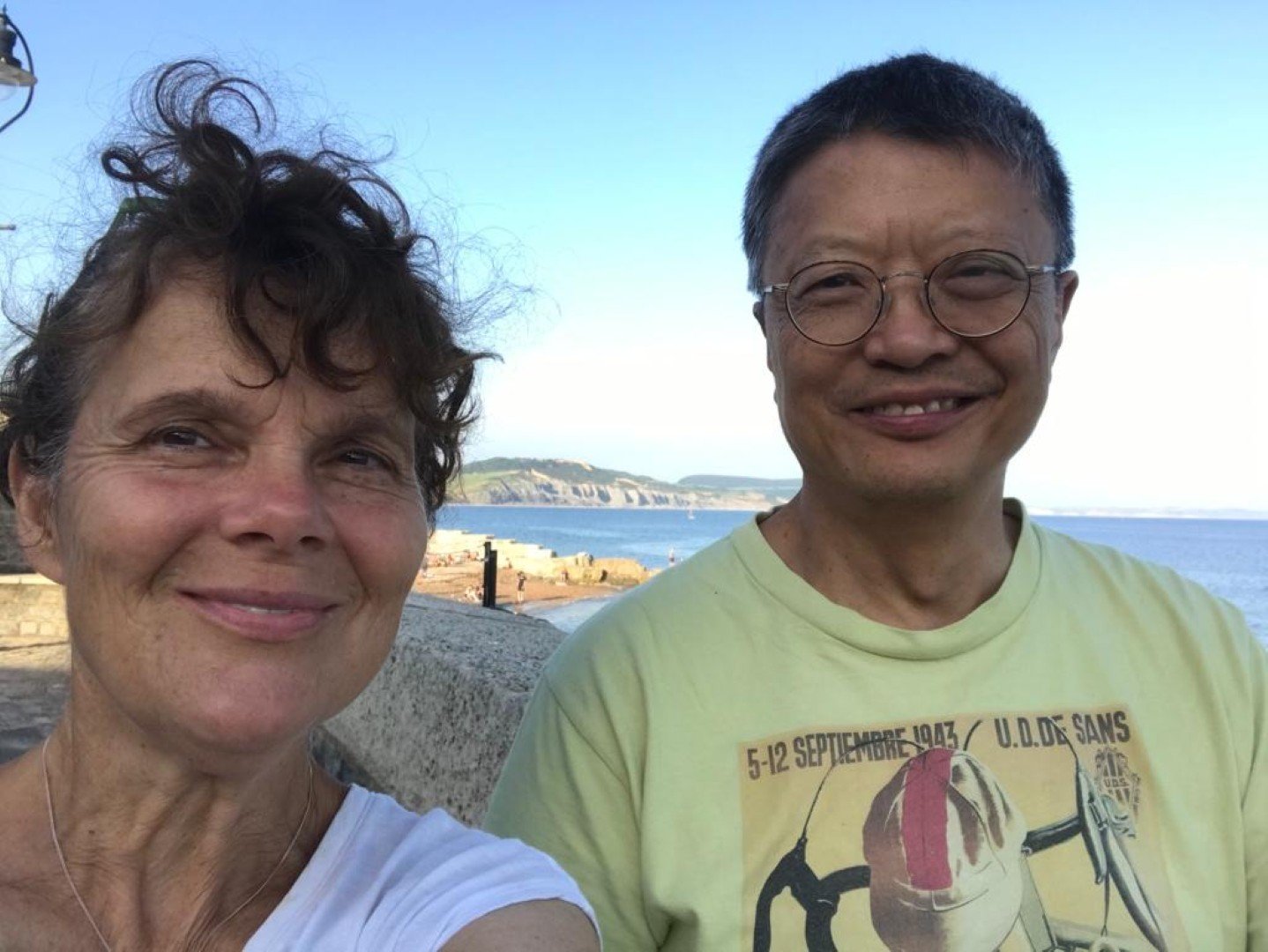
Environmentalists Lucy Sommers and Chit Chong own a 17-acre agro-ecological site on the edge of Bridport.
Context
Like many people working with plants, we began life in other careers, (research, strategic planning, engineering and product design) before studying horticulture and permaculture techniques. We were also keen volunteers on nature projects, which is how we met Dorset Wildlife & West Dorset Wilding: in the middle of a local river, pulling up Himalayan balsam!
Several pivotal events. The grain crisis in Ukraine and subsequent flour rationing by supermarkets brought home the vulnerability of key foods we might not be able to get locally. Then there was the publication of ‘Silent Earth’, laying out the devastation of modern agricultural practices and climate change on the insect population (a decline over 70% observed from 1960s).* As 87% of plant species require pollination, mostly from insects, how is pollination going to happen? The UK was not alone but we were killing insects on an unprecedented scale on agricultural land. At the same time, we were taking away their food sources. Both agricultural practices and changes in land use contributed to the huge reduction of wildflower meadows (97% since 1930s).**
It is also the case that the UK is now one of the most nature-depleted countries in Europe. In the Biodiversity Intactness Index, the UK is ranked 222nd out of 240 countries in the world — right down at the bottom, in other words.
How we came to start this project
The opportunity to do more
Later on in the year, we had the opportunity to do something further when two arable fields next to Bridport came up for sale. Instead of heading for retirement, we (perhaps rashly!) decided to increase our workload and buy them both, with the first goal of boosting the local insect population. Over the next few months, we sowed four acres of wildflowers and eleven acres of traditional species grassland.
Alongside these, we started our second goal, to create a two-acre orchard of what we hope will be climate adaptive varieties of fruit and nut trees, able to resist some of the surprises the changing climate may bring. These were underplanted with nitrogen-fixing wildflowers, clovers, and pockets of comfrey. This underplanting will both encourage pollinators, and be part of the natural fertiliser for the trees. Local fungi expert, Nick Phillips, also created an experimental area of inoculated logs and trees.
Lucy had been experimenting, in earlier years growing, with unusual food plants such as Chilean guavas and the very delicious Asian pears - both which we included.
Building resilience for local food supply
Mostly, we have chosen trees which are welcoming of ‘warming temperatures’ whilst able to resist periods of extreme cold. In addition to the Asian pears and Chilean guavas, we planted toona, (Chinese vegetable tree), persimmons, sweet chestnuts, pecan tree cultivars, and Szechuan peppers - all selected for their suitability in the UK. We have also sourced and sown an ancient semi-perennial rye grain (St John’s Rye).
Lately, we have added the tea plant, camellia sinensis var sinensis, varieties of yam - notably dioscora batatas - and the saffron crocus.
Our aim is to improve understanding of a wider range of food crops that could be successfully grown locally as the climate changes and food security likely becomes an issue.
Across and surrounding the wildflower meadows and grassland, we also planted over a thousand native hedging plants and trees to form new hedgerows. A further hedge of 940 native plants and trees has just been completed this past winter (2025/26) to bisect the wildflower meadows.
Yes, in respect of recreating meadows and grasslands - though it is not passive or pure rewilding, as we have actively intervened to hasten biodiversity along. By creating space for wildlife to thrive, establishing new wildflower sites, where none had existed previously, and avoiding pesticides, we have already encouraged a plethora of insects, such as butterflies, including a great many common blues, birds, including spotted flycatchers and green woodpeckers (seen earlier this year obsessing over the early Spring meadow), and many small mammals.
Perhaps most exciting, was the sighting of a hare darting across the recently cut meadow.
We have also had a real buzz from a letter from a local walker and neighbour who has lived here for many years, thanking us for helping what she noticed as a “huge increase in the happy insects in the surrounding hedgerows to our fields”.
We have to point out that we have had to exclude some wildlife from some areas in order for new plants to thrive. Deer, in particular, exist in such numbers as to graze down both young trees and hedging plants if unprotected, hence our establishing a deer (and rabbit) fence around our two-acre orchard.
Is what we’re doing considered ‘rewilding’?
What have been the greatest challenges?
Getting the flowering meadows to establish along with working with very limited equipment, reducing the bracken at the field margins, and keeping the fruit and nut trees watered in the dry spring and summer drought. For the wildflowers to progress, we have spent a lot of time ‘pretending to be sheep’, by scything, mowing and collecting grass, to reduce fertility and let the light in for the flowers to establish. Later in the year, a local farmer helps by making hay for his livestock.
The dependency of successful wildflower meadows on livestock is not as widely recognised as it should be. We did not fully appreciate this on starting up. Looking ahead, we hope to be part of a grazing collective to incorporate a small number of carefully managed grazing animals at specific times of the year to help manage the meadows, whilst keeping the carbon and methane output to a minimum.
We have recently opened our meadows and orchard for Dorset Climate Action Network and Bridport Food Matters and would love to do more in the coming year.
The climate is changing; we have to adapt and prepare. We are part of a wider effort to diversify what we grow and eat, to prepare for a future climate scenario. And to do it in a way which benefits insects and humans simultaneously. This is going to take a huge leap - the need for people to reconnect to the origins of their food and understand its dependency on wild nature has never been greater.